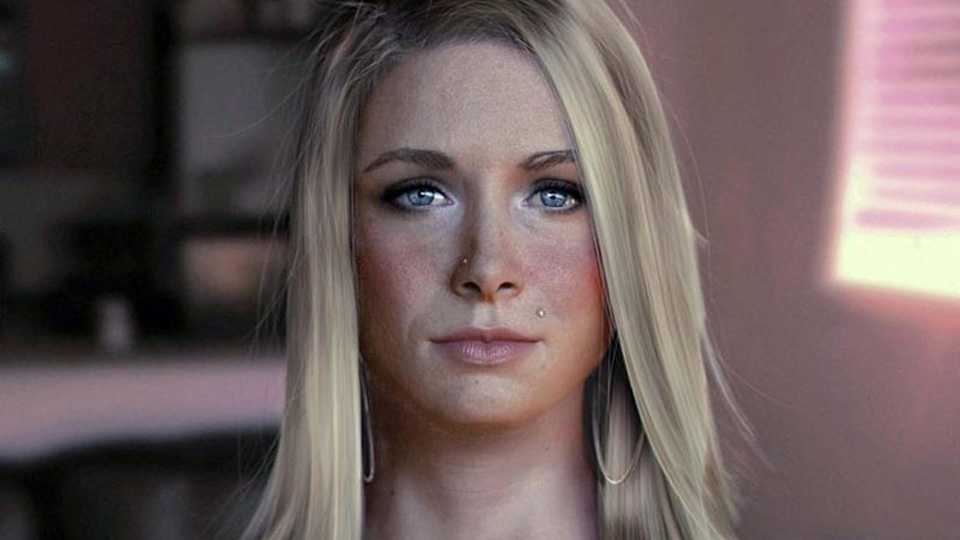
The 2000s pushed CGI to the line we now consider photorealism. James Cameron’s Avatar (2009) crossed it for general audiences, and the gap between a fully rendered film and a live-action film has been hard to spot since. The same techniques migrated downstream to architectural visualization, automotive marketing, and consumer product mockups, where photorealistic renders now routinely replace expensive photo shoots.
How to Tell CGI From a Real Photo
The honest answer in 2026 is that often you can’t, at least not from a glance on a phone screen. There are still a few places the illusion tends to crack, though, if you know where to look. Reflections and shadows are the usual giveaways, a render has to calculate how light bounces, and when the software cuts corners you’ll catch a reflection that doesn’t match its surroundings or a shadow falling at an angle the light source doesn’t justify. Skin and fabric are the other weak points, drifting toward a slightly waxy, poreless evenness that reads as “off” before you can say why. Oddly, clutter helps you more than polish does: a messy, lived-in scene with dust and scratches is harder to fake than a clean studio shot, so a suspiciously perfect image is worth a second look.
CGI Isn’t the Same as AI-Generated Images
Worth untangling, since people now use the terms interchangeably and they’re genuinely different crafts. CGI is built, an artist models the geometry, wraps it in textures, places the lights, and renders the result with control over every element. AI image generation works the other way around: you describe what you want and a diffusion model assembles it from patterns learned across millions of images, with far less say over the specifics. That gap shows up in how each one fails. CGI tends to break at the level of physics, lighting, reflection, the weight of things, while AI breaks at the level of logic, with six-fingered hands, earrings that melt into hair, and signage that dissolves into nonsense. Rough rule: if the weird part is physical, you’re probably looking at a render; if it’s nonsensical, it’s more likely AI. (We dig into where the generative side is heading over in How AI Is Changing Hip-Hop Production.)
Where You’re Already Looking at CGI Without Knowing It
A surprising share of the “photographs” you scroll past were never photographed. Most car advertising is rendered rather than shot, cheaper and safer than wrangling a real vehicle, a closed road, and perfect weather. Furniture retailers have rendered their catalogs for years instead of building and shooting every finish of every product. Real-estate listings, architectural proposals, packaging, food shots, all lean heavily on CGI, precisely because a render controls everything a camera can’t.
The gallery
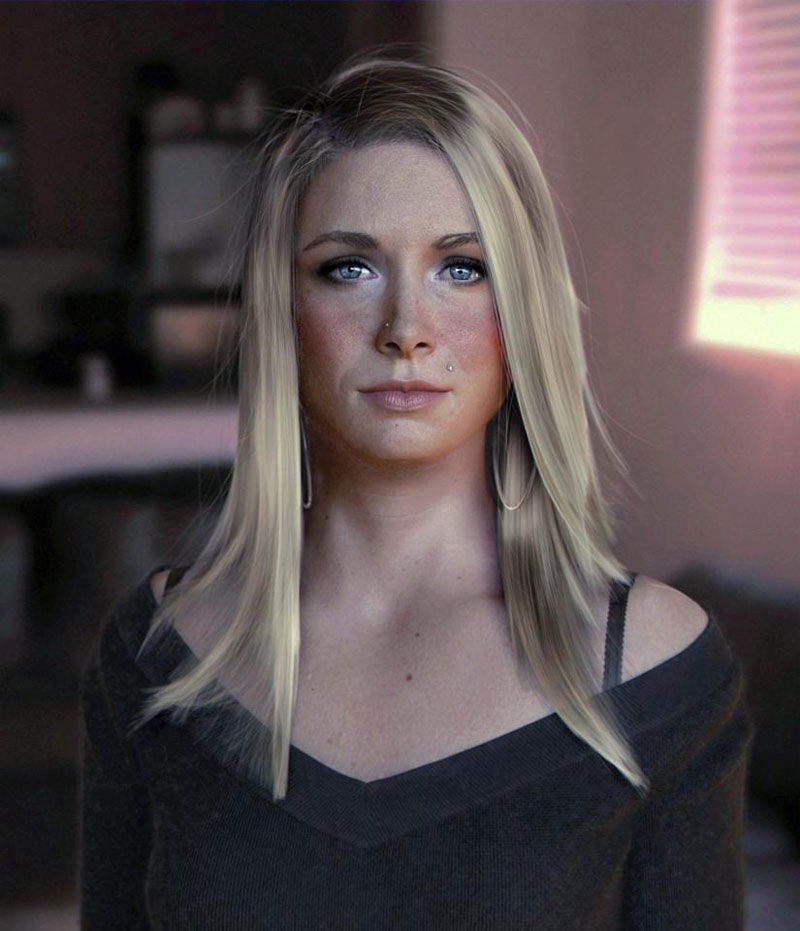
Below are pieces that have circulated widely as examples of how far the format has come. Squint at one for a few seconds, and you may forget what you are actually looking at.











Frequently Asked Questions
Photorealistic CGI is computer-generated imagery designed to be indistinguishable from a photograph of a real-world subject. It relies on physics-based lighting (typically ray tracing or path tracing), accurate material shaders, and high-fidelity surface detail to mimic how light, color, and texture behave in the real world.
CGI started seriously chasing photorealism in the 1980s, Tron (1982) was the first major film with extensive CGI, and ray-tracing algorithms developed in 1984 enabled the first physically-accurate light simulation. The 2000s and especially Avatar (2009) crossed the threshold for general audiences. Today, fully rendered scenes regularly pass for live-action footage.
Common 3D suites include Blender (free, open source), Autodesk Maya, Cinema 4D, and 3ds Max. Photorealistic rendering typically uses dedicated render engines like Cycles (Blender), Arnold (Maya/3ds Max, the industry standard for film VFX), V-Ray, or Octane. Each uses ray tracing or path tracing to simulate light behavior accurately.
Photorealistic CGI is now standard across architecture (interior and exterior renderings), product design and marketing, automotive (most car ads use renders rather than photographs of real cars), real estate, video games, fashion, and advertising more broadly. The cost has dropped enough that small studios and freelance 3D artists routinely deliver renders that would have required a Hollywood VFX house twenty years ago.
Modern 3D suites like Blender, Autodesk Maya, Cinema 4D, and 3ds Max give artists the tools, and dedicated rendering engines like Cycles, Arnold, V-Ray, and Octane simulate light bouncing through a scene with ray tracing or path tracing. The math is heavy. The patience is heavier.
How the form evolved
Photorealism in CGI has been an aspirational goal since the format existed. The 1980s marked the first transformative period. Disney’s Tron (1982) became the first major film with extensive CGI, and ray-tracing algorithms developed in 1984 made physically accurate light simulation possible for the first time. After that, every Hollywood VFX milestone (Jurassic Park in 1993, Toy Story in 1995, The Matrix in 1999) pushed the bar a little higher.
The 2000s pushed CGI to the line we now consider photorealism. James Cameron’s Avatar (2009) crossed it for general audiences, and the gap between a fully rendered film and a live-action film has been hard to spot since. The same techniques migrated downstream to architectural visualization, automotive marketing, and consumer product mockups, where photorealistic renders now routinely replace expensive photo shoots.
How to Tell CGI From a Real Photo
The honest answer in 2026 is that often you can’t, at least not from a glance on a phone screen. There are still a few places the illusion tends to crack, though, if you know where to look. Reflections and shadows are the usual giveaways, a render has to calculate how light bounces, and when the software cuts corners you’ll catch a reflection that doesn’t match its surroundings or a shadow falling at an angle the light source doesn’t justify. Skin and fabric are the other weak points, drifting toward a slightly waxy, poreless evenness that reads as “off” before you can say why. Oddly, clutter helps you more than polish does: a messy, lived-in scene with dust and scratches is harder to fake than a clean studio shot, so a suspiciously perfect image is worth a second look.
CGI Isn’t the Same as AI-Generated Images
Worth untangling, since people now use the terms interchangeably and they’re genuinely different crafts. CGI is built, an artist models the geometry, wraps it in textures, places the lights, and renders the result with control over every element. AI image generation works the other way around: you describe what you want and a diffusion model assembles it from patterns learned across millions of images, with far less say over the specifics. That gap shows up in how each one fails. CGI tends to break at the level of physics, lighting, reflection, the weight of things, while AI breaks at the level of logic, with six-fingered hands, earrings that melt into hair, and signage that dissolves into nonsense. Rough rule: if the weird part is physical, you’re probably looking at a render; if it’s nonsensical, it’s more likely AI. (We dig into where the generative side is heading over in How AI Is Changing Hip-Hop Production.)
Where You’re Already Looking at CGI Without Knowing It
A surprising share of the “photographs” you scroll past were never photographed. Most car advertising is rendered rather than shot, cheaper and safer than wrangling a real vehicle, a closed road, and perfect weather. Furniture retailers have rendered their catalogs for years instead of building and shooting every finish of every product. Real-estate listings, architectural proposals, packaging, food shots, all lean heavily on CGI, precisely because a render controls everything a camera can’t.
The gallery
Below are pieces that have circulated widely as examples of how far the format has come. Squint at one for a few seconds, and you may forget what you are actually looking at.
Frequently Asked Questions
Photorealistic CGI is computer-generated imagery designed to be indistinguishable from a photograph of a real-world subject. It relies on physics-based lighting (typically ray tracing or path tracing), accurate material shaders, and high-fidelity surface detail to mimic how light, color, and texture behave in the real world.
CGI started seriously chasing photorealism in the 1980s, Tron (1982) was the first major film with extensive CGI, and ray-tracing algorithms developed in 1984 enabled the first physically-accurate light simulation. The 2000s and especially Avatar (2009) crossed the threshold for general audiences. Today, fully rendered scenes regularly pass for live-action footage.
Common 3D suites include Blender (free, open source), Autodesk Maya, Cinema 4D, and 3ds Max. Photorealistic rendering typically uses dedicated render engines like Cycles (Blender), Arnold (Maya/3ds Max, the industry standard for film VFX), V-Ray, or Octane. Each uses ray tracing or path tracing to simulate light behavior accurately.
Photorealistic CGI is now standard across architecture (interior and exterior renderings), product design and marketing, automotive (most car ads use renders rather than photographs of real cars), real estate, video games, fashion, and advertising more broadly. The cost has dropped enough that small studios and freelance 3D artists routinely deliver renders that would have required a Hollywood VFX house twenty years ago.
Photorealistic CGI keeps getting better. The line between a 3D render and a real photograph is now so thin that even trained eyes get fooled. What used to be the realm of Hollywood VFX studios is now the daily output of architectural visualizers, product designers, and independent 3D artists working from a laptop. Below is a quick gallery of pieces that genuinely look like photographs, plus a short tour of how the form got here.
What counts as photorealistic CGI?
Photorealistic computer-generated imagery is, by definition, a render that aims to be indistinguishable from a real photograph. That means accurate physics-based lighting, materials that respond to light the way real materials do, and surface details (micro-bumps, dust, scratches) that the eye expects to see. The more the artist sweats the small stuff, the more the brain accepts the image as real.
Modern 3D suites like Blender, Autodesk Maya, Cinema 4D, and 3ds Max give artists the tools, and dedicated rendering engines like Cycles, Arnold, V-Ray, and Octane simulate light bouncing through a scene with ray tracing or path tracing. The math is heavy. The patience is heavier.
How the form evolved
Photorealism in CGI has been an aspirational goal since the format existed. The 1980s marked the first transformative period. Disney’s Tron (1982) became the first major film with extensive CGI, and ray-tracing algorithms developed in 1984 made physically accurate light simulation possible for the first time. After that, every Hollywood VFX milestone (Jurassic Park in 1993, Toy Story in 1995, The Matrix in 1999) pushed the bar a little higher.
The 2000s pushed CGI to the line we now consider photorealism. James Cameron’s Avatar (2009) crossed it for general audiences, and the gap between a fully rendered film and a live-action film has been hard to spot since. The same techniques migrated downstream to architectural visualization, automotive marketing, and consumer product mockups, where photorealistic renders now routinely replace expensive photo shoots.
How to Tell CGI From a Real Photo
The honest answer in 2026 is that often you can’t, at least not from a glance on a phone screen. There are still a few places the illusion tends to crack, though, if you know where to look. Reflections and shadows are the usual giveaways, a render has to calculate how light bounces, and when the software cuts corners you’ll catch a reflection that doesn’t match its surroundings or a shadow falling at an angle the light source doesn’t justify. Skin and fabric are the other weak points, drifting toward a slightly waxy, poreless evenness that reads as “off” before you can say why. Oddly, clutter helps you more than polish does: a messy, lived-in scene with dust and scratches is harder to fake than a clean studio shot, so a suspiciously perfect image is worth a second look.
CGI Isn’t the Same as AI-Generated Images
Worth untangling, since people now use the terms interchangeably and they’re genuinely different crafts. CGI is built, an artist models the geometry, wraps it in textures, places the lights, and renders the result with control over every element. AI image generation works the other way around: you describe what you want and a diffusion model assembles it from patterns learned across millions of images, with far less say over the specifics. That gap shows up in how each one fails. CGI tends to break at the level of physics, lighting, reflection, the weight of things, while AI breaks at the level of logic, with six-fingered hands, earrings that melt into hair, and signage that dissolves into nonsense. Rough rule: if the weird part is physical, you’re probably looking at a render; if it’s nonsensical, it’s more likely AI. (We dig into where the generative side is heading over in How AI Is Changing Hip-Hop Production.)
Where You’re Already Looking at CGI Without Knowing It
A surprising share of the “photographs” you scroll past were never photographed. Most car advertising is rendered rather than shot, cheaper and safer than wrangling a real vehicle, a closed road, and perfect weather. Furniture retailers have rendered their catalogs for years instead of building and shooting every finish of every product. Real-estate listings, architectural proposals, packaging, food shots, all lean heavily on CGI, precisely because a render controls everything a camera can’t.
The gallery
Below are pieces that have circulated widely as examples of how far the format has come. Squint at one for a few seconds, and you may forget what you are actually looking at.
Frequently Asked Questions
Photorealistic CGI is computer-generated imagery designed to be indistinguishable from a photograph of a real-world subject. It relies on physics-based lighting (typically ray tracing or path tracing), accurate material shaders, and high-fidelity surface detail to mimic how light, color, and texture behave in the real world.
CGI started seriously chasing photorealism in the 1980s, Tron (1982) was the first major film with extensive CGI, and ray-tracing algorithms developed in 1984 enabled the first physically-accurate light simulation. The 2000s and especially Avatar (2009) crossed the threshold for general audiences. Today, fully rendered scenes regularly pass for live-action footage.
Common 3D suites include Blender (free, open source), Autodesk Maya, Cinema 4D, and 3ds Max. Photorealistic rendering typically uses dedicated render engines like Cycles (Blender), Arnold (Maya/3ds Max, the industry standard for film VFX), V-Ray, or Octane. Each uses ray tracing or path tracing to simulate light behavior accurately.
Photorealistic CGI is now standard across architecture (interior and exterior renderings), product design and marketing, automotive (most car ads use renders rather than photographs of real cars), real estate, video games, fashion, and advertising more broadly. The cost has dropped enough that small studios and freelance 3D artists routinely deliver renders that would have required a Hollywood VFX house twenty years ago.