This article is part of our complete guide to How Hip-Hop Changed Everything.
Here’s a hot take that shouldn’t even be a hot take. Hip-hop has always been a technology story, and the rise of AI in hip-hop is the latest chapter. From the turntables and drum machines that birthed the genre in the 1970s to the MPC samplers that defined the golden age to the DAWs that democratized production in the 2000s, every major era of hip-hop was shaped by the tools available to its creators. Now artificial intelligence is the next technological inflection point, and hip-hop, as usual, is the genre where the consequences are playing out first and most dramatically.
And this isn’t some theoretical ‘what if AI takes over music’ thought experiment. AI-generated tracks have already gone viral, got pulled from streaming platforms under legal threat, and provoked responses from major artists’ estates. They’ve forced the music industry to confront questions it is not remotely prepared to answer. The tech is moving faster than the lawyers, the ethicists, and the culture can keep up, which, if you know anything about hip-hop’s relationship with sampling laws, should feel extremely familiar. And hip-hop, because of its relationship with sampling, vocal identity, and technological innovation, is ground zero for the collision.
Poll Results
Poll: Cole World, K. Dot, Drizzy, Who’s the Best in the Triumvirate

Cast your vote
Cole World, K. Dot, Drizzy, Who’s the Best in the Triumvirate
Cast your vote
Poll: Cole World, K. Dot, Drizzy, Who’s the Best in the Triumvirate
The Ghostwriter Moment: When AI Drake Broke the Internet
Back in April 2023, a track called “Heart on My Sleeve” appeared on streaming platforms under the name Ghostwriter977. The song featured AI-generated vocals that mimicked the voices of Drake and The Weeknd with unsettling accuracy. It was not a parody, not a remix, and not a mashup. It was an original composition that used artificial intelligence to clone two of the biggest voices in modern music and create something that sounded, to casual listeners, like an authentic collaboration between the two artists.
The track went viral almost immediately. It accumulated millions of streams across Spotify, Apple Music, YouTube, and TikTok before Universal Music Group, which represents both Drake and The Weeknd, moved to have it removed from platforms. UMG issued a statement expressing concern about AI’s implications for the music industry and pushing streaming platforms to address the use of AI-generated content that mimics signed artists without authorization.
What made “Heart on My Sleeve” significant was not just the technology. It was the quality. The AI-generated vocals were convincing enough that the track could plausibly pass for an actual Drake and Weeknd release. This was not a novelty. This was a proof of concept that demonstrated, in the most public way possible, that AI had reached a threshold where it could replicate a specific artist’s vocal identity well enough to create commercially viable music without that artist’s involvement.

The incident also raised immediate legal questions that remain unresolved. Copyright law, as it currently exists in the United States, generally protects specific recordings and compositions but does not clearly protect a person’s vocal style or sound. You can copyright a song, but you cannot copyright the way your voice sounds. What this means is that AI-generated music that mimics an artist’s voice without using any of their actual recordings occupies a legal gray area that existing intellectual property frameworks were not designed to address.
Ghostwriter977 did not disappear after the controversy. They continued to release AI-generated tracks and even submitted “Heart on My Sleeve” for Grammy consideration. The Recording Academy reportedly considered the submission before determining that the track was not eligible under existing rules, though the episode forced the organization to begin developing guidelines for AI-generated content in future award cycles.
Drake, Tupac’s Estate, and the Weaponization of AI Voices
If “Heart on My Sleeve” was the warning shot, the next major AI incident in hip-hop demonstrated how the technology could be used not just to create music but to weaponize it. In April 2024, during his ongoing public feud with Kendrick Lamar, Drake released a track called “Taylor Made Freestyle” that used AI-generated voices mimicking Tupac Shakur and Snoop Dogg. The track used these cloned voices to taunt Kendrick Lamar, with the AI Tupac and Snoop seemingly taking Drake’s side in the beef.
The response was swift and pointed. Tupac Shakur’s estate, managed through his mother Afeni Shakur’s trust, issued a legal threat demanding the track’s removal. The estate’s attorney reportedly gave Drake a deadline to take the song down, citing violations of Tupac’s publicity rights and the unauthorized use of his likeness. Drake complied and removed the track from his social media channels.
This incident crystallized a specific ethical dimension of AI in hip-hop that goes beyond copyright law: the use of deceased artists’ voices. Tupac Shakur died in 1996. He never had the opportunity to consent to his voice being used in a 2024 diss track. The idea that his vocal identity could be deployed as a rhetorical weapon in someone else’s beef struck many listeners and industry observers as deeply disrespectful, regardless of the legal technicalities.
The Tupac estate’s response also established an important precedent. While copyright law may not clearly address AI voice cloning, publicity rights, the legal right to control the commercial use of one’s name, image, and likeness, offer a potential legal avenue for artists and their estates to challenge unauthorized AI impersonation. Several states, including Tennessee and California, have moved to strengthen these protections in response to the AI voice cloning issue. Tennessee passed the ELVIS Act (Ensuring Likeness Voice and Image Security Act) in 2024, which extended publicity rights to cover AI-generated reproductions of an individual’s voice.
Snoop Dogg, whose voice was also cloned in Drake’s track, responded with characteristic directness. While he did not pursue legal action in the same way Tupac’s estate did, his public comments made clear that he was not pleased about having his vocal identity used without permission. The entire episode underscored a growing consensus within the hip-hop community. Just because you can clone someone’s voice does not mean you should.
The Producer’s Dilemma: AI as Tool vs. AI as Replacement
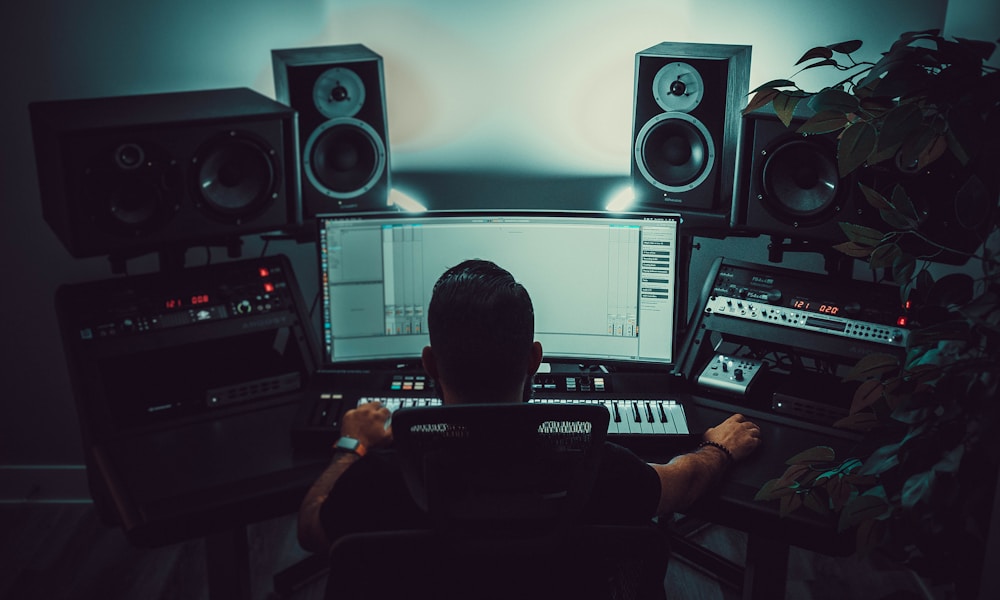
While the AI voice cloning headlines grabbed the most public attention, a quieter revolution is happening in hip-hop production that is arguably more consequential for the genre’s long-term future. AI-powered production tools are fundamentally changing how beats are made, who can make them, and what production skills are valued.
AI-assisted beat-making tools can now generate complete instrumentals based on text prompts or reference tracks. Platforms and tools have emerged that allow users with no musical training to produce beats that sound, at minimum, competent, and at best, genuinely creative. Stem separation technology, powered by AI, allows producers to isolate individual elements from existing recordings with a precision that was impossible just a few years ago. AI mastering services can polish a mix in minutes for a fraction of what a professional mastering engineer would charge.
For some producers and industry veterans, this is an existential threat. Timbaland, one of hip-hop’s most iconic producers, has taken a different approach. He is openly exploring AI tools, viewing them as creative instruments rather than replacements for human creativity. In public appearances and interviews, Timbaland has discussed using AI as part of his production process, treating it as another tool in the same lineage as the drum machines and samplers that previous generations of producers adopted. His perspective is that AI does not replace the creative vision, it accelerates the execution of that vision.
This is a reasonable position, but it obscures a real tension. The producers who will thrive with AI tools are artists like Timbaland who already have the creative taste, industry relationships, and brand recognition to leverage AI as an enhancement. For the next generation of producers trying to break in, the bedroom beatmakers who might have previously built careers by selling beats online, AI represents genuine competition. When anyone can generate a serviceable beat in seconds, the market value of serviceable beats approaches zero. What remains valuable is taste, curation, creative vision, and the human relationships that turn a beat into a hit. Those are real skills, but they are different skills than the technical production knowledge that has traditionally been the entry point for hip-hop producers.
The democratization angle is worth taking seriously, though. Hip-hop has always been about accessibility, about creating art with whatever tools are available, about the kid with a cheap turntable or a cracked copy of FL Studio being able to make music that competes with major label productions. AI tools extend that tradition. A teenager in Lagos or Sao Paulo or rural Mississippi who cannot afford studio time or music lessons can now use AI to produce beats, experiment with sounds, and develop their creative voice in ways that were not possible before. The question is whether this democratization creates genuine opportunity or just floods the market with content that makes it harder for anyone to be heard.
The Copyright Question: Who Owns What AI Creates?
The legal landscape around AI-generated music is evolving rapidly, and the current state of affairs is genuinely uncertain. The U.S. Copyright Office has taken the position that works generated entirely by AI, without meaningful human creative input, are not eligible for copyright protection. This was articulated in guidance issued in 2023, which stated that copyright requires human authorship and that merely prompting an AI to generate content does not constitute sufficient human creative contribution.
The Copyright Office has also indicated that works involving a combination of human and AI contributions may be eligible for copyright protection, with the copyright applying to the human-authored elements. This creates a spectrum rather than a binary. A song where a human wrote the lyrics, arranged the structure, and made creative decisions about the production, but used AI tools to generate certain instrumental elements or assist with mixing, would likely have a stronger copyright claim than a song generated entirely by an AI from a single text prompt.
For hip-hop, this has specific implications. The genre’s history with sampling already created a complex legal framework around what constitutes original creation versus derivative work. AI adds another layer of complexity. If a producer uses AI to generate a beat that is informed by, but does not directly sample, an existing artist’s production style, is that a copyright issue? Current law suggests probably not, since you cannot copyright a style. But the ethical question persists even where the legal question is settled.
The major labels and publishers are not waiting for the law to catch up. Universal Music Group, Sony Music, and Warner Music Group have all taken positions opposing the unauthorized use of their artists’ content to train AI models. They have pushed streaming platforms to implement detection and removal tools for AI-generated content that infringes on their artists’ rights. And they have begun investing in AI tools that they control, positioning themselves to profit from the technology rather than be disrupted by it.
This corporate response mirrors what happened with sampling in the late 1980s and early 1990s. When hip-hop’s use of samples from existing recordings first drew legal scrutiny, the result was not a ban on sampling but a licensing regime that formalized and monetized the practice. Something similar is likely to happen with AI. Not a prohibition, but a framework that determines who gets paid when AI shows up to create music that draws on existing artists’ work. The question is whether that framework will be designed to benefit artists or labels, and hip-hop’s experience with sample clearance, where the costs often fell disproportionately on smaller artists, suggests the outcome is not guaranteed to be equitable.
What This Means for the Culture
The deepest question AI poses to hip-hop is not legal or economic. It is cultural. Hip-hop is, at its core, a culture of human expression. It values authenticity, lived experience, and individual voice. It’s built on the idea that what you say and how you say it reflects who you are. AI disrupts every one of these values.
When a rapper’s voice can be cloned and used to say things they never said, what happens to the concept of keeping it real? When a beat can be generated by an algorithm trained on decades of human creativity, what happens to the producer’s art? When anyone can generate a technically proficient rap verse without ever having lived the experiences that traditionally gave hip-hop its emotional weight, what happens to authenticity?
These are not rhetorical questions. They have practical implications for how hip-hop operates as a culture and an industry. And the answers will not come from technology companies or copyright lawyers. They will come from the artists, producers, fans, and communities that make hip-hop what it is.
There is a historical parallel worth considering. When drum machines first appeared in hip-hop production, traditional musicians dismissed them as inauthentic, machines replacing human musicianship. Hip-hop responded by turning the drum machine into an instrument in its own right, developing performance techniques and creative approaches that were unique to the technology. When sampling faced legal challenges in the early 1990s, producers adapted by developing new techniques: chopping samples into unrecognizable fragments, layering and manipulating them in ways that were creative acts in themselves.
Hip-hop has a track record of absorbing new technologies and making them its own. AI may follow the same pattern: resisted initially, then adopted selectively, then transformed into something the technology’s creators never anticipated. The producers and artists who figure out how to use AI in ways that are genuinely creative, not as a replacement for human expression but as an amplifier of it, will likely define the next era of the genre.
But this optimistic framing should not obscure the real risks. AI-generated content is flooding streaming platforms, making it harder for genuine artists to be discovered. AI voice cloning is being used to create non-consensual content, from diss tracks to explicit material, using real people’s vocal identities. Power is concentrating further in the hands of technology companies and major labels who control the AI tools and the platforms they run on. These are not speculative concerns. They are already happening.
The hip-hop community’s response to AI will be a defining test of the culture’s values. If hip-hop’s history tells us anything, it is that the culture will not simply accept what technology imposes. It will fight, adapt, and ultimately shape the technology to serve its own purposes. But that outcome requires active engagement, not passive acceptance. The artists, producers, and fans who care about hip-hop’s future need to be part of the conversation about how AI is regulated, how it is used, and what boundaries are respected. The technology is not going away. The question is who controls it.
Frequently Asked Questions
In April 2023, an anonymous creator using the name Ghostwriter977 released a track called “Heart on My Sleeve” that featured AI-generated vocals mimicking Drake and The Weeknd. The song went viral, accumulating millions of streams before Universal Music Group had it removed from streaming platforms. The incident was one of the first major demonstrations that AI could generate commercially convincing vocal performances mimicking specific real artists.
In April 2024, Drake released “Taylor Made Freestyle,” which used AI-generated voices mimicking Tupac Shakur and Snoop Dogg as part of his feud with Kendrick Lamar. Tupac’s estate issued a legal threat demanding the track’s removal, citing violations of Tupac’s publicity rights and unauthorized use of his likeness. Drake complied and removed the track. The incident highlighted serious ethical and legal concerns about using AI to clone the voices of deceased artists without consent from their estates.
According to guidance issued by the U.S. Copyright Office in 2023, works generated entirely by AI without meaningful human creative input are not eligible for copyright protection, as copyright requires human authorship. Works that combine human and AI contributions may be eligible, with copyright applying to the human-authored elements. This creates a spectrum where the level of human creative involvement determines the strength of a copyright claim. The legal landscape is still evolving and may change as courts and legislators address new cases.
AI shows up in hip-hop production in several ways: generating beats and instrumentals from text prompts or reference tracks, separating stems from existing recordings with high precision, assisting with mixing and mastering, and generating vocal performances. Established producers like Timbaland are openly exploring AI as a creative tool. The technology is also making production more accessible to aspiring beatmakers who lack traditional music training or expensive equipment, though this democratization also raises concerns about market saturation and the devaluation of production skills.