The Definitive Guide
Hip-hop didn’t just change music. It rewired the entire cultural operating system, from what we wear and how we talk to what we value and who we celebrate. What started as block parties in the South Bronx in the mid-1970s (as the Recording Academy documented) has become the single most dominant cultural force on the planet. It dictates fashion cycles (just ask anyone who’s ever camped out for a sneaker drop). It reshapes the English language in real time, something we explore in depth in our piece on how hip-hop slang changed the way we talk (if you’ve ever said “drip,” “flex,” or “slay” in conversation, thank a rapper). And it’s turned former street kids into billionaire moguls who sit across the table from Fortune 500 CEOs.
But here’s what most “history of hip-hop” guides get wrong: they treat the culture like a museum exhibit, something to be cataloged and admired from a distance. That’s not what hip-hop is. Hip-hop is alive. It’s evolving. And its influence isn’t contained to any one lane. It bleeds into fashion, film, language, politics, technology, sports, every corner of modern life. This guide is our attempt to map that influence, connect the dots between the culture’s past and present, and celebrate the ways hip-hop has reshaped the world we all live in.
Whether you grew up in the era of Cross Colours jumpsuits and LA Gear light-ups, or you’re discovering hip-hop culture through Travis Scott collaborations and Kendrick’s Pulitzer, this guide is for you. Let’s get into it.
How Hip-Hop Invented Modern Streetwear
Before hip-hop, fashion was dictated from the top down. Designers in Paris and Milan told the world what to wear, and everyone else followed. Hip-hop flipped that script entirely. For the first time, style was being invented on the streets, by kids in the Bronx, Brooklyn, Compton, and Atlanta who couldn’t afford haute couture but had an eye for self-expression that no fashion school could teach.
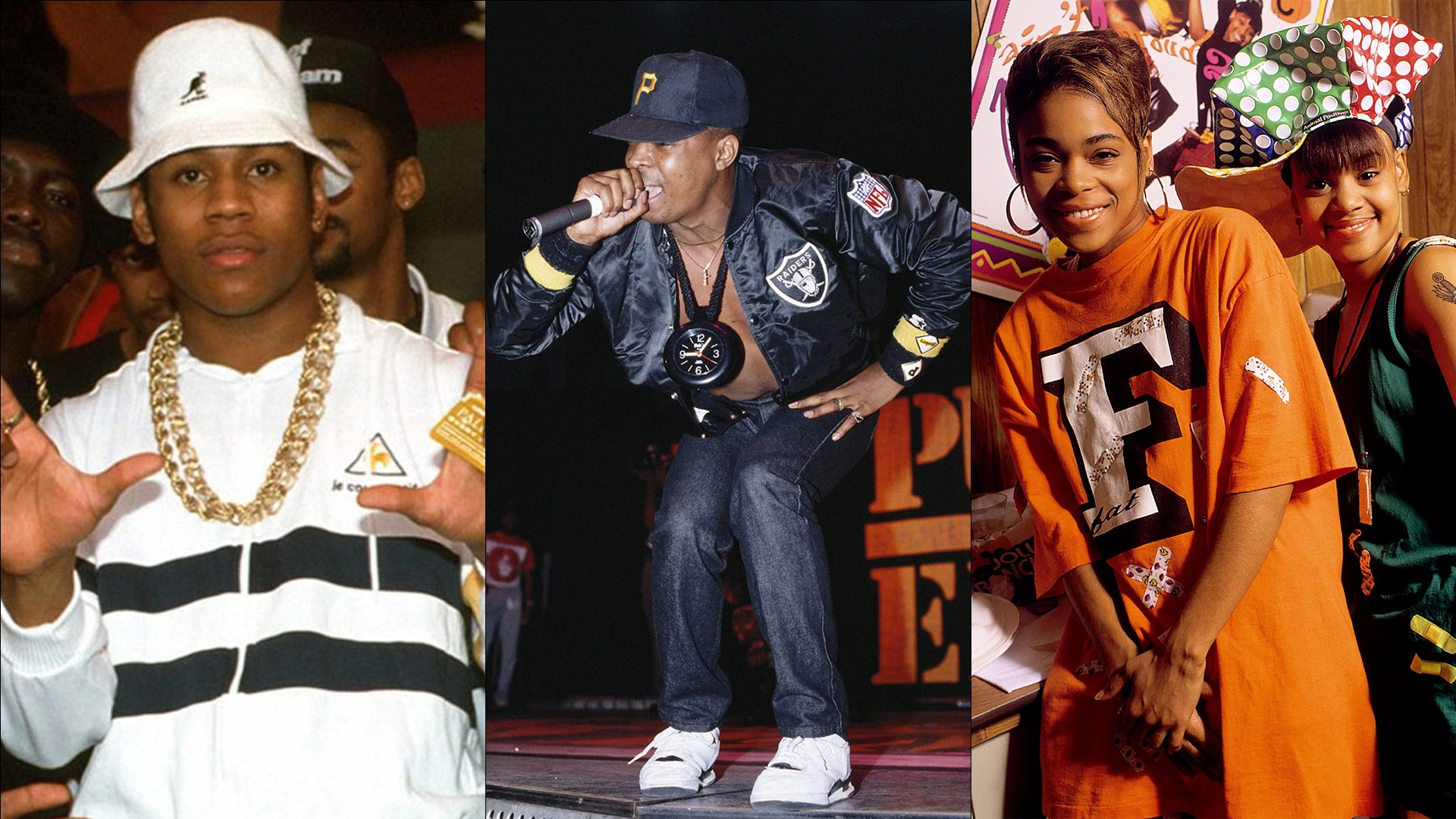
The early days of hip-hop fashion were defined by practicality and swagger: Kangol hats, adidas shell-toes (thanks to Run-DMC’s iconic endorsement), fat gold chains, oversized everything. Brands like Cross Colours, Karl Kani, and FUBU were created specifically to serve the hip-hop community, and they exploded into mainstream consciousness almost overnight. These weren’t just clothing brands; they were cultural statements. FUBU literally stood for “For Us, By Us.” That meant something.
By the late ’90s, the streetwear landscape had expanded into what we now call hip-hop affiliated clothing, a fusion of urban aesthetics, luxury logos, and athletic wear that would eventually consume high fashion entirely. The evolution from bootleg Polo to Pharrell sitting front row at Chanel is one of the most remarkable class mobility stories in fashion history, and it happened because hip-hop artists refused to wait for permission.
Sneaker Culture: From Shell-Toes to StockX
If hip-hop invented streetwear, it perfected sneaker culture. The moment Run-DMC recorded “My Adidas” in 1986, sneakers stopped being athletic equipment and became cultural currency. That one song led to the first non-athlete sneaker endorsement deal in history, a groundbreaking $1 million contract with Adidas.
The ’90s sneaker scene was a fever dream of innovation. LA Gear lit up the world (literally) with their light-up sneakers, becoming a childhood obsession for an entire generation. Starter jackets paired with the right Jordans could make or break your playground credibility. And if your parents brought home knock-off Jordans from the bargain bin, you carried that shame with you for the rest of the school year.
Fast forward to today, and the Yeezy effect has transformed the sneaker game into a multi-billion-dollar economy. Kanye’s partnership with Adidas didn’t just sell shoes. It created a cultural phenomenon where sneaker drops function like stock market events. Travis Scott’s Nike collaborations sell out in seconds and resell for ten times retail. The sneaker brand loyalty debate has never been more heated, and hip-hop is the engine driving all of it.
The Golden Age: Hip-Hop Battles That Shaped the Culture
Hip-hop has always been a competitive culture. From the earliest MC battles in New York parks to the Drake vs. Kendrick saga that dominated 2024, competition is the genre’s lifeblood. It’s what pushes artists to be better, sharper, and more innovative than the person across from them, and it’s produced some of the most memorable moments in music history.
Our deep dive into the 10 greatest hip-hop battles traces the lineage from Boogie Down Productions vs. the Juice Crew in the late ’80s through Jay-Z vs. Nas, 50 Cent vs. Ja Rule, and the modern era of Drake vs. Pusha T. Each battle didn’t just produce great music. It shifted power dynamics, ended careers, and redefined what it meant to be the best in the game.
The J. Cole and Kendrick dynamic represents a new evolution of the battle format, one where respect and rivalry coexist in ways that would have been unthinkable in the ’90s. And the Kanye and Jay-Z saga is less about bars and more about the complicated politics of loyalty, ego, and empire that define hip-hop’s business side.
Rappers Breaking Stereotypes: Education and Hip-Hop
The narrative that hip-hop and education are incompatible has always been a lazy one. Plenty of the genre’s most influential artists walked across a college stage before they ever stepped into a recording booth. From Chuck D’s graphic design degree at Adelphi to J. Cole graduating magna cum laude from St. John’s to 2 Chainz earning a psychology degree at Alabama State on a basketball scholarship, the intersection of academia and hip-hop is richer than most people realize.
What makes these stories matter isn’t just the degrees themselves. It’s what they represent. Education gave these artists tools: critical thinking, business acumen, broader vocabularies, and frameworks for understanding the world they were rapping about. Ludacris graduated summa cum laude in business and built a multi-million dollar empire. David Banner was pursuing a master’s in education. Young MC wrote platinum hits between classes at USC. The “street or school” binary that dominated rap’s early identity has largely dissolved. That’s a good thing for the culture.
Hip-Hop’s Second Generation: Rap Dynasties and Progeny
Every great cultural movement eventually has to answer a question: what happens when the kids grow up? In hip-hop, the answer has been fascinating. The children of hip-hop’s founders are carving their own lanes, sometimes following in their parents’ footsteps, sometimes rebelling against them entirely. Jaden Smith doesn’t sound like Will. Coi Leray doesn’t rap like Benzino. And that’s exactly how it should be.
The generational handoff in hip-hop is also playing out in business. Jay-Z’s Roc Nation empire employs dozens of artists who weren’t born when “Reasonable Doubt” dropped. Dr. Dre’s Beats headphones became a $3 billion Apple acquisition, built on the cultural credibility that hip-hop gave him. The second generation of hip-hop isn’t just inheriting the culture. They’re scaling it into industries the founders never imagined.
Neo-Soul and Hip-Hop’s Musical Evolution
Hip-hop’s influence on music extends far beyond rap itself. The neo-soul movement, artists like Erykah Badu, D’Angelo, Lauryn Hill, and Anderson .Paak, emerged directly from hip-hop’s creative DNA, blending soul, R&B, and jazz with the production sensibilities and lyrical depth that hip-hop pioneered. It’s impossible to understand modern R&B without understanding hip-hop’s role in reshaping what vocal music could be.
The way we consume music has also been fundamentally altered by hip-hop culture. When Spotify Wrapped drops every December, hip-hop dominates the global charts year after year. The genre’s embrace of streaming, social media, and viral moments has given it a distribution advantage that no other genre can match. And for those who care about how their music actually sounds, the debate around lossless audio formats like FLAC has real implications for how we experience hip-hop production in its intended form.
Hype Culture: The Playlist Is the New Mixtape
Hip-hop didn’t just invent the mixtape. It invented the entire concept of hype culture. The idea that music, fashion, and cultural moments could be deliberately manufactured into must-have events? That’s a hip-hop innovation. From Cash Money’s “Bling Bling” era to Supreme’s weekly drops to Beyoncé’s surprise album model (which she borrowed from Jay-Z’s playbook), the scarcity-and-anticipation formula that drives modern consumer culture was road-tested in hip-hop first.
Today’s hype songs serve the same function that mixtape bangers did in the 2000s. They set the tone, build energy, and signal cultural relevance. The playlist has replaced the mixtape as the primary discovery mechanism, but the underlying dynamic is the same: hip-hop artists control the narrative, create the anticipation, and deliver the moment. Nobody does it better.
Street Cred and Celebrity Gang Culture
No honest conversation about hip-hop’s cultural influence can ignore the complicated relationship between the genre and gang culture. From N.W.A. to Chief Keef, the streets have always been part of hip-hop’s origin story, and the tension between authenticity, exploitation, and accountability remains one of the culture’s most contentious debates.
Our examination of celebrities with gang affiliations reveals a spectrum of stories, from Snoop Dogg’s lifelong Crip identity to Tekashi 6ix9ine’s catastrophic Nine Trey association to Tookie Williams’ death-row redemption arc. And the impact extends beyond individual stories: gang-affiliated sports hats became a cultural phenomenon that blurred the line between fashion, geography, and identity in ways that still resonate today. A Dodgers cap isn’t always just a Dodgers cap. A Cincinnati Reds hat carries meaning that transcends baseball. That’s hip-hop’s influence on the visual language of street culture.
Hip-Hop Goes Global: From Grime to J-Fashion
Hip-hop’s most remarkable achievement might be its ability to transcend borders. The culture that was born in New York City housing projects now thrives in Tokyo, London, Lagos, Seoul, and São Paulo, each city adding its own flavor while maintaining the core DNA of self-expression, competition, and swagger.
The UK’s grime scene is hip-hop’s most successful international offspring, with artists like Skepta, Stormzy, and Dizzee Rascal building an entirely distinct sound that still acknowledges its American roots. Meanwhile, Japanese streetwear has created a parallel fashion universe where hip-hop aesthetics merge with precision craftsmanship in ways that even American brands envy. K-pop’s entire visual language, the fashion, the choreography, the attitude, is deeply indebted to hip-hop, even when the genre doesn’t explicitly acknowledge it.
For a deep dive into this cultural exchange, read our piece on how K-Pop borrowed hip-hop’s playbook.
Hip-Hop on Screen: Film, TV, and Representation
Hip-hop’s influence on visual media is so pervasive now that it’s easy to forget how recently the culture was locked out of Hollywood’s gates. For decades, hip-hop stories were told through the lens of exploitation: poverty porn, gang violence, and stereotypes that reduced complex communities to cautionary tales. That started changing when hip-hop artists began telling their own stories.
Shows like Living Single, which predated Friends and arguably inspired it, proved that Black sitcoms could be both commercially successful and culturally significant. Jay-Z’s “Moonlight” video made that connection explicit, casting an all-Black ensemble in a shot-for-shot Friends recreation that was equal parts tribute and critique. And the current golden age of social commentary films, from Get Out to Judas and the Black Messiah, owes a debt to hip-hop’s tradition of using art to challenge power.
Explore the full timeline in our guide to how hip-hop conquered Hollywood.
The Legends Who Built It (and the Ones We Lost)
Hip-hop’s history is measured in legends and in losses. The culture’s brightest stars have often burned out tragically early, from Tupac and Biggie to Nipsey Hussle and King Von. But the legacy isn’t just in the music they left behind; it’s in the businesses they built, the communities they invested in, and the doors they kicked open for everyone who came after.
The untold heroes of Black history include plenty of figures whose contributions to hip-hop culture never made the mainstream narrative. DJs, producers, graffiti writers, b-boys, and community organizers who built the infrastructure that made the superstars possible. And artists like Tone Lōc, whose quiet dominance of the late ’80s and early ’90s tends to get overlooked in favor of flashier names, deserve their flowers while they can still smell them.
For the full list, check out our profile of the most influential hip-hop producers of all time.
Hip-Hop’s Next Chapter: AI, Streaming, and the Future
Hip-hop has always been an early adopter. It embraced sampling when rock purists called it stealing. It pioneered the digital distribution model that the entire music industry eventually copied. And now, it’s at the forefront of the next technological shift: artificial intelligence, virtual performances, and the ongoing streaming revolution.
AI-generated beats and vocals are already disrupting how music gets made. The viral AI track “Heart on My Sleeve,” created by an anonymous producer called Ghostwriter who used AI to mimic Drake and The Weeknd’s voices, forced the industry to confront questions about creativity, ownership, and authenticity that hip-hop has been debating since the first sampler was plugged in. The Spotify Wrapped phenomenon has turned listening habits into social currency, a concept hip-hop pioneered with mixtape culture decades ago.
We explore this shift in detail in our piece on how AI is changing hip-hop production.
Where Do We Go from Here?
Hip-hop is fifty years old and shows no signs of slowing down. If anything, its influence is accelerating. The genre that was once dismissed as a fad is now the most consumed music on Earth. The culture that was once confined to certain neighborhoods now shapes global fashion, language, film, technology, and politics. The kids who grew up on Rakim and KRS-One are now CEOs, filmmakers, politicians, and university professors, and they brought their culture with them.
The question isn’t whether hip-hop will remain relevant. It’s whether the rest of culture can keep up. Because if the last fifty years are any indication, hip-hop doesn’t follow trends. It creates them. And the world has been playing catch-up ever since a DJ in the Bronx decided to extend the break.
Poll Results
Poll: Cole World, K. Dot, Drizzy, Who’s the Best in the Triumvirate

Cast your vote
Cole World, K. Dot, Drizzy, Who’s the Best in the Triumvirate
Cast your vote
Poll: Cole World, K. Dot, Drizzy, Who’s the Best in the Triumvirate
Frequently Asked Questions About Hip-Hop Culture
Hip-hop originated in the South Bronx, New York City, in the mid-1970s. DJ Kool Herc’s back-to-school party on August 11, 1973, is widely considered the genre’s birth date. The culture initially comprised four elements: MCing (rapping), DJing, breakdancing, and graffiti art.
Hip-hop fundamentally transformed fashion by elevating streetwear into a legitimate fashion category. The culture popularized oversized silhouettes, athletic wear as casual clothing, sneaker collecting, gold jewelry, and brand logomania. Hip-hop artists created their own brands (FUBU, Rocawear, Yeezy) and eventually moved from consumers to creative directors at luxury houses like Louis Vuitton and Dior.
The four foundational elements of hip-hop culture are: MCing (rapping), DJing (turntablism), b-boying/b-girling (breakdancing), and graffiti art. Some historians add a fifth element, knowledge of self, which reflects hip-hop’s roots in community consciousness and social commentary.
While subjective, most historians cite Grandmaster Flash, Run-DMC, Rakim, Tupac Shakur, The Notorious B.I.G., Jay-Z, Nas, Outkast, Kanye West, and Kendrick Lamar as among the most influential. Each fundamentally changed the genre, whether through lyrical innovation, production techniques, business ventures, or cultural impact.
Yes. As of 2024, hip-hop and R&B combined are the most consumed music genre in the United States and among the top globally. Hip-hop dominates streaming platforms, with artists like Drake, Kendrick Lamar, and Travis Scott consistently ranking among the most-streamed artists on Spotify, Apple Music, and YouTube.
Modern sneaker culture traces directly to hip-hop. Run-DMC’s 1986 song ‘My Adidas’ and their subsequent endorsement deal with Adidas was the catalyst. Michael Jordan’s Nike partnership added fuel, but it was hip-hop artists who transformed sneakers from athletic gear into status symbols, collectibles, and cultural currency. Today the global sneaker resale market is valued at over $6 billion and growing rapidly.
Hip-hop and gang culture have been intertwined since the genre’s earliest days, particularly on the West Coast. Many pioneering artists grew up in gang-heavy neighborhoods, and their music reflected that reality. Some artists (like Snoop Dogg and Nipsey Hussle) maintained gang ties throughout their careers, while others used their platform to advocate against gang violence. The relationship remains one of hip-hop’s most complex and debated aspects.