This article is part of our complete guide to How Hip-Hop Changed Everything.
Every time this conversation comes up online, somebody’s catching a block. Did K-Pop borrow from hip-hop culture? How much credit does it owe? And why does it feel like nobody wants to have this discussion with any nuance? Look. The relationship between Korean pop and Black American culture ain’t a simple story of theft or tribute. It’s a decades-long pattern. Cultural exchange, a bag chase, genuine admiration, and yes, legitimate jacking. All of it deserves a hard look. The k-pop hip-hop connection runs deeper than most people realize. To understand how K-Pop became a global force, you need to know one thing. Its foundation was poured with hip-hop’s concrete.
Look, I’m not here to drag K-Pop. The genre has produced incredible artists and a fan infrastructure that Western labels are still trying to reverse-engineer. But if we’re keeping it real about where K-Pop came from? We gotta talk about who laid the damn foundation. And what it means when that foundation don’t always get its credit.
Poll Results
Poll: Cole World, K. Dot, Drizzy, Who’s the Best in the Triumvirate

Cast your vote
Cole World, K. Dot, Drizzy, Who’s the Best in the Triumvirate
Cast your vote
Poll: Cole World, K. Dot, Drizzy, Who’s the Best in the Triumvirate
The Beginning: Seo Taiji and Boys Rewrote the K-Pop Hip-Hop Rules
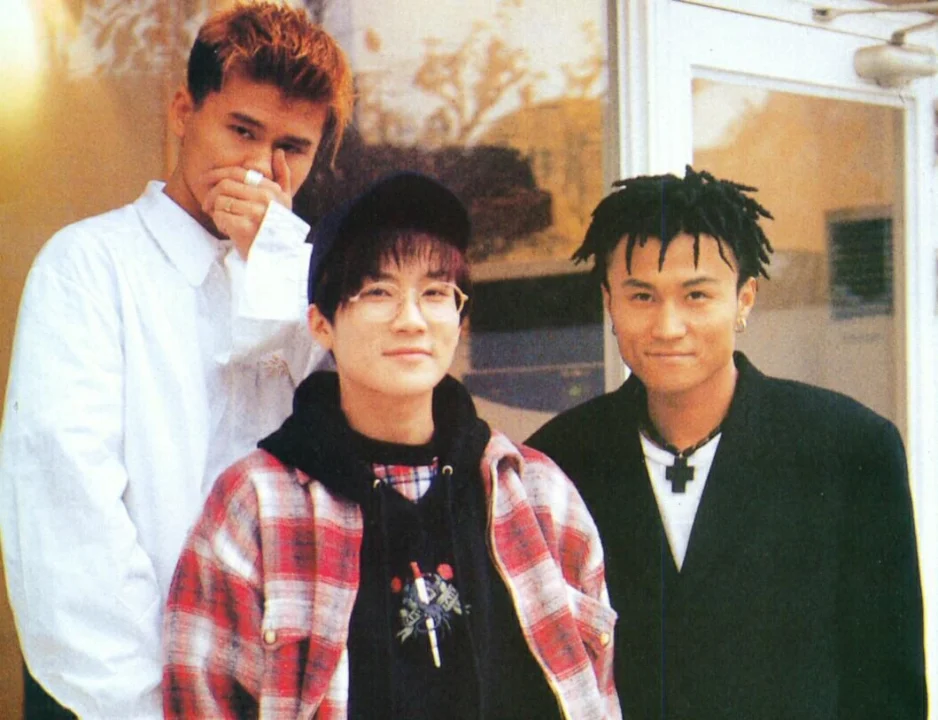
The story of K-Pop as we know it starts in 1992. A trio called Seo Taiji and Boys debuted on a Korean talent show. Look, they performed “Nan Arayo (I Know).” The track fused New Jack Swing, hip-hop beats, and rap with Korean pop. The talent show judges reportedly gave them low scores. Yet the Korean public disagreed violently. The song topped charts for a then-record 17 weeks. So South Korean pop music was never the same.
What Seo Taiji did wasn’t subtle at all. He had studied American hip-hop and R&B. He took its rhythms, its fashion, its attitude, and dropped that energy into a Korean context. The group’s dance moves came from the same street dance traditions that hip-hop had popularized globally. Their fashion, baggy pants, backward caps, oversized jackets, was borrowed directly from early 90s hip-hop style. Here’s the thing. Most importantly, Seo Taiji brought rap as a real way to rap in Korean popular music. That simply did not exist in the mainstream before him.
How Entertainment Empires Were Built on Hip-Hop’s Blueprint
This was borrowing at the deepest level. Seo Taiji and Boys did not just sample a hip-hop beat for a single track. They used hip-hop as the whole damn blueprint for an entirely new genre. The music companies that would come to define K-Pop all built their models with this template in mind. Look, SM Entertainment was founded in 1995, YG Entertainment in 1996, JYP Entertainment in 1997. Yang Hyun-suk, the founder of YG Music, was himself a member of Seo Taiji and Boys. So the connection between K-Pop’s industry machine and hip-hop’s style influence isn’t a coincidence. It’s baked in.
The Training System Meets the Cipher
One of K-Pop’s most distinctive features is its trainee system. Aspiring idols spend years, sometimes from childhood, learning to sing, dance, rap, and perform before ever debuting. This system has no real equivalent in hip-hop. Hip-hop has always prized being real and street cred. The idea is that talent comes from lived life, not corporate training. Yet the skills these trainees are taught lean heavily on hip-hop traditions.
Rap Training and the K-Pop Hip-Hop Dance Pipeline
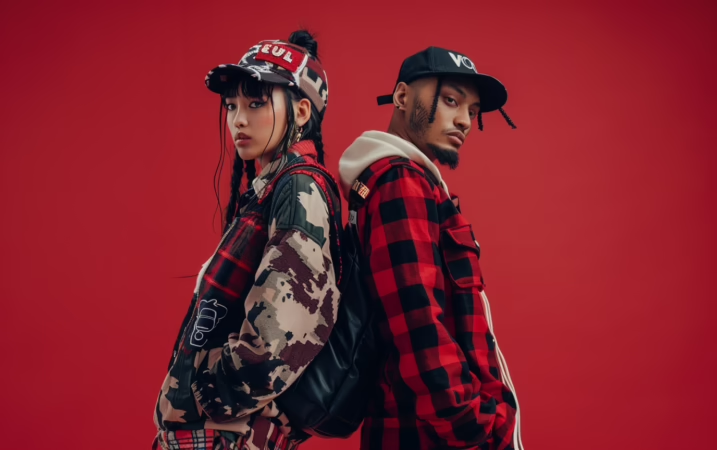
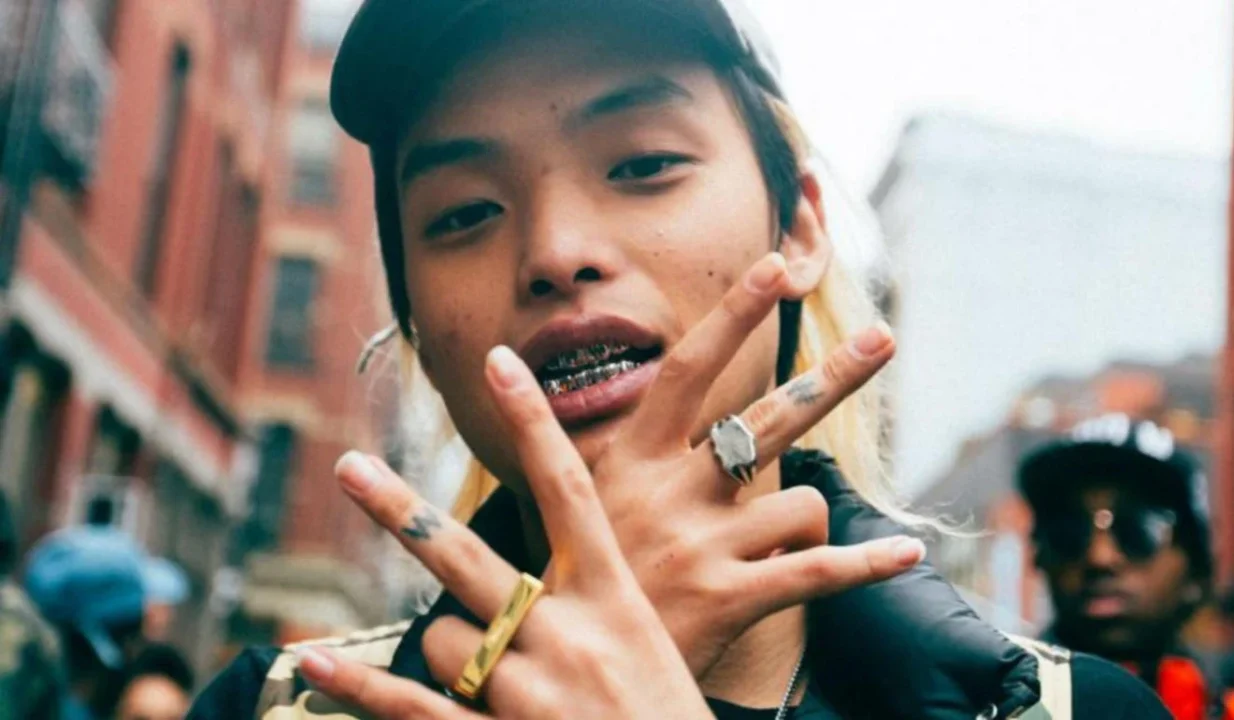
Rap training is standard in virtually every major K-Pop group. Watch any K-Pop group’s lineup and you will find designated rappers. Their entire role within the group is to deliver verses that any hip-hop head would clock. The dancing draws from popping, locking, breaking, and krumping, all forms with deep roots in Black American scenes. The fashion cycles through hip-hop eras with remarkable detail. One comeback might channel 90s boom-bap aesthetics. The next might lean into trap-influenced visuals with grillz, heavy chains, and streetwear.
And this is where shit gets tricky. There is a difference between a Korean artist who genuinely loves hip-hop, has studied its history, and engages with it respectfully, and a corporate music system that strip-mines Black culture for sellable aesthetics. Both things exist in K-Pop at the same time. Flattening that reality into either “K-Pop steals from hip-hop” or “K-Pop is just paying homage” totally misses the point.
G-Dragon: When Individual Respect Meets Systemic Extraction
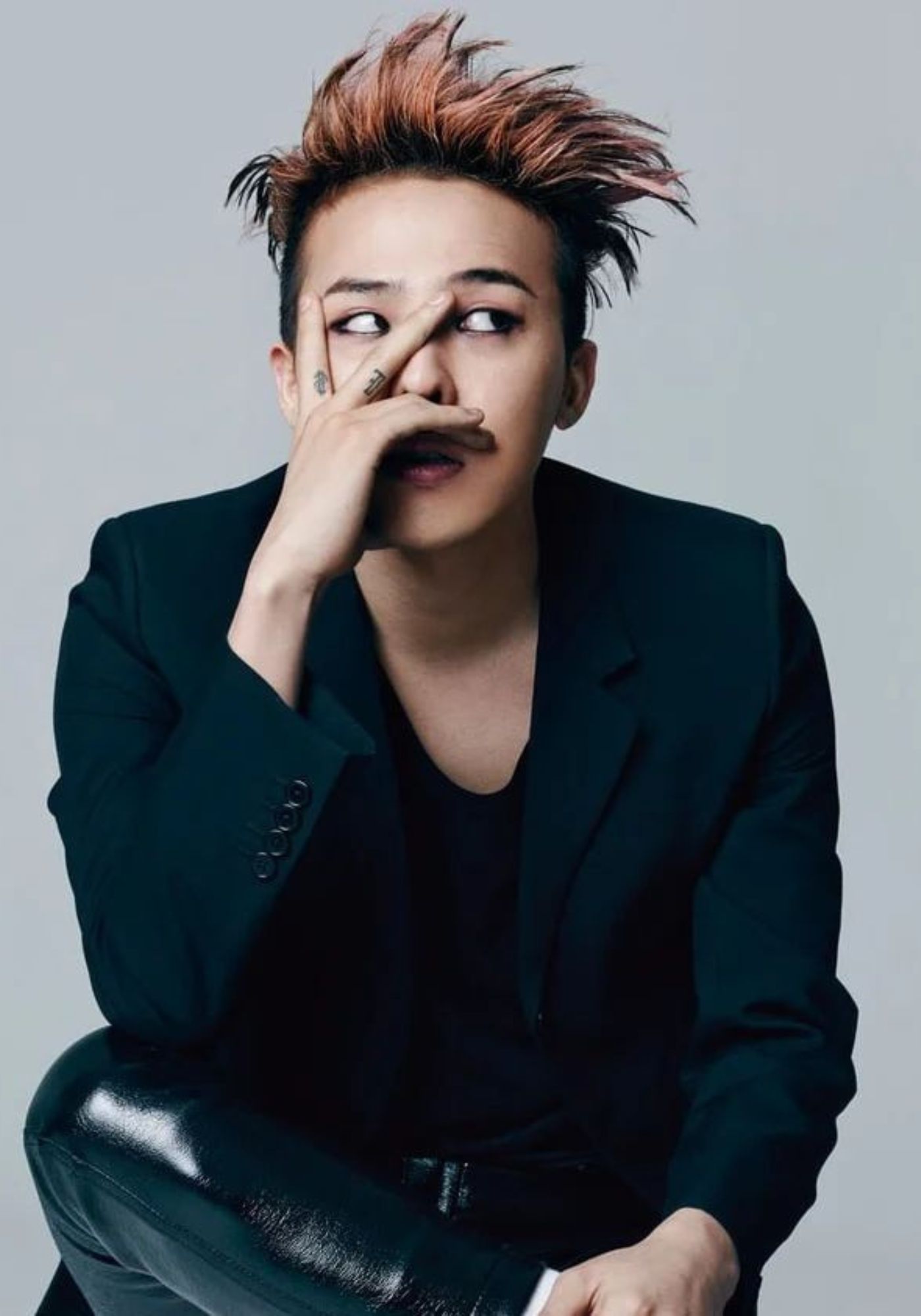
BIGBANG’s G-Dragon is a useful case study. G-Dragon, whose real name is Kwon Ji-yong, debuted with BIGBANG under YG Entertainment in 2006. He quickly became one of K-Pop’s most huge figures. Look, his music drew openly from hip-hop. He rapped, he produced, he worked with American hip-hop artists. He was a fashion icon who moved fluidly between hip-hop aesthetics and high fashion, and he became a fixture at Paris Fashion Week. G-Dragon has spoken openly about his admiration for hip-hop. His work reflects real love for the genre, not just cosplay. Still, the broader system that elevated him has been far less careful. The K-Pop industrial complex deploys Black cultural signifiers without the same care.
BTS, Show Me the Money, and the Hip-Hop Pivot
When BTS debuted in June 2013 under the relatively small Big Hit Music, they were openly marketed as a hip-hop group. Look, their early material, tracks like “No More Dream” and “N.O.”, had hard rap and socially aware lyrics about education pressure and class anxiety. The production drew from current hip-hop sounds. Members RM and Suga came up in the Korean underground rap scene before joining the group. Their technical skill as rappers was a genuine selling point, not a gimmick.
From Underground Ciphers to Stadium Tours
BTS’s path is wild because it traces the exact arc of hip-hop’s influence on K-Pop in miniature. They started with hip-hop cred. Then they gradually broadened their sound to add pop, EDM, and R&B elements. They became the biggest musical act in the world. A pop group whose foundation was built on hip-hop. By the time they were selling out stadiums globally and breaking Billboard records, their sound had evolved far beyond their hip-hop roots. But those roots remained visible in their stage style, their rap line’s continued prominence, and their lyrical approach.
The Korean hip-hop scene itself, distinct from K-Pop, also deserves attention here. Epik High, the trio led by Tablo, debuted in 2003. They built a career that bridged underground hip-hop cred with mainstream Korean success. They rapped in both Korean and English, tackled real lyrical content, and earned respect from hip-hop heads worldwide. Drunken Tiger, often credited as pioneers of Korean hip-hop, had been active since the late 1990s. They helped establish that rap in Korean was not a novelty but a legitimate art form.
Show Me the Money and Keith Ape’s Viral Moment
Show Me the Money, the Korean rap battle show that debuted in 2012 on Mnet, brought hip-hop culture into Korean living rooms in a way nobody had seen before. The show featured underground rappers competing for shine. Established Korean hip-hop artists served as judges and mentors. It became a whole cultural moment in South Korea and launched the careers of numerous artists. It further blurred the line between authentic hip-hop and a product. That tension is one hip-hop has navigated in America for decades.
In 2015, Korean rapper Keith Ape released “It G Ma,” a track that went viral worldwide. It accumulated millions of views and caught the attention of the American hip-hop press. The song, a high-energy trap-influenced banger, was both celebrated and criticized. Some saw it as a sign of hip-hop’s global reach. Others called it derivative of American trap conventions. The track, along with its remix featuring A$AP Ferg, Dumbfoundead, and Waka Flocka Flame, showed both the possibilities and the tensions inherent in k-pop hip-hop cross-cultural exchange.
The Jacking Debate: Where Admiration Meets Extraction
The culture jacking conversation around K-Pop is not theoretical. There are real, specific times that have drawn legitimate criticism. Look, K-Pop idols have worn dreadlocks, cornrows, and other Black hairstyles as fashion accessories. They have used the N-word in lyrics and casual speech, sometimes claiming ignorance of its weight. They have adopted blaccents, exaggerated imitations of Black English, as a whole act. Album concepts have drawn from Black cultural imagery in ways that feel more about taking than respecting.
Here’s the thing. These are not fringe incidents. They’ve happened across basically every major K-Pop company and involving some of the genre’s biggest names. The response from K-Pop’s institutional infrastructure has been, more often than not, weak. It follows a pattern. A brief apology if the backlash is loud enough. Then back to business as usual.
Systemic Extraction, Not Just Individual Missteps
But the conversation cannot stop there. Jacking in this context is not just about just one-off moments. It is about a pattern. The aesthetics, musical techniques, fashion codes, and dance moves of Black culture are extracted, repackaged, and sold by a mostly non-Black industry to a mostly non-Black global audience. In most cases, this happens without giving real credit of where those elements came from. Almost always, the economic benefit does not flow back to the people who made it.
This same dynamic has played out in American music for over a century. From rock and roll to EDM, the pattern repeats. Hip-hop itself has been subject to this pattern within the United States. What makes the K-Pop version distinctive is the distance, both physical and cultural, involved. That distance can make the borrowing feel more jarring. It makes the “I didn’t know” defense at the same time more plausible and less acceptable. In an era of global internet connectivity, not knowing about Black culture at this point is a choice. Full stop.
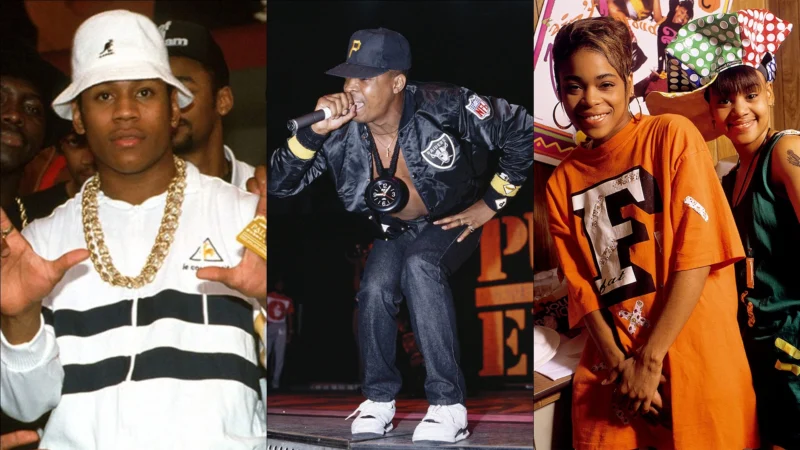
There are also K-Pop artists and fans who engage with this conversation thoughtfully. Some artists have educated themselves. They’ve spoken about hip-hop’s origins with respect and approached cross-cultural collab genuinely. RM of BTS has discussed hip-hop’s influence on his work with apparent sincerity. He has shown awareness of the cultural dynamics at play. The question is, does one person’s good intentions matter when the whole system runs on taking?
What K-Pop Actually Learned from Hip-Hop’s Playbook
Beyond the obvious musical and aesthetic borrowing, K-Pop absorbed several strategic lessons from hip-hop that are worth naming openly.
The Artist-as-Brand Model
First, the power of the brand. Look, hip-hop pioneered the artist-as-brand concept. Not just a musician, but a cultural figure whose influence extends into fashion, language, and attitude. Then K-Pop took this concept and industrialized it to a degree that even hip-hop has rarely achieved. Look, they created idols whose every aspect is managed as a cohesive brand. Music, fashion, social media, parasocial fan relationships, all of it controlled.
Visual Storytelling as Equal to the Music
Second, the power of visuals. Hip-hop music videos were among the first to treat visuals hitting just as hard as the music itself. Think of Missy Elliott’s cinematic ambition. Think of Hype Williams’ spectacles for Busta Rhymes and Nas. Think of Kanye West’s visual storytelling. Then K-Pop elevated this further. They made the music video an essential component of every release, with production values that rival feature films. The choreo becomes as viral as the songs themselves.
Fan Communities as Infrastructure
Third, the fan scene as power. Hip-hop built some of the earliest and most passionate music fan scenes. That legacy stretches from tape trading and mixtape culture to internet-era forums and social media fan bases. Then K-Pop took this model and engineered it into something unprecedented. Organized fan armies have names and coordinated streaming strategies. They can move Billboard charts and trend hashtags globally within hours. The energy is different. But the blueprint of fan-as-participant rather than fan-as-passive-consumer came from hip-hop’s playbook.
Authenticity Narratives, Remixed
Fourth, the embrace of being real narratives. Hip-hop has always valued origin stories. Where you came from, what you overcame, what makes your view unique. K-Pop adapted this through the “debut story” and “trainee struggle” narratives. These give fans an emotional investment in their favorite groups. BTS came from a small company and overcame industry skepticism. That underdog arc mirrors hip-hop careers from Notorious B.I.G. to Kendrick Lamar.
Still, the difference is major. Hip-hop’s being real narratives were rooted in lived life. Poverty, systemic racism, scene struggle. K-Pop’s are often curated by music companies. This is not to say K-Pop artists do not have genuine struggles. But the way those struggles are packaged and marketed is a whole different thing. A rapper writes about their actual neighborhood. That is not the same thing.
Where Do We Go from Here?
The relationship between K-Pop and hip-hop is not going to resolve into a clean narrative. It will remain messy and contested. Every major cross-cultural exchange in pop music history has been. What matters is how that exchange is conducted going forward.
Real collab is one path. Korean artists can work directly with Black producers, choreographers, and songwriters. When that collab gets credit and fair pay, the exchange produces something genuinely valuable. The problem arises when the collab is invisible. That happens when Black creatives work behind the scenes. Korean faces get the credit on camera.
Education is another. Here’s the thing. K-Pop companies have the resources to educate their trainees about the cultural origins of the styles they are learning. Here’s the thing. A rapper who understands that the art form they are practicing came from Black Americans in the Bronx in the 1970s as a response to systemic neglect will approach that art form differently. Someone who thinks of rap as just another skill to master in training won’t carry that same weight. Context changes behavior.
And accountability? That matters too. Jacking will continue. The incentive structures haven’t changed. But the response gotta be more than a corporate apology. It needs to involve actual engagement with the criticism. It needs actual changes in practice. And it needs actual investment in the scenes whose culture is being used.
Real talk, K-Pop built a global empire. That empire’s foundations are, in major part, k-pop hip-hop fusion and hip-hop’s cultural innovations. Acknowledging that is not an attack on K-Pop. It is the bare minimum for the genre’s integrity. You cannot build a house on someone else’s land and then pretend the land was always yours. But you can own up to the debt, pay the rent, and build something that honors where you came from. That’s the conversation K-Pop needs to keep having. Loud and in public. As long as the music exists.
Frequently Asked Questions
K-Pop as a modern genre really started with Seo Taiji and Boys’ 1992 debut, which mixed hip-hop beats, rap, and New Jack Swing into Korean pop music. While K-Pop has evolved to encompass many genres, its core style, rap, street dance, fashion, came straight from hip-hop and R&B. K-Pop is its own distinct genre, but hip-hop was a key ingredient.
Yes. When BTS debuted in June 2013, they came out as a hip-hop group. Members RM and Suga came up in the Korean underground rap scene, and the group’s early releases had hard rap and socially aware lyrics. Over time, BTS broadened their sound to include pop, EDM, and other genres, but their hip-hop foundation remained a core part of their identity, mainly through their rap line.
This is an ongoing and legitimate debate. Specific incidents, such as K-Pop idols wearing Black hairstyles, using the N-word, or adopting exaggerated Black English, have drawn real criticism. Critics argue that the K-Pop industry over and over extracts Black cultural aesthetics for commercial gain without adequate acknowledgment or pay. Defenders note that single artists often engage with hip-hop out of real love. Both views have merit, and the convo works better when we look at the system, not just one person’s intent.
Show Me the Money is a Korean rap battle show that started in 2012 on Mnet. The show puts underground rappers against each other, with big-name Korean hip-hop artists as judges. It blew up in South Korea and brought hip-hop to the mainstream and put a lot of Korean rappers on the map. The show also blurred the line between underground hip-hop and mainstream K-Pop even more.
K-pop hip-hop influence spread globally through several intersecting forces. The Korean music industry’s trainee system baked in hip-hop elements, rap, street dance, and urban fashion, into the DNA of virtually every major idol group from the 1990s onward. Social media and platforms like YouTube then pushed K-Pop to global audiences who may not have realized how deeply hip-hop shaped what they were watching. Collaborations between Korean and American artists, viral moments like Keith Ape’s “It G Ma,” and battle shows like Show Me the Money further cemented the connection. Basically, hip-hop’s rhythms, aesthetics, and attitude became the go-to creative language of Korean pop, and when K-Pop went global, that influence traveled with it.