This article is part of our complete guide to How Hip-Hop Changed Everything.
There’s this myth, usually peddled by people who’ve never been to a barbershop, that the entire business of hip-hop was an accident, that artists just stumbled into money. Like Jay-Z woke up one day and accidentally became a billionaire.
Nothing could be further from the truth. From the earliest days of the genre, hip-hop has been inseparable from entrepreneurship. DJs built sound systems and charged admission to park jams. MCs sold tapes out of car trunks. Producers bartered beats for studio time. The hustle was never a side effect of hip-hop, it was foundational to it. What changed over the decades was not the presence of business instinct, it was the scale at which it operated.
Today, hip-hop artists sit atop media empires, spirits brands, fashion houses, and technology companies. The genre has produced billionaires, reshaped consumer markets, and fundamentally altered how the entertainment industry thinks about artist-owned intellectual property. This is the arc, from selling tapes out of trunks to sitting across from Fortune 500 boards, and how the business of hip-hop built a playbook that Harvard Business School couldn’t have written if it tried.
The Independent Label Revolution: Def Jam, Death Row, and No Limit
Before hip-hop artists could become moguls, they first had to prove that the business of hip-hop could sustain itself at all. The major labels of the early 1980s were skeptical. Radio was hostile. MTV initially refused to play rap videos. So the earliest hip-hop entrepreneurs did what entrepreneurs always do when gatekeepers refuse them entry: they built their own gates.
Def Jam: The Dorm-Room Blueprint
Def Jam Recordings, founded in 1984 by Russell Simmons and Rick Rubin, is the template for everything that followed. Operating out of Rubin’s NYU dorm room with a few hundred dollars, Def Jam proved that hip-hop could be packaged, marketed, and sold at scale without compromising the music. LL Cool J, the Beastie Boys, and Public Enemy became not just artists but proof of concept.
More importantly, Def Jam demonstrated that a label built around hip-hop culture, not a major label dabbling in it, could compete with and eventually outperform the establishment. The label’s distribution deal with Columbia Records gave it major-label reach while preserving creative independence. That model would be imitated for decades.
Death Row: Cultural Earthquake
On the West Coast, Death Row Records took a different but equally consequential approach. Founded in 1991 by Suge Knight, Dr. Dre, The D.O.C., and Dick Griffey, Death Row was less a label than a cultural event. Dr. Dre’s “The Chronic” in 1992 and Snoop Dogg’s “Doggystyle” in 1993 did not just sell millions of copies, they shifted the entire center of gravity in hip-hop from New York to Los Angeles.
Death Row’s business practices were, to put it diplomatically, controversial. Allegations of artist exploitation and intimidation would eventually destroy the label. Suge Knight’s legal troubles led to its downfall. Still, Death Row’s cultural impact was undeniable. Its commercial success, driven by Dr. Dre’s production genius, proved that hip-hop could dominate mainstream pop culture, not just exist alongside it.
Master P: The Vertical Integration King
Then there was Master P, who built No Limit Records into something that business schools should study. Operating out of Richmond, California, and later New Orleans, Percy Miller understood vertical integration before most hip-hop entrepreneurs had heard the term. He manufactured his own CDs, handled his own distribution, and released albums at a pace that overwhelmed the market.
At its peak in the late 1990s, No Limit was reportedly worth over $100 million. Master P kept ownership of his masters, negotiated an unprecedented distribution deal with Priority Records that gave him roughly 85 cents on every dollar, and diversified into film, clothing, real estate, and sports management. While the music press often dismissed No Limit’s output as formulaic, Master P was quietly building one of the most efficient independent entertainment companies in America.
Jay-Z and the Blueprint for the Hip-Hop Business Mogul
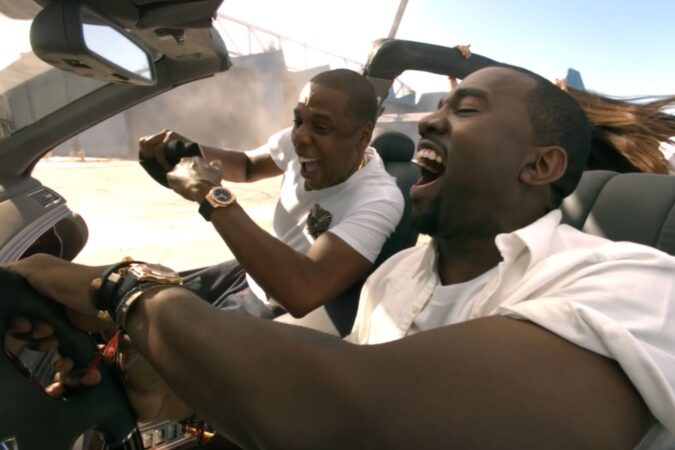
If the independent labels proved that hip-hop could be big business, Jay-Z proved that a single artist could become the business. Shawn Carter’s trajectory from Marcy Projects in Brooklyn to the upper echelons of American commerce is not just a hip-hop story, it is one of the great entrepreneurial narratives in modern capitalism.
Roc-A-Fella and Rocawear
It started with Roc-A-Fella Records, which Jay-Z co-founded in 1995 after being turned down by major labels. The lesson was immediate and permanent: if no one will invest in you, invest in yourself. Roc-A-Fella’s success, driven by Jay-Z’s own multiplatinum albums, gave him the leverage and capital to think bigger.
Rocawear, the clothing line he co-founded, reportedly generated over $700 million in annual revenue at its peak before Jay-Z sold his stake in 2007 for an estimated $204 million. And that was just the beginning.
Roc Nation: Full-Spectrum Empire
The formation of Roc Nation in 2008 signaled Jay-Z’s transformation from rapper-with-businesses to full-spectrum entertainment mogul. Roc Nation is not just a record label. It is a management company, a publishing house, a sports agency, a touring and production company. Its roster has included some of the biggest names in music and sports.
Jay-Z understood something that took the rest of the industry years to grasp: the real value in entertainment is not in any single product but in the infrastructure that creates, distributes, and monetizes creative work.
Spirits, Tidal, and Billionaire Status
The spirits portfolio elevated things further. Armand de Brignac champagne, the gold-bottled “Ace of Spades” that became a fixture in hip-hop videos, saw Jay-Z acquire a majority stake and later sell a 50% interest to LVMH’s Moet Hennessy in a deal reportedly valuing the brand at approximately $630 million. D’Usse cognac, a joint venture with Bacardi, became one of the fastest-growing spirits brands in the United States. These were not celebrity endorsements, they were ownership stakes that generated wealth independent of album sales or touring.
In 2015, Jay-Z acquired Tidal, the streaming service, for approximately $56 million, positioning it as an artist-owned alternative to Spotify and Apple Music. The platform struggled commercially, and its market share never matched its cultural cachet. But when Jay-Z sold a majority stake to Square (now Block) in 2021, the deal reportedly valued Tidal at $297 million. Even the “failure” turned a profit.
In 2019, Forbes declared Jay-Z hip-hop’s first billionaire, a milestone that would have been unthinkable when Def Jam was operating out of a dorm room.
Dr. Dre, Beats, and the $3 Billion Exit
If Jay-Z’s empire is a portfolio, diversified, strategic, built over decades, then Dr. Dre’s biggest business play was a single, devastating knockout punch.
Selling Identity, Not Specs
Beats by Dre, the headphone and audio brand Dre co-founded with legendary music executive Jimmy Iovine around 2006, did not just succeed as a product. It rewrote the rules of celebrity branding and consumer electronics in one stroke.
The headphone market before Beats was dominated by companies that marketed on technical specifications: frequency response, impedance, driver size. Dre and Iovine understood that most consumers did not buy headphones based on specs. They bought headphones based on identity. Beats were fashion accessories as much as audio equipment, status symbols that communicated taste and cultural affiliation. The bass-heavy sound signature was tuned for hip-hop and pop, not for audiophile purists, and that was entirely the point.
The Apple Acquisition
When Apple acquired Beats in 2014 for approximately $3 billion, it was not just buying a headphone company. It was buying a cultural bridge, a way to connect Apple’s technology ecosystem to the music culture that Beats had captured. The deal made Dr. Dre one of the wealthiest figures in entertainment history.
More importantly, it validated something that hip-hop entrepreneurs had been arguing for years: cultural influence has quantifiable economic value, and the people who create that influence deserve to own the upside.
What made the Beats deal particularly significant was its scale. This was not a licensing agreement or a sponsorship. It was a multi-billion-dollar acquisition by the most valuable company on Earth. It forced corporate America to take the business of hip-hop seriously as a source of real, defensible business value, not just marketing buzz.
Brand Partnerships and the New Business of Hip-Hop Endorsements
Poll Results
Poll: Cole World, K. Dot, Drizzy, Who’s the Best in the Triumvirate

Cast your vote
Cole World, K. Dot, Drizzy, Who’s the Best in the Triumvirate
Cast your vote
Poll: Cole World, K. Dot, Drizzy, Who’s the Best in the Triumvirate
From Flat Fees to Equity Stakes
The old model of celebrity endorsement was simple and, frankly, exploitative. A company paid an artist a flat fee to appear in an advertisement. The artist got a check. The company got the cultural credibility. The artist had no ownership, no equity, no participation in the upside if the campaign succeeded. Hip-hop artists, perhaps because so many of them came from communities where exploitation was a daily reality, were among the first to reject this model systematically.
The story of 50 Cent and Vitaminwater is instructive. Curtis Jackson did not simply endorse the beverage brand. He took an equity stake and helped develop a flavor (Formula 50). When the Coca-Cola Company acquired Glaceau, Vitaminwater’s parent company, in 2007, 50 Cent reportedly earned approximately $100 million or more from his stake. The exact figure has been debated, but the principle was clear: ownership beats endorsement, every time.
Ownership-First Mentality
This ownership-first mentality rippled through the culture. Diddy built Ciroc vodka into a juggernaut through a reported profit-sharing arrangement with Diageo that went far beyond a standard endorsement deal. Rick Ross partnered with Wingstop as a franchisee, not a spokesperson. Nipsey Hussle invested in the Crenshaw neighborhood where he grew up, purchasing commercial real estate and opening businesses in a deliberate strategy of community wealth-building that resonated far beyond hip-hop.
Travis Scott and Cultural Gravity
Travis Scott’s September 2020 partnership with McDonald’s represented a newer evolution of this model. The “Travis Scott Meal” was not just a marketing campaign, it was a cultural moment that caused supply chain disruptions at McDonald’s locations across the country. Customers were not just buying a Quarter Pounder with specific toppings. They were buying participation in a cultural event.
The deal reportedly included merchandise, which Scott’s team controlled, and it opened the door for subsequent McDonald’s partnerships with other artists. Scott demonstrated that an artist with sufficient cultural gravity could reshape the operations of a global corporation, even temporarily.
A Fundamental Shift in Leverage
What all of these deals share is a fundamental shift in leverage. Early hip-hop artists were often exploited by labels and brands that understood the music’s commercial potential better than the artists themselves. The current generation has access to decades of cautionary tales, from TLC’s bankruptcy despite selling millions of albums to the countless artists who signed away their publishing rights for a fraction of their value, and they are negotiating accordingly.
Ownership, Masters, and the Fight for Intellectual Property
No discussion of the business of hip-hop is complete without addressing the fight over masters, the original recordings from which all copies, streams, and licenses are derived. Whoever owns the masters controls the revenue. For most of hip-hop’s history, that meant the labels.
The Economics of Master Ownership
The economics are stark. An artist signed to a traditional major-label deal might receive 15 to 20 percent of revenue from their recordings, with the label retaining ownership of the masters. An independent artist who owns their masters keeps the vast majority. Over a career spanning decades, this difference amounts to tens or hundreds of millions of dollars.
Master P understood this early, which is why No Limit’s deals were structured to keep ownership in-house. Jay-Z has spoken publicly about the importance of ownership throughout his career. The issue gained mainstream visibility when prominent artists across genres began publicly challenging their label contracts and advocating for systemic change in how record deals are structured.
Streaming Changed the Math
The streaming era has intensified this fight. In the physical and download eras, catalog music had a limited commercial lifespan. In the streaming era, a classic album generates revenue essentially in perpetuity. Owning your masters is no longer just a matter of principle, it is a financial position that appreciates over time, more like real estate than a depreciating asset.
The rise of independent distribution platforms like DistroKid, TuneCore, and AWAL has made it easier than ever for artists to release music without surrendering ownership. The most successful hip-hop artists are using their leverage to negotiate deals that would have been unthinkable a generation ago: short-term licensing agreements instead of permanent transfers, joint ventures where the artist retains ownership after the deal expires, and 360-degree deals where the expanded revenue sharing at least comes with commensurate investment in the artist’s career.
The Legacy and What Comes Next
The business of hip-hop is no longer a subcategory of the music industry. It is a force that touches nearly every sector of the consumer economy: fashion, spirits, technology, food and beverage, sports, real estate, media, and finance. The genre’s entrepreneurs have not just built wealth. They have built a template for how artists in any genre, in any medium, can leverage cultural influence into durable economic power.
What makes this remarkable is the context. Many of hip-hop’s most successful entrepreneurs came from communities that were systematically denied access to capital, education, and professional networks. They built empires not because the system supported them, but in spite of the fact that it actively worked against them. In this sense, the business of hip-hop is a story about American capitalism at its most contradictory: a system that excluded Black entrepreneurs from its mainstream institutions and then watched as those entrepreneurs built parallel institutions that outperformed the originals.
The next generation will likely be shaped by Web3, artificial intelligence, direct-to-consumer models, and evolving intellectual property frameworks. But the fundamental principle will remain the same, the one that Master P understood in the 1990s, that Jay-Z codified in the 2000s, and that every aspiring artist-entrepreneur learns eventually: own your work, control your distribution, and never let someone else build wealth on your cultural labor without getting your fair share.
The mixtape era is over. The empire era is here. And hip-hop built the blueprint.
Frequently Asked Questions About the Business of Hip-Hop
In 2019, Forbes declared Jay-Z hip-hop’s first billionaire, citing his extensive portfolio of business interests including Roc Nation, Armand de Brignac champagne, D’Ussé cognac, his stake in Tidal (which he later sold to Square/Block), and various other investments and real estate holdings. His wealth was built primarily through ownership stakes and equity positions rather than music sales alone.
Apple acquired Beats Electronics, the company co-founded by Dr. Dre and Jimmy Iovine around 2006, for approximately $3 billion in 2014. At the time, it was Apple’s largest acquisition ever. The deal included both the Beats headphone hardware business and the Beats Music streaming service, which Apple later integrated into what became Apple Music.
Masters are the original recordings from which all copies, streams, and licenses are derived. Whoever owns the masters controls the revenue generated by the music. In the streaming era, classic albums can generate revenue essentially in perpetuity, making master ownership an appreciating asset similar to real estate. Artists who own their masters keep the vast majority of their recording revenue, while those on traditional deals may only receive 15 to 20 percent. Hip-hop entrepreneurs like Master P and Jay-Z have been vocal advocates for artist ownership.
Rather than simply endorsing Vitaminwater, 50 Cent negotiated an equity stake in the brand and helped develop a flavor called Formula 50. When the Coca-Cola Company acquired Glacéau, Vitaminwater’s parent company, in 2007, 50 Cent reportedly earned approximately $100 million or more from his ownership position. The deal became a landmark example of why hip-hop artists increasingly pursue ownership stakes over flat endorsement fees.
The business of hip-hop fundamentally shifted how artists negotiate with corporations. Rather than accepting flat endorsement fees, hip-hop entrepreneurs pioneered ownership-stake deals (like 50 Cent with Vitaminwater and Diddy with Ciroc), artist-owned labels and distribution (like Master P’s No Limit), and full-spectrum entertainment companies (like Jay-Z’s Roc Nation). These models proved that cultural influence has quantifiable economic value, and they’ve been adopted across the entertainment industry as the standard for how artists monetize their brands.