This article is part of our complete guide to How Hip-Hop Changed Everything.
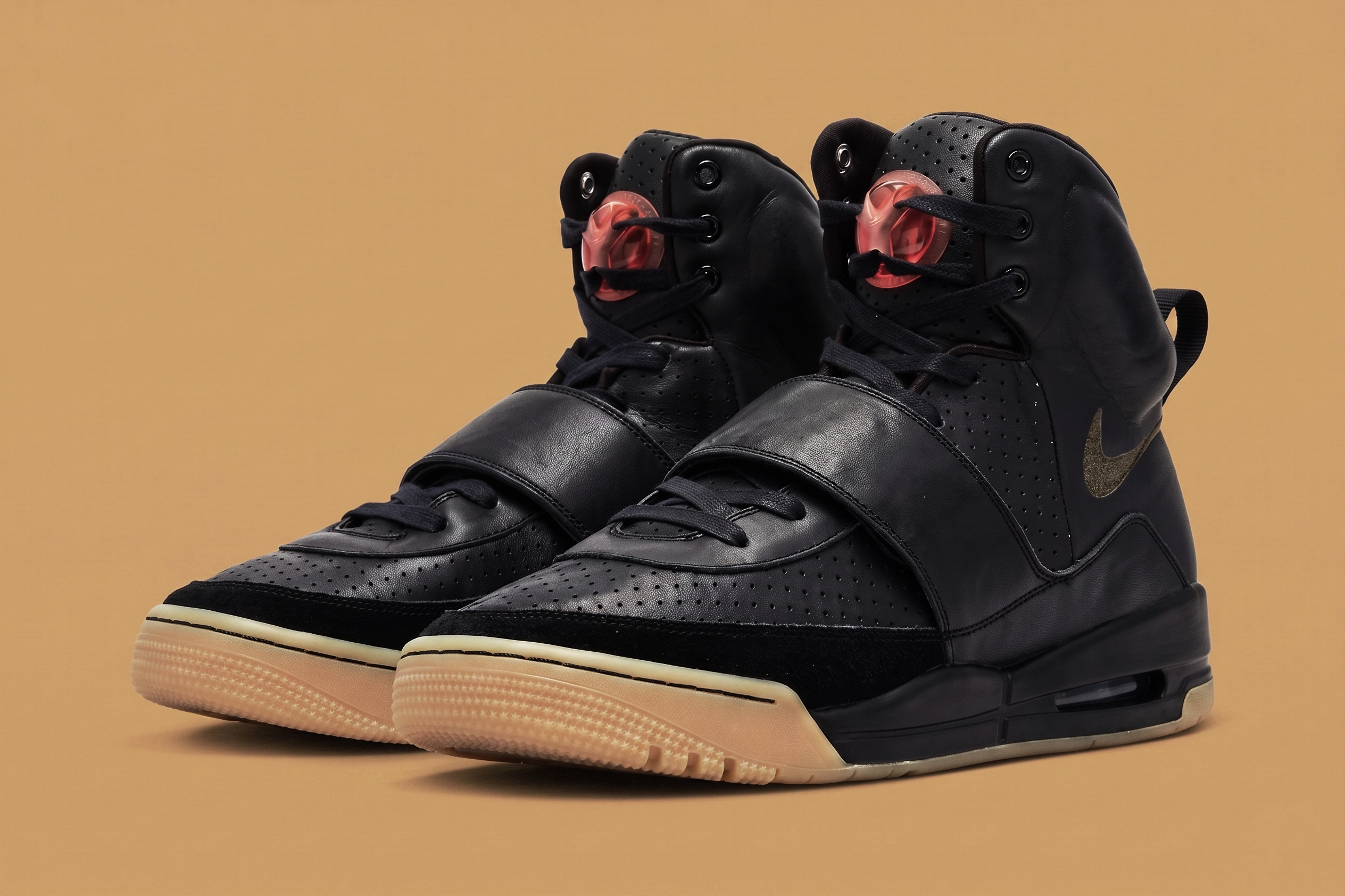
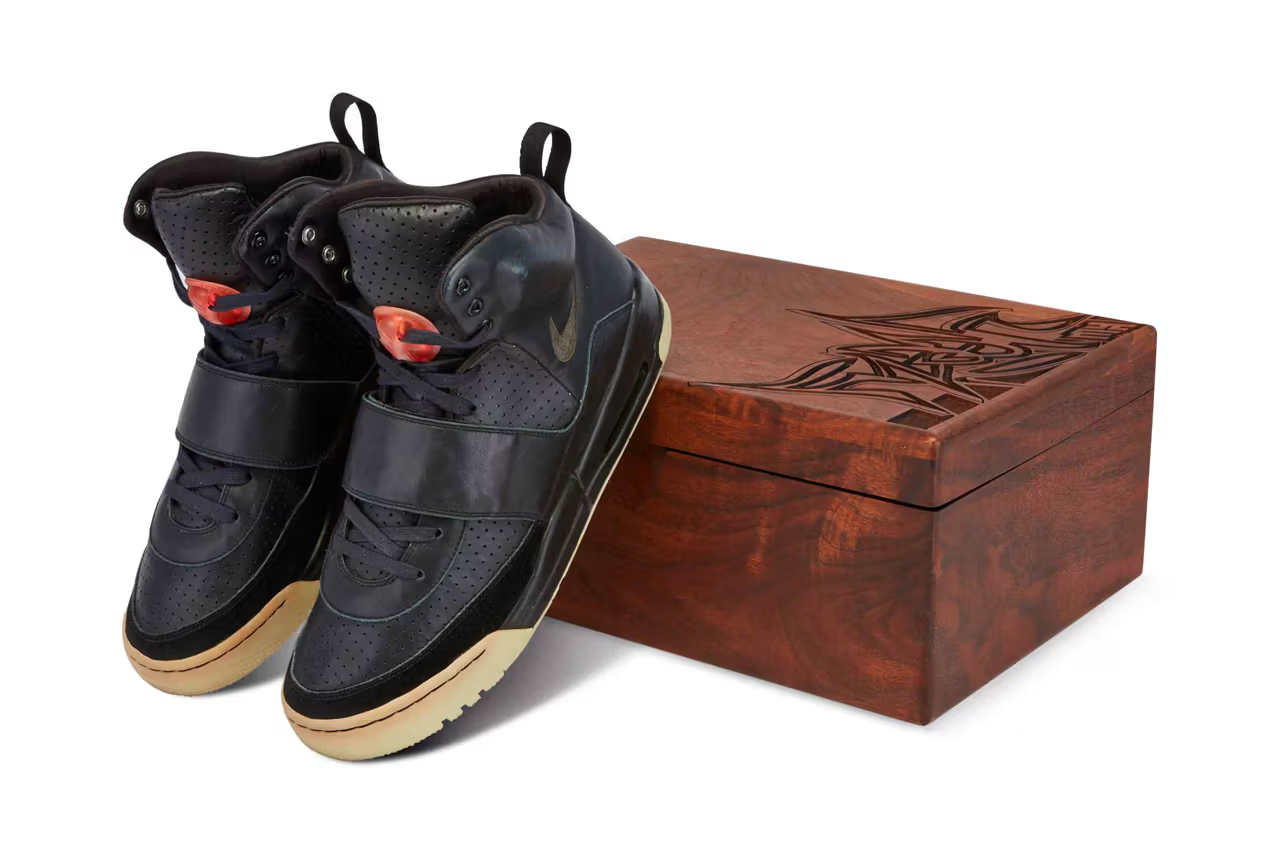
In April 2021, and I need you to sit down for this, a pair of Nike Air Yeezy 1 prototypes sold at Sotheby’s for $1.8 million. Those were the ones Kanye West wore at the 2008 Grammy Awards. That is not a typo. One point eight million dollars for a pair of sneakers.
That sale set a record for the most expensive sneakers ever sold at auction. That number would have sounded like science fiction to the kids lining up outside Foot Locker in the early 2000s.
But that $1.8 million price tag is not an anomaly. It is the logical endpoint of a trajectory that began when hip-hop turned sneakers into cultural currency. The market figured out there was serious money in the gap between retail price and what people were willing to pay.
Today the sneaker resale market is worth upwards of $6 billion globally. Some analysts project it could reach $30 billion by 2030, according to Cowen & Company. This industry did not meaningfully exist twenty years ago. It was built almost entirely on the cultural value that hip-hop gave to footwear.
Poll Results
Poll: Cole World, K. Dot, Drizzy, Who’s the Best in the Triumvirate

Cast your vote
Cole World, K. Dot, Drizzy, Who’s the Best in the Triumvirate
Cast your vote
Poll: Cole World, K. Dot, Drizzy, Who’s the Best in the Triumvirate
Run-DMC and the Birth of the Sneaker Resale Economy
“My Adidas” and the $1 Million Handshake
The origin story starts in 1986, when Run-DMC (Joseph “Run” Simmons, Darryl “D.M.C.” McDaniels, and Jason “Jam Master Jay” Mizell) released “My Adidas.” The track celebrated their Adidas Superstars as symbols of identity, style, and street credibility.
This was not a marketing exercise. It was genuine cultural expression. Run-DMC wore Adidas because that was what they wore. The way they rocked them, unlaced with the tongue out, was how their community rocked them. The song simply reflected that reality.
Then something happened. Adidas executive Angelo Anastasio attended a Run-DMC concert. There, he witnessed the group ask the audience to hold up their Adidas. Thousands of shoes went into the air. Shortly after, Adidas signed Run-DMC to an endorsement deal worth approximately $1 million. It was the first major deal between a hip-hop act and an athletic brand.
Why That Deal Changed Everything
This was groundbreaking for several reasons. First, it showed that hip-hop artists could sell products the way athletes could. Cultural influence translated into commercial power. Second, it established the connection between hip-hop and sneakers, a connection that would become one of the most lucrative in consumer culture.
And third, it proved that authenticity mattered. Run-DMC didn’t take money to promote something they didn’t use. They promoted a product they already loved. That organic relationship is what made the endorsement credible.
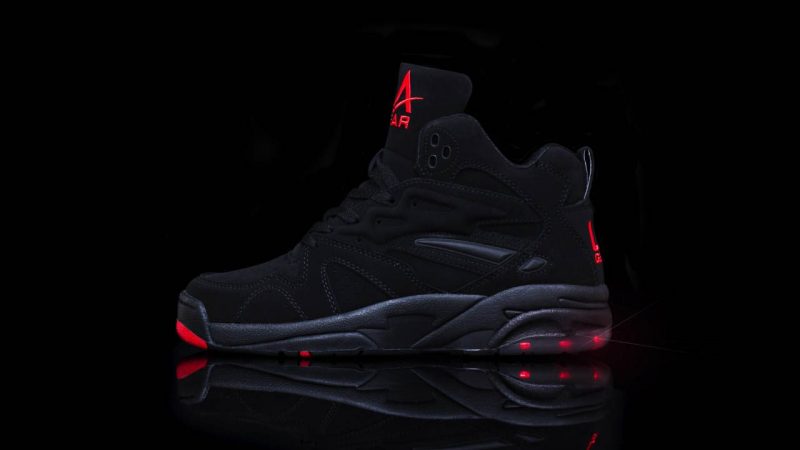
That Adidas deal was the seed. What grew from it took decades to mature. But every sneaker collaboration, every limited release, every resale markup traces back to three guys from Hollis, Queens, who loved their shell-toes enough to write a song about them.
The Jordan Effect and the Rise of Sneaker Resale Hype
From the Court to the Corner
While Run-DMC opened the door, it was the Air Jordan line that built the framework. Michael Jordan signed with Nike in 1984. Then the Air Jordan 1 debuted in 1985. Although originally designed for basketball, hip-hop culture adopted them as streetwear almost immediately.
By the late 1980s, Jordans had become status symbols. This was especially true in urban, predominantly Black neighborhoods. In those communities, sneakers were one of the most visible markers of personal style.
The Economics of Hype
Hip-hop’s relationship with Jordans was symbiotic. Rappers wore them in music videos and referenced them in lyrics. That visibility reinforced the shoes’ cultural cachet. Demand surged, popular models sold out fast, and the conditions for a resale market emerged.
The basic logic of sneaker resale was already operating in the 1990s. People bought Jordans at retail and flipped them for markups in schoolyards and barbershops. Then platforms like eBay brought this hustle online.
Over time, Nike began engineering scarcity deliberately. The “limited release” model, producing fewer pairs than demand warranted, became a core strategy. Later, Nike’s SNKRS app formalized this approach. It turned sneaker drops into cultural events that no ad budget could replicate.
The Dark Side of Scarcity
The violence that sometimes accompanied sneaker releases cannot be ignored. Reports of fights and robberies over limited-release sneakers marked a dark chapter. These incidents were disproportionately covered in Black communities and used to pathologize sneaker culture.
In reality, the situation was more complex. Manufactured scarcity, aggressive marketing, and genuine economic desperation combined to create predictable conflict. The responsibility lay with corporations that engineered scarcity and with the systemic conditions that made sneakers one of the few accessible status symbols in underserved communities.
StockX, GOAT, and the Formalization of Sneaker Resale
For years, the sneaker resale market was informal. It lived in eBay listings, consignment shops, Facebook groups, and in-person deals. Then, in the mid-2010s, platforms emerged that brought financial market infrastructure to sneaker trading.
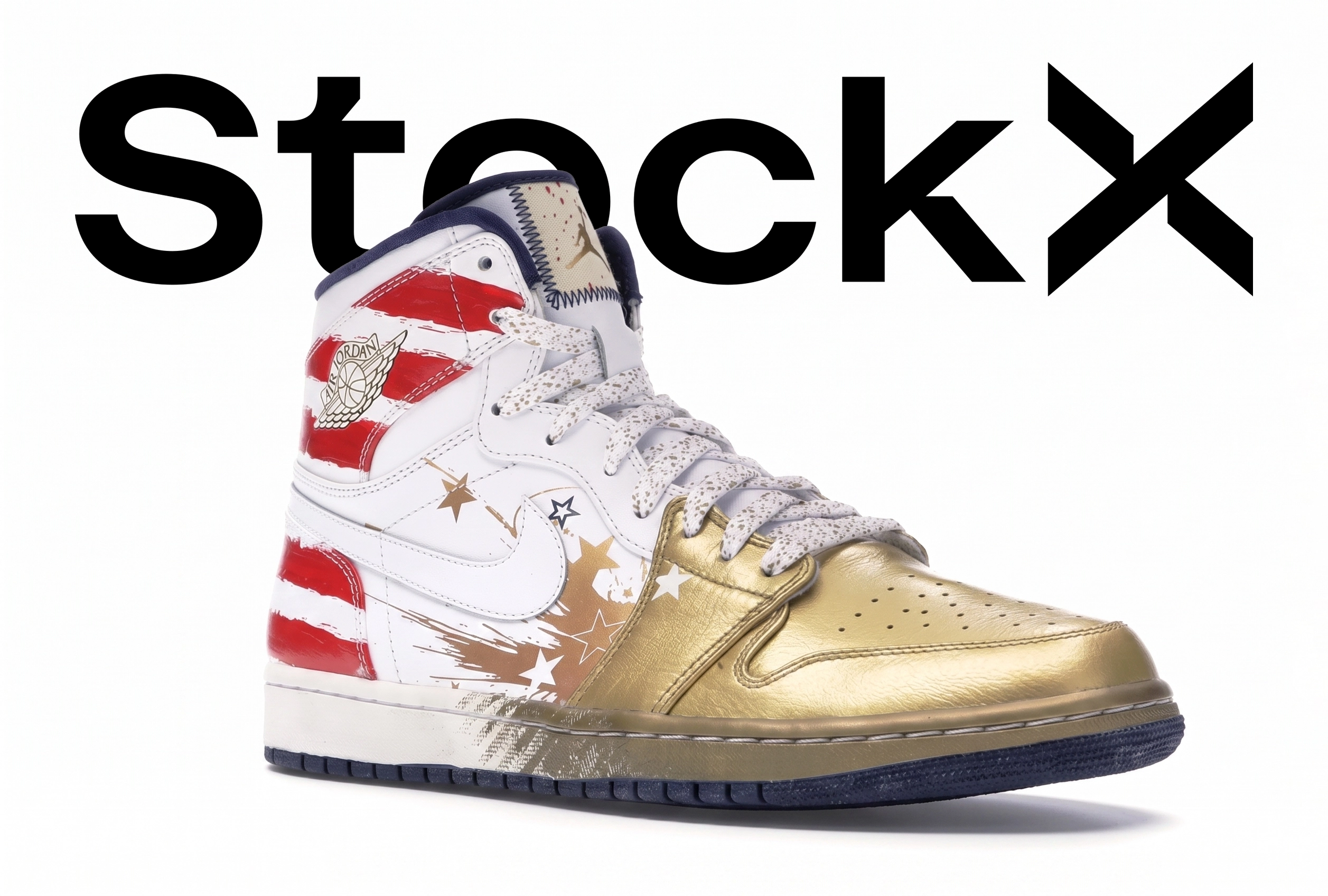
The Stock Market for Sneakers
StockX launched in Detroit around 2015-2016. It used a bid/ask system modeled on stock exchanges. Every pair went through authentication to weed out counterfeits. That was a big deal in a market where fakes were rampant.
GOAT launched in 2015 with authentication services for new and used sneakers. Both platforms grew quickly. They were fueled by the explosion of sneaker culture and the “hypebeast” consumerism that hip-hop created.
How Platforms Transformed the Market
These platforms didn’t just serve the market. They transformed it. For one thing, transparent pricing reduced the information advantage of experienced resellers. Authentication reduced fraud risk. Simple e-commerce checkout expanded the market far beyond hardcore sneakerheads.
The numbers speak for themselves. StockX processed over $1.8 billion in gross merchandise value in 2019. It was valued at approximately $3.8 billion after a 2021 funding round. GOAT Group hit $3.7 billion in a similar round. These are not niche valuations. They reflect a genuine consumer economy.
Bots, Flippers, and the Financialization Problem
Formalization also attracted new players. What had been a community of genuine sneakerheads now drew purely financial actors. People bought sneakers not to wear them but to flip them. Limited releases became investment vehicles.
Bots made the problem worse. This automated software could buy limited-release sneakers faster than any human. Bot operators scooped up entire releases and listed them at markup immediately.
Real sneaker culture suffered. The people who actually wore the shoes found themselves priced out by speculators. A Jordan that retailed for $190 might appear on StockX at $400, $600, or $1,000 within hours. Those prices weren’t about the shoe’s quality. They were about its scarcity value as a tradable asset.
Kanye, Travis, and the Modern Sneaker Resale Collaboration
The Yeezy Phenomenon
No discussion of hip-hop’s sneaker economy is complete without the Yeezy story. Kanye West’s trajectory, from Nike to Adidas to implosion, is a case study. It shows both the power of hip-hop’s sneaker influence and the risks of building a brand on one person.
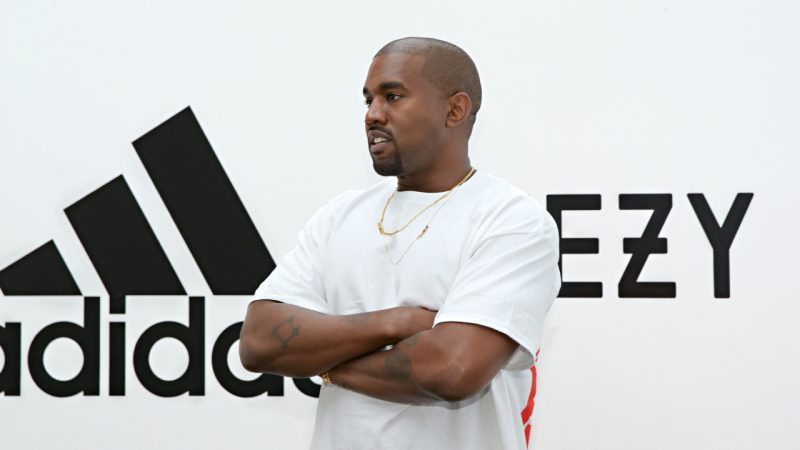
Kanye’s Nike collaboration produced the Air Yeezy 1 (2009) and Air Yeezy 2 (2012). Both became instant grails. They were produced in tiny quantities and commanded massive resale premiums. But Kanye wanted royalties, not just a flat fee. Nike wouldn’t offer that to a non-athlete.
The Adidas Deal and Its Collapse
So Kanye left Nike for Adidas around 2013-2014. The Adidas deal gave him what Nike wouldn’t: royalties on every pair sold, creative control, and room to expand into apparel.
The partnership transformed both parties. For Kanye, it was a fashion empire platform. For Adidas, Yeezy became a juggernaut. At its peak, the line reportedly generated $2 billion in annual revenue.
The Yeezy Boost 350 became one of the era’s best-selling designs. Its distinctive knit upper and Boost sole technology made it a cultural statement and a commercial hit.
Then it collapsed. In October 2022, Adidas terminated the partnership after Kanye’s antisemitic remarks. The company projected a loss of 1.2 billion euros in 2023 revenue. Billions in unsold inventory remained. Adidas eventually sold remaining stock in waves, with proceeds going to anti-discrimination organizations.
The lesson was clear. When the artist becomes toxic, the brand becomes toxic. There is no separating the product from the person when the person is the product’s entire reason for existing.
There’s no separating the product from the person when the person is the product’s entire reason for existing.
Travis Scott: The Other Side of the Coin
Meanwhile, Travis Scott’s Nike collaborations represent the flip side. His Jordan Brand partnerships, which began around 2017, have produced some of the most sought-after sneakers in the resale market.
His reverse-Swoosh Air Jordan 1 became an iconic design. His releases consistently command massive premiums. A pair of Jordans with Travis Scott’s name is worth multiples of the same shoe without it. That’s cultural influence translated directly into dollars.
What Sneaker Resale Tells Us About Hip-Hop’s Power
Cultural Value as Currency
The sneaker resale economy runs on cultural value, and hip-hop is the primary generator of that value. A sneaker’s resale price isn’t about material cost or manufacturing quality. It’s about cultural significance, shaped by hip-hop artists, hip-hop aesthetics, and the style ecosystem that hip-hop created.
A multi-billion-dollar economy depends on the cultural labor of Black artists and communities. The sneaker resale market couldn’t exist without decades of work that transformed sneakers into symbols of identity and artistic expression.
Who Benefits?
And yet the money flows mostly to corporations like Nike and Adidas, platforms like StockX and GOAT, and individual resellers. The communities that created the culture don’t see a penny from the resale market.
There are exceptions, of course. Artist deals with royalties direct some value back. Kanye’s Adidas deal was one of the most lucrative in history because it included royalties. Travis Scott’s Nike deal works similarly. But those are superstar deals. The broader community, the artists, dancers, DJs, and fans whose collective effort sustains sneaker culture, gets nothing from the resale economy.
The Sustainability Question
The resale economy raises questions about sustainability. Economically, a market built on scarcity and hype is volatile. When consumers get fatigued with drops and markups, premiums contract. Already, the market has shown signs of cooling.
Culturally, financialization has changed sneaker culture itself. When sneakers become investment vehicles instead of things people wear, something essential gets lost. The joy was always about the shoes, how they looked, how they felt, what they said about you. When “what will it resell for?” replaces “do I want to wear this?” the culture has been hollowed out by its own success.
Hip-hop created a multi-billion-dollar industry. Whether that industry serves the culture that built it or simply extracts value from it remains the central question. The sneaker resale market is the most visible example of a pattern that defines hip-hop’s relationship with commerce: Black culture creates the value. Everyone else figures out how to monetize it.
Frequently Asked Questions
The global sneaker resale market is estimated to be worth upwards of $6 billion, according to industry analyses. Research from <a href=”https://www.cowen.com/” target=”_blank” rel=”noreferrer noopener”>Cowen</a> & Company has projected the market could grow to approximately $30 billion by 2030. Major platforms like StockX and GOAT have each been valued at approximately $3.7-3.8 billion following funding rounds in 2021, reflecting significant investor confidence in the market’s continued growth.
The most expensive sneakers sold at public auction include the Nike Air Yeezy 1 prototypes worn by Kanye West at the 2008 Grammy Awards, which sold at Sotheby’s for $1.8 million in April 2021. Other high-profile sales include rare Air Jordans and game-worn Nike sneakers that have sold for hundreds of thousands of dollars through auction houses and private sales. The extreme end of the market treats sneakers as collectible art pieces or historical artifacts rather than wearable items.
The first major endorsement deal between a hip-hop act and an athletic brand was the Run-DMC Adidas deal in 1986. After the group released “My Adidas” and demonstrated their cultural influence at concerts, where audiences would hold up their Adidas sneakers during the song, Adidas signed Run-DMC to a deal reportedly worth approximately $1 million. The agreement included a signature sneaker line and established the template for all subsequent hip-hop sneaker partnerships.
Kanye West partnered with Adidas beginning around 2013-2014, with the Yeezy line officially launching in 2015. The partnership was enormously successful, with the Yeezy brand reportedly generating approximately $2 billion in annual revenue at its peak. Adidas terminated the partnership in October 2022 following a series of antisemitic remarks Kanye made publicly. The termination left Adidas with billions of dollars in unsold Yeezy inventory and was projected to cost the company approximately 1.2 billion euros in revenue in 2023. Adidas subsequently sold remaining Yeezy stock in waves, with a portion of proceeds directed to organizations combating discrimination.
The sneaker resale market is a secondary market where limited-edition and high-demand sneakers are bought and sold above their original retail price. Platforms like StockX and GOAT operate like stock exchanges, buyers place bids, sellers set asking prices, and every pair is authenticated before shipping. The market is driven by artificial scarcity (brands produce fewer pairs than demand warrants), cultural hype (largely generated by hip-hop artists and influencers), and collector demand. Resale premiums can range from modest markups to thousands of dollars above retail, depending on the shoe’s cultural significance and rarity.