This article is part of our complete guide to How Hip-Hop Changed Everything.
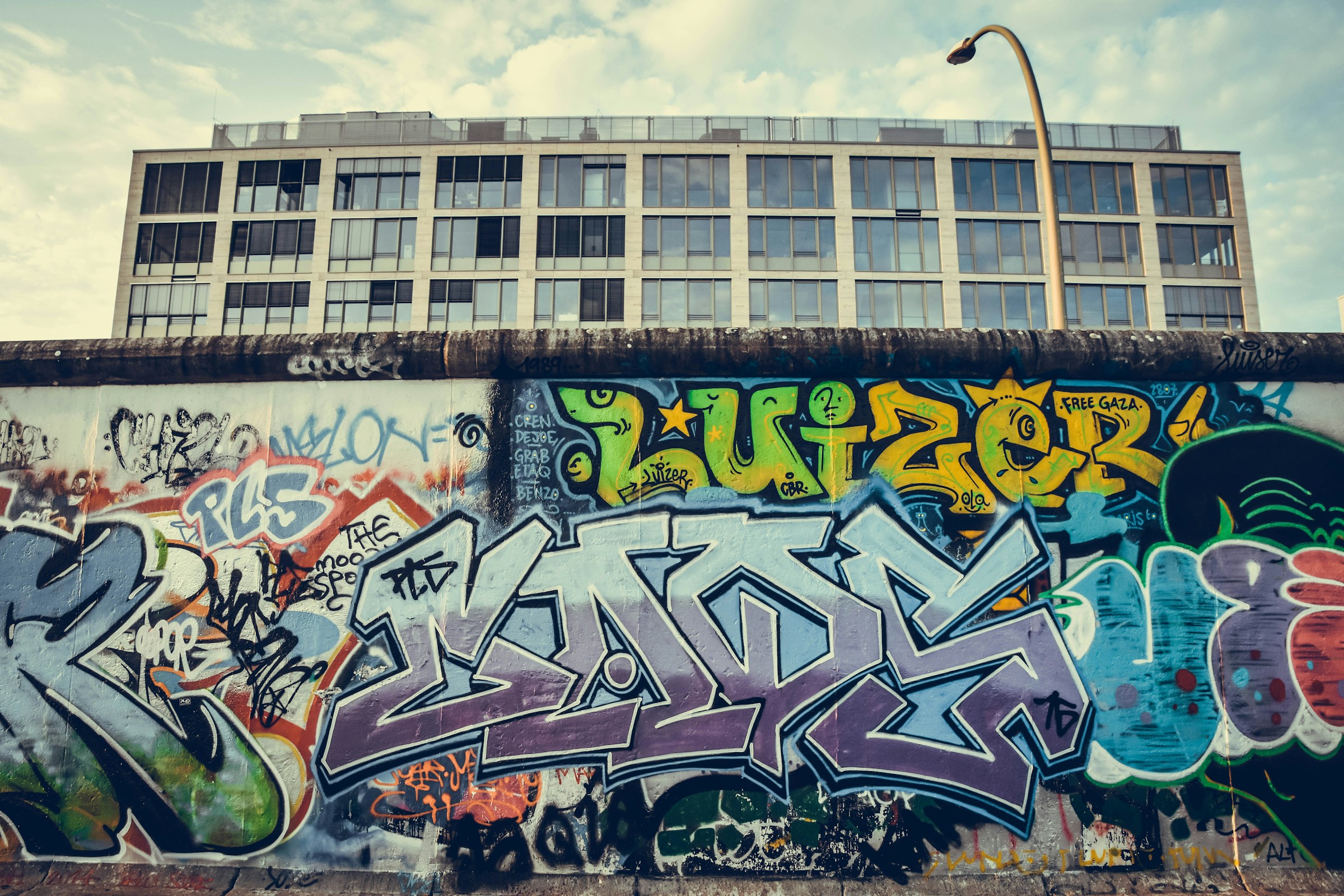
Hip-hop art was never just an afterthought. It was there from day one. From the culture’s inception in the South Bronx in the 1970s, the culture rested on four pillars: MCing, DJing, breaking, and graffiti writing. That last element, the visual one, is often treated as the culture’s minor sibling, a colorful backdrop to the more commercially viable musical components.
This is a fundamental misunderstanding. Graffiti was hip-hop’s first mass medium, its most visible form of cultural expression, the entry point through which the art world was forced to confront an aesthetic movement it neither understood nor controlled.
The journey from subway cars to Sotheby’s is not a simple rags-to-riches narrative. It is a complicated, often contentious story about who gets to define art, who profits from it, and what happens when a practice rooted in illegality and anonymity enters the commodity-driven machinery of the fine art market. Some of the artists in this story embraced the transition. Others resisted it. Some were consumed by it. All of them changed the visual landscape of contemporary culture in ways that are still unfolding.
The Train Era: How Hip-Hop Art Found Its Visual Language
Tags, Trains, and a New Aesthetic
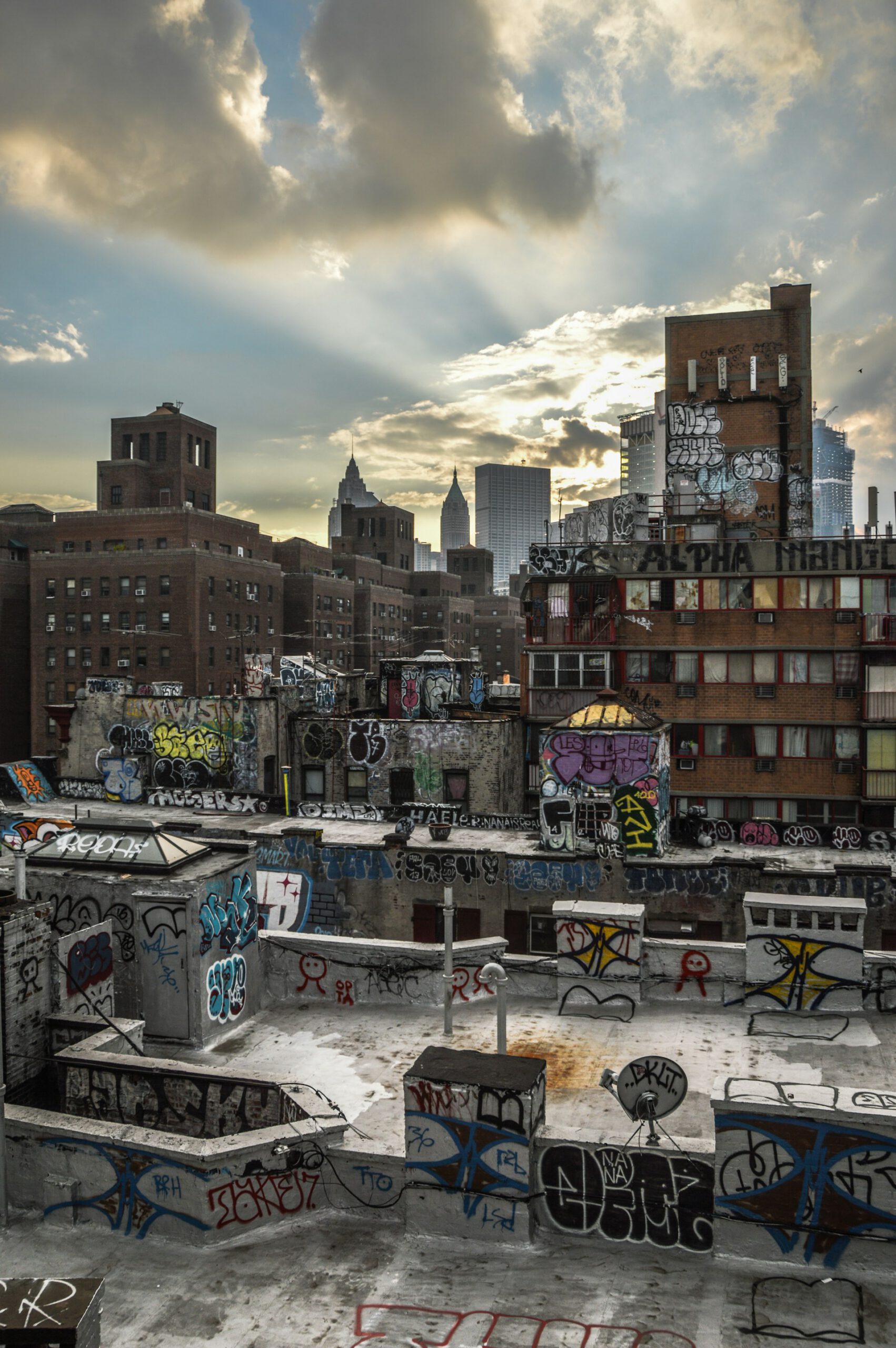
To understand how graffiti entered galleries, you first have to understand what graffiti was before the galleries came calling. In the late 1960s and throughout the 1970s, young writers in New York City, many of them Black and Latino teenagers from working-class neighborhoods, began tagging their names on walls, buses, and subway trains.
What started as a simple act of self-identification evolved rapidly into an increasingly sophisticated visual practice. Writers developed wildstyle lettering so complex it was deliberately illegible to outsiders. They painted entire subway cars in elaborate, multicolored pieces that rolled through the city like mobile exhibitions.
Poll Results
Poll: Cole World, K. Dot, Drizzy, Who’s the Best in the Triumvirate

Cast your vote
Cole World, K. Dot, Drizzy, Who’s the Best in the Triumvirate
Cast your vote
Poll: Cole World, K. Dot, Drizzy, Who’s the Best in the Triumvirate
Art Under Extreme Conditions
This was art created under extreme conditions: in the dark of train yards, under threat of arrest, with cheap paint and limited time. The technical skill required was extraordinary. Writers had to plan compositions, mix colors from available stock, and execute large-scale pieces quickly and precisely.
The best writers, DONDI, LEE, SEEN, LADY PINK, FUTURA 2000, ZEPHYR, BLADE, were celebrated within the community with a reverence that rivaled any art school salon. Their subway cars were their canvases, and the trains carried their work to every borough, every neighborhood, every pair of eyes on a platform.
The culture developed its own hierarchy, its own critical vocabulary, its own sense of history. “Biting,” copying another writer’s style, was the gravest offense. Innovation was the highest currency. This was not random vandalism, no matter how the city government and the press characterized it. It was a visual art movement with rules, traditions, and an internal logic as rigorous as anything happening in the galleries of SoHo.
Wild Style, Style Wars, and the Moment of Crossover
Two Films That Changed Everything
Two films released in 1983 brought graffiti culture to audiences far beyond New York’s five boroughs. They did so in very different ways.
“Wild Style,” directed by Charlie Ahearn, was a fictional narrative set in the South Bronx that featured real graffiti writers, DJs, MCs, and B-boys playing fictionalized versions of themselves. LEE Quinones and LADY PINK starred as lovers navigating the graffiti world, while Fab 5 Freddy, the cultural ambassador who would become instrumental in connecting hip-hop to the downtown art scene, served as a bridge between the uptown streets and the downtown galleries. “Wild Style” was raw, low-budget, and authentic in a way that later attempts to capture the culture rarely matched.
“Style Wars,” directed by Tony Silver and produced by Henry Chalfant, took a documentary approach. Originally airing on PBS, it captured the New York graffiti scene at a pivotal moment. Writers were producing some of their most ambitious work even as the Metropolitan Transportation Authority was escalating its campaign to eradicate graffiti from the subway system. The film treated its subjects with respect and complexity, presenting writers as artists with distinct philosophies and motivations rather than as delinquents. It remains one of the most important documents of hip-hop’s early visual culture.
Together, these films did something irreversible: they made hip-hop art visible to the art world establishment. Downtown Manhattan gallerists, collectors, and critics who would never have ventured to a Bronx train yard suddenly had access to the visual language of graffiti. Some of them recognized immediately that something significant was happening.
Basquiat, Haring, and the Downtown Hip-Hop Art Explosion
SAMO and the Basquiat Myth
No discussion of graffiti’s entry into the gallery world can avoid Jean-Michel Basquiat, though his relationship to graffiti is more complicated than the popular narrative suggests. Basquiat began as SAMO, a mysterious tag that appeared on walls and buildings in Lower Manhattan in the late 1970s, accompanied by cryptic, poetic phrases. SAMO was a collaboration between Basquiat and Al Diaz. It was more conceptual art than traditional graffiti, closer to Jenny Holzer’s text-based interventions than to wildstyle train pieces.
When Basquiat transitioned to gallery work, he brought with him an aesthetic vocabulary that drew on graffiti, but also on anatomy textbooks, jazz, African and Caribbean iconography, and the history of Western art itself. His connection to hip-hop was genuine. Fab 5 Freddy was a close associate, he made music, he was embedded in the same downtown scene where hip-hop, punk, and the art world intersected at venues like the Mudd Club and Club 57. But to call Basquiat a “graffiti artist who made it” is to flatten a practice that was always more expansive than any single category could contain.
$110.5 Million and the End of the Debate
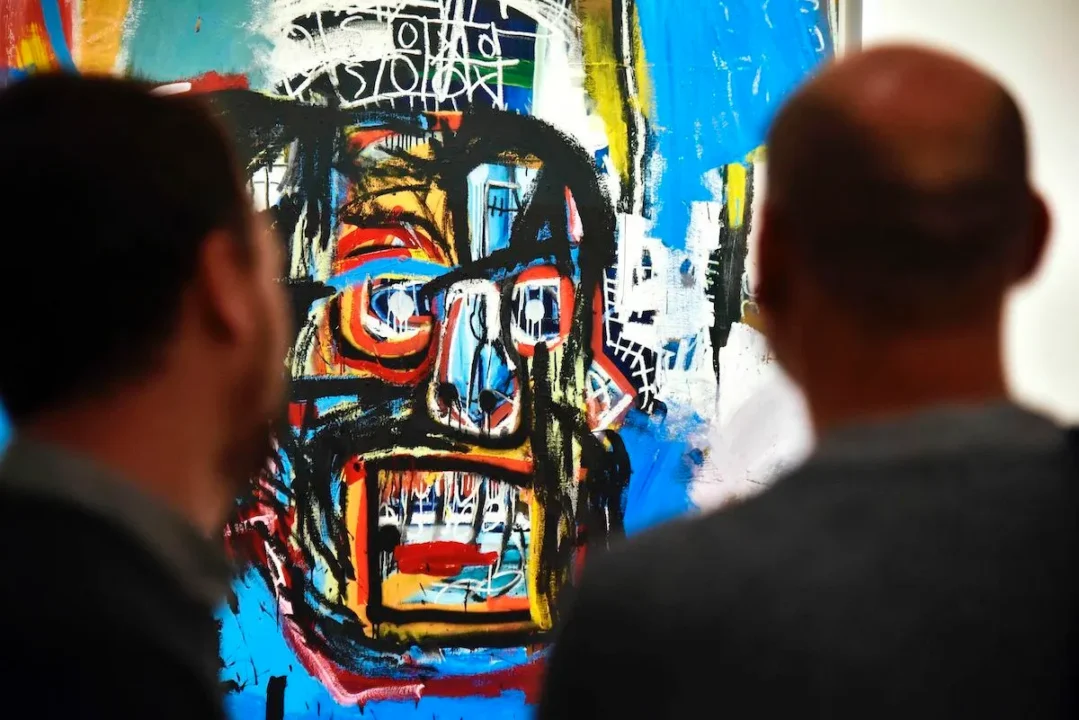
What is not debatable is his impact. When Basquiat’s 1982 painting of a skull sold at Sotheby’s in 2017 for $110.5 million, purchased by Japanese collector Yusaku Maezawa, it set a record for any American artist at auction. The sale forced even the most resistant art world gatekeepers to acknowledge that the aesthetic traditions rooted in hip-hop art could command the same prices as the European modernist canon.
Keith Haring and the Pop Shop Model
Keith Haring followed a different but parallel path. A transplant from Pennsylvania who immersed himself in New York’s downtown scene through Club 57 and the School of Visual Arts, Haring began drawing in white chalk on the blank black paper that covered expired subway advertisements. His bold, kinetic figures, outlined in thick lines, radiating energy marks, were immediately accessible in a way that wildstyle graffiti was not.
Haring’s connection to hip-hop was direct: he was drawn to breaking, he collaborated with hip-hop artists. His Pop Shop on Lafayette Street (opened in 1986) was one of the earliest examples of an artist making their work accessible through commercial products without waiting for gallery validation.
The Post-Graffiti Exhibition
The 1983 “Post-Graffiti” exhibition at the Sidney Janis Gallery in Manhattan was a watershed moment. The show explicitly positioned graffiti-influenced work within the context of fine art, exhibiting pieces by writers alongside work by artists associated with the downtown scene.
It was controversial. Some writers felt co-opted, while some in the art establishment dismissed the work as a fad. Both reactions missed the point. The show was not the beginning or end of anything; it was a visible marker of a cultural exchange that had been happening in clubs, studios, and streets for years.
Futura, KAWS, and the Blurring of Art, Fashion, and Commerce
Futura 2000: Abstraction Meets Street Culture
If Basquiat and Haring represented graffiti’s first wave of gallery acceptance, the artists who followed found new territory at the intersection of fine art, commercial design, and fashion. Futura 2000 (born Leonard McGurr) was a trained graffiti writer who became one of the first to abstract the form entirely. His paintings on subway trains were explosions of color and gesture that abandoned letterforms altogether.
His collaboration with The Clash in the early 1980s, painting live onstage during their performances, was an early example of the cross-pollination between street culture and music that would become standard practice. Decades later, Futura’s collaborations with fashion brands like Supreme and Nike demonstrated that the visual language of hip-hop art had become a permanent fixture in commercial design.
KAWS: From Bus Shelters to $14.8 Million
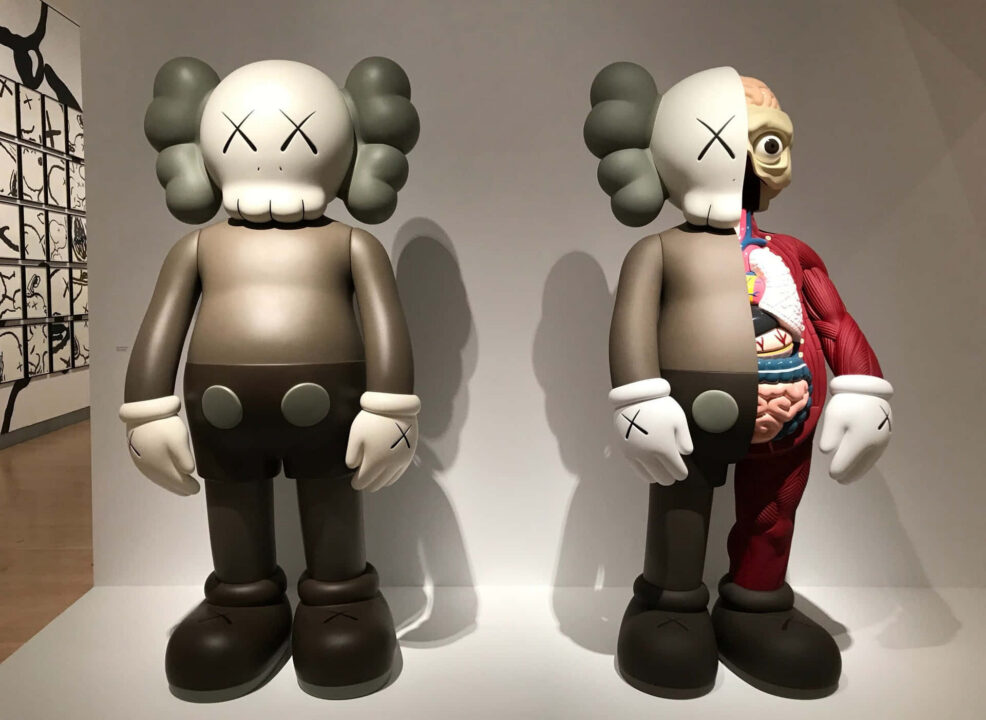
KAWS, born Brian Donnelly, represents perhaps the most commercially successful evolution of this lineage. A former graffiti practitioner who studied illustration at the School of Visual Arts, KAWS began by altering existing advertisements on bus shelters and phone booths, superimposing his signature “XX” eyes and skull-and-crossbones motifs onto corporate imagery. This practice straddled the line between graffiti, culture jamming, and graphic design in a way that anticipated much of what would later be called “street art.”
KAWS’s transition into the fine art and collectible markets was methodical and spectacularly successful. His Companion figures, vinyl toys that evolved into monumental sculptures, became some of the most recognizable artworks of their era. He designed album art, collaborated with brands ranging from Uniqlo to Dior, and saw his work achieve auction prices that would have been inconceivable for an artist with roots in street culture a generation earlier. In 2019, his painting “THE KAWS ALBUM” sold at Sotheby’s in Hong Kong for approximately $14.8 million, shattering pre-sale estimates.
What KAWS understood, and what the traditional art world was slow to accept, is that the boundaries between fine art, commercial design, and popular culture had been dissolving for decades. Hip-hop art was one of the primary solvents. A KAWS sculpture in a collector’s living room and a KAWS T-shirt at Uniqlo were not contradictions. They were different manifestations of the same practice, distributed across different price points and contexts.
Virgil Abloh, Murakami, and the Graduation of Hip-Hop Art
Virgil Abloh: Architect of the Convergence
The relationship between hip-hop visual culture and high fashion reached its apex with Virgil Abloh. Trained as an architect at the Illinois Institute of Technology, Abloh brought a conceptual rigor to fashion that was informed equally by his design education and his deep immersion in hip-hop culture. He interned at Fendi alongside Kanye West, founded Off-White in 2012, and in 2018 was appointed artistic director of Louis Vuitton’s menswear division, one of the most prestigious positions in global fashion.
Abloh’s work was built on the same principles that animated graffiti culture: appropriation, remix, the transformation of existing materials into new statements. His signature quotation marks, placing words like “SHOELACES” in quotes on sneakers, were a conceptual gesture that interrogated the relationship between objects and their labels, between authenticity and reproduction.
This was deeply intellectual work that also happened to be enormously popular, a combination that the fashion establishment had long insisted was impossible. Abloh’s death in November 2021, from a private battle with cardiac angiosarcoma, cut short a career that was still accelerating. His impact on the convergence of hip-hop culture and high fashion is permanent.
Murakami, Kanye, and Graduation
Takashi Murakami’s collaboration with Kanye West on the cover art for 2007’s “Graduation” represented another kind of convergence. Murakami, the Japanese contemporary artist known for his “Superflat” aesthetic, designed a cover featuring a cartoon bear, Kanye’s mascot character called Dropout Bear, being launched into a psychedelic landscape.
The collaboration was significant not because it was the first time a fine artist designed an album cover. That tradition stretches back decades. It mattered because of the specific cultural exchange it represented. Murakami’s work already drew on the blurred boundaries between fine art and commercial culture in Japanese visual traditions. Hip-hop’s own comfort with commercial expression made it a natural partner. The album cover became an icon, and the collaboration legitimized the idea that hip-hop art and contemporary fine art could meet as equals rather than as high and low culture.
The Tension That Remains
It would be dishonest to present this story as a simple triumph where graffiti goes from the streets to the galleries and everyone wins. The reality is messier. Many graffiti writers have complicated feelings about the mainstreaming of their art form. The gallery system, with its emphasis on individual genius, named authorship, and market value, is structurally at odds with a practice that was originally communal, anonymous (or pseudonymous), and deliberately outside the law.
Some artists embraced the transition and profited from it. Others felt that the thing they loved was being strip-mined for its aesthetic appeal while the communities that created it were policed, displaced, and ignored.
The “from the streets” narrative that galleries and auction houses use to market this work can be reductive. It flattens complex artistic practices into a single trajectory that culminates, conveniently, in the gallery system. Not every graffiti writer wanted to end up in a gallery. Not every artist with roots in hip-hop visual culture considers that origin story to be the most important thing about their work. Basquiat resisted being categorized as a graffiti artist. Many contemporary artists working in traditions that descend from graffiti are engaged in practices that have nothing to do with the culture’s original context.
What is undeniable is the influence. The visual language that emerged from hip-hop art, bold, graphic, text-heavy, irreverent, deeply referential, comfortable with commerce, is now the dominant aesthetic of global visual culture. It is in streetwear, in graphic design, in advertising, in architecture, in the way digital interfaces are designed. The train yards are gone. The aesthetic they produced is everywhere.
Whether that represents a triumph, a co-optation, or something more complicated depends on whom you ask. But the influence is beyond dispute.
Frequently Asked Questions
Jean-Michel Basquiat’s 1982 painting of a skull sold at Sotheby’s in May 2017 for $110.5 million, purchased by Japanese collector Yusaku Maezawa. At the time, it set a record for the highest price ever paid at auction for a work by an American artist. Basquiat began as part of the SAMO graffiti collaboration in the late 1970s before transitioning to gallery work that drew on hip-hop culture, anatomy, jazz, and art history.
The Post-Graffiti exhibition was a 1983 show held at the Sidney Janis Gallery in Manhattan that positioned graffiti-influenced work within the context of fine art. It was a watershed moment that explicitly placed street-culture aesthetics alongside established gallery art, though it was controversial, some writers felt co-opted by the gallery system, while some in the art establishment dismissed the work as a passing trend.
Virgil Abloh was a designer and creative director who studied architecture at the Illinois Institute of Technology. He interned at Fendi alongside Kanye West, founded the fashion label Off-White, and was appointed artistic director of Louis Vuitton’s menswear division in 2018. His work drew on the remix and appropriation principles central to hip-hop visual culture. He passed away in November 2021 from cardiac angiosarcoma. Abloh is widely regarded as one of the most influential figures in the convergence of hip-hop art and high fashion.
Two landmark films from 1983 brought graffiti culture to wider audiences. ‘Wild Style,’ directed by Charlie Ahearn, was a fictional narrative set in the South Bronx featuring real graffiti writers like LEE Quinones and LADY PINK, along with cultural figures like Fab 5 Freddy. ‘Style Wars,’ directed by Tony Silver and produced by Henry Chalfant, was a documentary that aired on PBS and captured the New York graffiti scene at a pivotal moment as writers produced ambitious work while the city escalated efforts to eradicate graffiti from the subway system.
Hip-hop art introduced a visual language, bold, graphic, text-heavy, irreverent, and comfortable with commerce, that has become the dominant aesthetic in global visual culture. Starting with subway graffiti in the 1970s and evolving through artists like Basquiat, KAWS, and Virgil Abloh, hip-hop art’s influence now extends into streetwear, graphic design, advertising, architecture, fashion, and digital interfaces. The boundaries between fine art and commercial design that hip-hop art helped dissolve have never been rebuilt.