This article is part of our complete guide to How Hip-Hop Changed Everything.
The history of the best hip-hop movies is really a story about Hollywood having a whole hip-hop problem for decades. And honestly, it was embarrassing. The same industry that swore it was the best at storytelling could not figure out how to tell hip-hop’s story without turning it into tragedy porn. For every real attempt to get it right, there were a dozen films that treated Black urban life like a zoo exhibit for suburban audiences to point at from a safe distance. Hip-hop did what hip-hop always does when the gatekeepers act funny: it built its own door.
The journey from the Bronx to the Dolby Theatre? One of the wildest come-ups in entertainment history. Let me walk you through it.
The Early Films That Documented a Movement
Before Hollywood figured out hip-hop, independent filmmakers captured it first. Charlie Ahearn’s Wild Style (1983) is widely considered the first hip-hop film (IMDB), a semi-documentary that featured real graffiti writers, breakers, and MCs from New York’s underground scene. That same year, Tony Silver and Henry Chalfant released Style Wars, a PBS documentary that remains the definitive visual record of early graffiti and breakdancing culture.
Poll Results
Poll: Cole World, K. Dot, Drizzy, Who’s the Best in the Triumvirate

Cast your vote
Cole World, K. Dot, Drizzy, Who’s the Best in the Triumvirate
Cast your vote
Poll: Cole World, K. Dot, Drizzy, Who’s the Best in the Triumvirate
These weren’t slick studio productions. They were raw, low-budget documents of a culture that mainstream America didn’t yet understand. But they laid the groundwork for everything that followed, proving there was an audience hungry for authentic hip-hop stories told by the people who lived them.
By 1984 and 1985, the studios started paying attention. Beat Street (1984) and Krush Groove (1985) brought hip-hop to wider audiences, with Krush Groove offering a fictionalized version of the founding of Def Jam Records featuring Run-DMC, LL Cool J, and the Beastie Boys playing themselves.
The Golden Era: Boyz n the Hood to Friday
Then the ’90s hit, and everything shifted. A 23-year-old film school graduate named John Singleton walked into Hollywood and basically said ‘watch this.’ Boyz n the Hood (1991) wasn’t just a great hip-hop film. It was a great American film, period. Singleton became the youngest person and the first African American nominated for the Academy Award for Best Director. Ice Cube, in his acting debut, delivered a performance that launched a decades-long film career.
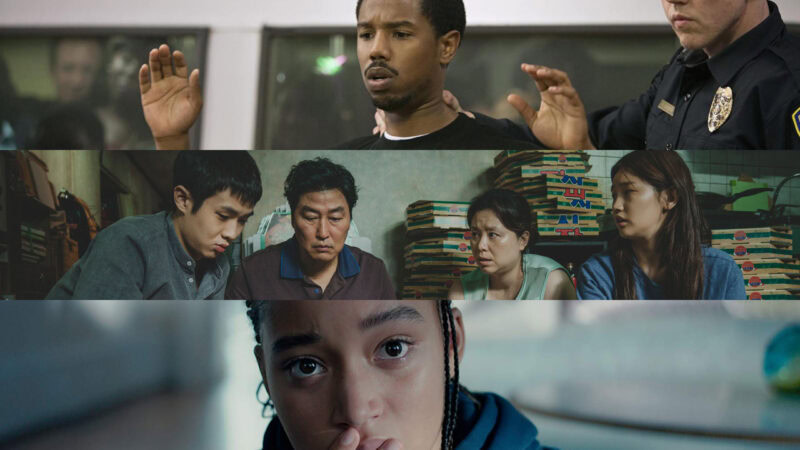
What followed was a wave of films that used hip-hop culture as both backdrop and narrative engine. The Hughes Brothers’ Menace II Society (1993) offered an unflinching look at Watts. Juice (1992) gave Tupac Shakur his breakout acting role as the charismatic and dangerous Bishop. And F. Gary Gray’s Friday (1995) proved that hip-hop films didn’t have to be tragic. Ice Cube and Chris Tucker turned a day in South Central into one of the most quotable comedies of the decade.
Set It Off (1996) brought women to the forefront of the genre, with Queen Latifah and Jada Pinkett Smith delivering powerful performances. And on television, Living Single was proving that hip-hop’s influence on sitcoms could be just as potent, creating a template for Black ensemble comedy that predated and arguably inspired Friends.
Rappers Who Became Hollywood’s Biggest Stars
Here’s the part that really gets me. Hip-hop didn’t just change what stories got told. It gave Hollywood a whole generation of leading talent that the industry never would’ve found on its own. The crossover started with Will Smith, whose transition from MC to sitcom star to blockbuster leading man remains the most commercially successful rapper-to-actor career in history. The Fresh Prince of Bel-Air debuted on NBC in 1990, and by the late ’90s, Smith was headlining films like Independence Day (1996) and Men in Black (1997) that grossed hundreds of millions worldwide.
Ice Cube parlayed his Boyz n the Hood debut into a filmmaking empire, writing, producing, and starring in the Friday franchise, the Barbershop series, and Are We There Yet? Ice-T found a permanent home on television as Detective Fin Tutuola on Law & Order: SVU, a role he’s played since 2000. Queen Latifah earned an Academy Award nomination for Chicago (2002) and became one of the most bankable actresses in Hollywood. LL Cool J starred in NCIS: Los Angeles for over a decade. Common won an Oscar for Best Original Song with “Glory” from Selma (2015), sharing the award with John Legend.
The pattern was clear: hip-hop artists weren’t just guest-starring in someone else’s industry. They were taking over.
The Biopic Boom and Straight Outta Compton
By the 2010s, Hollywood finally caught on to what the rest of us already knew: hip-hop stories sell. Like, really sell. Straight Outta Compton (2015) was the watershed moment. The N.W.A. biopic grossed over $200 million worldwide against a $28 million budget, making it one of the most profitable music biopics ever made. The film proved that hip-hop stories had enormous crossover appeal when told with authenticity and scale.
Before that, Curtis “50 Cent” Jackson produced Get Rich or Die Tryin’ (2005) as a semi-autobiographical vehicle. Eminem’s 8 Mile (2002) grossed over $240 million worldwide and won the Academy Award for Best Original Song with “Lose Yourself”, making Eminem the first hip-hop artist to win an Oscar. And Hustle & Flow (2005) earned Three 6 Mafia their own Oscar for Best Original Song, “It’s Hard out Here for a Pimp”, making them the first hip-hop group to win an Academy Award, performing the song live at the ceremony in one of the most memorable Oscar moments of the 2000s.
The TV Revolution: Atlanta Changed Everything
If the 1990s belonged to hip-hop cinema, the 2010s and 2020s belonged to hip-hop television. And no show changed the game more than Donald Glover’s Atlanta (FX, 2016–2022). The series, created, written, and starring the rapper/actor/producer known as Childish Gambino, blended surrealism, social commentary, and hip-hop culture into something television had never seen before. It won multiple Emmys and was hailed by critics as one of the best shows of its era.
Atlanta proved that hip-hop stories on TV didn’t have to be soapy melodramas like Empire (FOX, 2015–2020), though Empire deserves credit for bringing hip-hop to network primetime, pulling in over 17 million viewers at its peak. The landscape now includes Wu-Tang: An American Saga (Hulu, 2019–2023), Rap Sh!t (HBO Max, 2022–2023), The Chi (Showtime, 2018–present), and BMF (Starz, 2021–present), each exploring different facets of hip-hop culture through a prestige TV lens.
Meanwhile, Jay-Z’s “Moonlight” video made the hip-hop/television connection explicit, recasting Friends with an all-Black ensemble as both tribute and critique of Hollywood’s racial blind spots.
Hip-Hop and Social Commentary Cinema
Hip-hop’s tradition of speaking truth to power found its most powerful cinematic expression in the films of the late 2010s and early 2020s. Jordan Peele’s Get Out (2017) used horror as a vehicle for racial commentary, winning the Academy Award for Best Original Screenplay. Judas and the Black Messiah (2021) told the story of Fred Hampton with a soundtrack that was inseparable from its message. Blindspotting (2018) wove spoken-word poetry and hip-hop rhythms directly into its narrative structure.
These films share DNA with hip-hop’s core mission: using art to challenge power structures, amplify marginalized voices, and force uncomfortable conversations. The most powerful social commentary films of the past decade owe a direct debt to the cultural infrastructure that hip-hop built, an audience conditioned to expect art with a message, not just entertainment as escapism.
What’s Next for Hip-Hop on Screen
The future of hip-hop in film and TV is being written right now. The most exciting development is behind the camera. Hip-hop artists are no longer waiting for Hollywood to greenlight their stories. They’re building their own production companies and streaming deals. Jay-Z, through Roc Nation, has produced multiple films and series. Diddy, 50 Cent, and Ice Cube all have active production slates. And a new generation of creators who grew up immersed in hip-hop culture, like Donald Glover, Issa Rae, and Lena Waithe, are bringing that sensibility to everything they touch.
The question ain’t whether hip-hop will keep influencing Hollywood. It’s whether Hollywood can keep up with a culture that moves faster, thinks bigger, and connects with people more authentically than any studio executive ever could. Spoiler: it can’t. And that’s exactly the point.
Frequently Asked Questions
Wild Style (1983), directed by Charlie Ahearn, is widely considered the first hip-hop film. It featured real graffiti artists, breakdancers, and MCs from New York’s underground scene, including Lee Quiñones and Fab 5 Freddy.
Multiple hip-hop artists have won Oscars. Eminem won Best Original Song for ‘Lose Yourself’ from 8 Mile (2003 ceremony). Three 6 Mafia won Best Original Song for ‘It’s Hard out Here for a Pimp’ from Hustle & Flow (2006 ceremony). Common and John Legend won Best Original Song for ‘Glory’ from Selma (2015 ceremony).
Straight Outta Compton (2015) grossed over $200 million worldwide against a production budget of approximately $28 million, making it one of the most profitable music biopics in film history.
While subjective, Donald Glover’s Atlanta (FX, 2016-2022) is widely regarded as the most critically acclaimed hip-hop TV series, winning multiple Emmy Awards. Other highly praised shows include The Wire, Empire (which peaked at 17+ million viewers), and Wu-Tang: An American Saga.