Battleship
This naval warfare guessing game first showed up in the early 1900s from Clifford Von Wickler. Called Salvo in 1931, it originally played with paper and pencils. Milton Bradley Co. later released it as Broadsides: The Game of Naval Strategy in 1943 and as Battleship in 1967, when plastic grid boards, ships and pegs finally let players record hits and misses easily. Two players secretly arrange a fleet of 10 ships (aircraft carriers, battleships, cruisers, submarines and destroyers) on the lettered and numbered grids. Players take turns targeting their opponent’s fleet by guessing coordinates where the hidden ships are positioned. The battle ends when one player’s entire fleet is sunk.
Candy Land
Eleanor Abbott created this sweet little game in the 1940s while recovering from polio in a San Diego hospital. She figured the color-matching game would let young children with the disease entertain themselves. More than 40 million Candy Lands have sold since Milton Bradley Co. introduced the game in 1949. The original went for $1.
Checkers
Checkers and its more sophisticated cousin chess rank among the oldest board games in the world, both originating in the Middle East during ancient times. Checkers, called draughts in England, involves two players, each with 12 pieces or checkers, who jump over their opponent’s pieces and remove them from a square “checked” board. Alex Moiseyev, 50, of Dublin, Ohio, has reigned as world checker champion since 2002 and is among the all-time greatest players of the game, according to the American Checker Federation.
Clue
Originally called Cluedo, this murder-mystery board game came from Englishman Anthony E. Pratt in the 1940s. The object is for players to collect clues and deduce which of six characters (Col. Mustard, Miss Scarlett, Mrs. Peacock, Mrs. White, Professor Plum or the Rev. Green) murdered Dr. Black, with what weapon (candlestick, lead pipe, knife, revolver, rope or wrench) and in what room of his country mansion (ballroom, billiard room, conservatory, dining room, hall, kitchen, library, lounge or study). The first player to correctly identify the murderer, type of weapon and site of the crime wins the game.
Monopoly
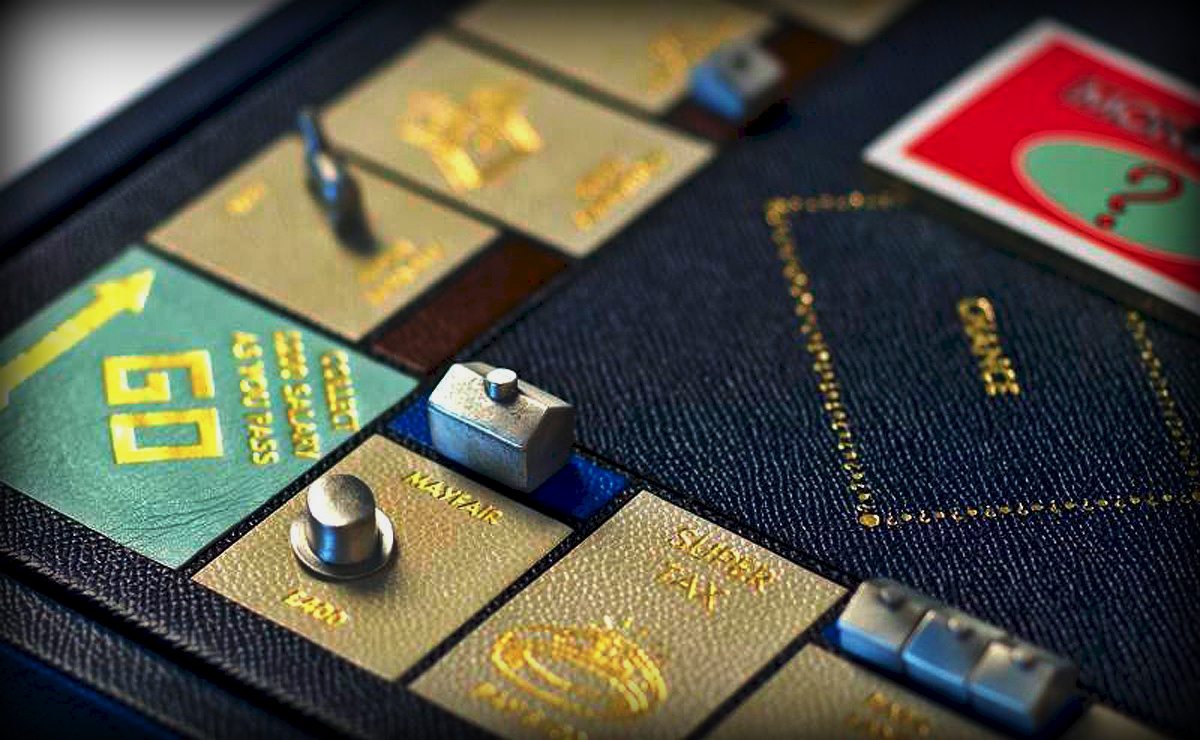
The best-selling board game in history began in 1904 as The Landlord’s Game. Elizabeth Magie, of Brentwood, Md., created the real estate game to illustrate the social injustices of slumlords and corporate monopolies. The game that lets players get “rich” by buying properties with phony money didn’t catch on until the Great Depression. In the 1930s, Charles Darrow, an unemployed salesman in Germantown, Pa., modified Magie’s game, renamed it Monopoly and sold 5,000 copies to a Philadelphia department store. Since Parker Brothers bought the rights in 1935, more than 200 million sets have sold in 103 countries and 37 languages.
Operation
In 1962, John Spinello, an industrial design student at the University of Illinois, built an electric toy that let players probe holes in a metal box with a metal rod. Touch the side of a hole and a loud bell sounded. The toy evolved into the 1965 game of Operation, in which surgeon wannabes test their steadiness by plucking 12 body parts and ailments (Adam’s Apple, Broken Heart, Charley Horse, Funny Bone, Spare Ribs, Writer’s Cramp, etc.) from a prone patient, Cavity Sam, with a set of tweezers. Players without a steady hand trigger a buzzer and light a bulb beneath Sam’s red nose.
Risk
French filmmaker Albert Lamorissee created this war strategy game in 1957, and it originally came out as La Conquete du Monde, or Conquest of the World. In 1959, Parker Brothers published Risk, an English language version. Up to six players amass armies on a political map of the world and try to capture territories and continents from other players by rolling dice. The game ends when one player eliminates his adversaries and rules the world.
Scrabble
Alfred Mosher Butts, an unemployed architect from Poughkeepsie, N.Y., invented this word game during the Great Depression when he combined the element of chance with the vocabulary skills required for crossword puzzles. Each player draws seven lettered tiles from a pool of 100 and scores points by forming words on a puzzle grid. More than 100 million sets have sold since Scrabble arrived in 1949. More than 200 tournaments get sanctioned each year by the North American Scrabble Players Association.
The Game of Life
The Game of Life began in 1860 as The Checkered Game of Life, developed by board game pioneer Milton Bradley. It originally played on a modified checkerboard and conveyed a moral message as players advanced through virtues and vices (ambition, crime, bravery, gambling, honor, idleness, matrimony, prison, poverty and wealth) encountered from infancy to “happy old age.” In 1959, game inventor Reuben Klamer redesigned The Checkered Game of Life for the 100th anniversary of the Milton Bradley Co. The result was The Game of Life, which celebrated its 50th anniversary this year.
Trivial Pursuit
Canadian journalists Scott Abbott and Chris Haney conceived this popular board game in 1979 after discovering pieces missing from the Scrabble game they were playing. In the original “Genus” edition of Trivial Pursuit, players advance on a wheel-shaped course by correctly answering randomly selected questions in six categories: arts and literature, entertainment, history, geography, science and nature, and sports and leisure. Trivial Pursuit spawned numerous other trivia games and dozens of editions, including the 25th anniversary edition in 2008. More than 90 million copies have sold in 17 languages and in 26 countries.
*****
Think these games are awesome? Check out this great post on great board games for kids.
Frequently Asked Questions
Senet, an ancient Egyptian game, is one of the oldest board games archaeologists have found, with surviving boards dating to roughly 3100 BCE. Modern classics like Backgammon descend from games like Senet and Tabula played in the ancient world. Among games most Americans recognize today, Checkers (English Draughts) traces back roughly 5,000 years.
The version of Monopoly published by Parker Brothers in 1935 drew on The Landlord’s Game, designed and patented by Lizzie Magie in 1904. Magie created the game to teach the dangers of land monopolies. Charles Darrow then sold his reworked version to Parker Brothers in 1935, which is the version most people know today.
Clue (known as Cluedo outside North America) appeared in 1944 by Anthony E. Pratt, a British solicitor’s clerk. He developed the murder-mystery game during the wartime blackouts. Waddingtons, a UK game company, first released it in 1949, and Parker Brothers brought it to the US the same year.
Yes, the global board game market has grown steadily since the early 2010s and stood at at over $13 billion in 2023, with strong continued growth driven by hobby tabletop games like Catan, Wingspan, and Gloomhaven. The trend deepened during the COVID-19 pandemic, when families looked for at-home entertainment.