The Stack Overflow Turf War, By the Numbers
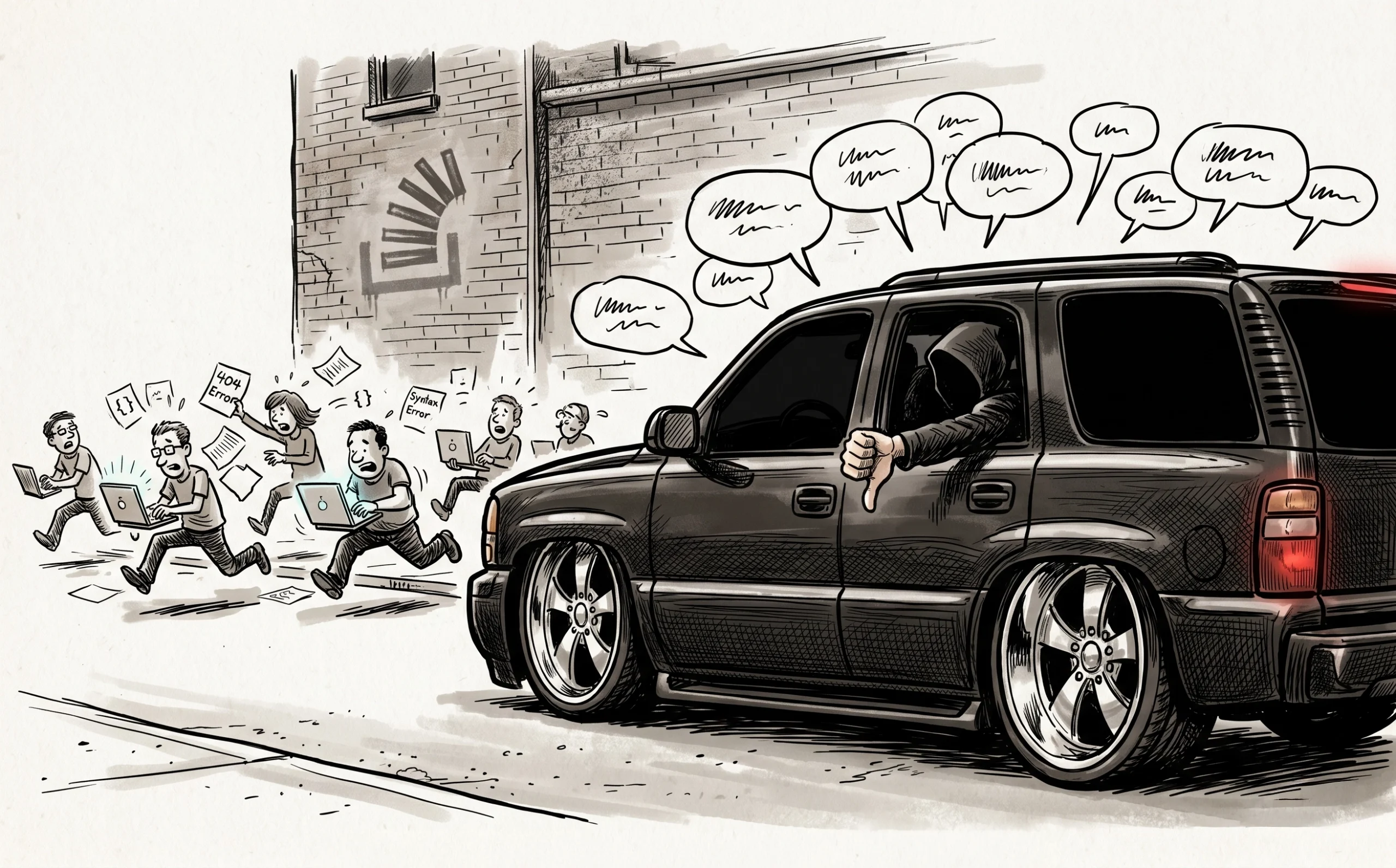
Look at the damage. Futurism put it bluntly: “AI Has Basically Killed Stack Overflow.” Their numbers back the headline. Monthly questions fell from over 21,000 in January 2025 to just 3,607 by December. That is a 75% drop in a single year.
The longer view looks just as grim. Monthly visits sat near 110 million in 2022. By late 2024, that figure had dropped closer to 55 million. Question volume is now down 75% from the 2017 peak. And daily active users fell 47% year over year between April 2024 and April 2025.
The chronology fits the easy story. ChatGPT launched in November 2022. Question volume started falling right away. Within six months, Stack Overflow lost a quarter of its user activity. The Stack Overflow turf war has a clear winner and a clear loser.
The easy story stops there, and it leaves the most important question unanswered.
Why “AI Killed It” Misses the Point
Here is the problem with blaming AI alone. ChatGPT did not target Stack Overflow specifically. It offered an alternative to every dev resource at once: GitHub, MDN, the official docs, Reddit, the whole stack. Most of those still exist in roughly their old shape. Some even grew. Stack Overflow alone became a ghost town.
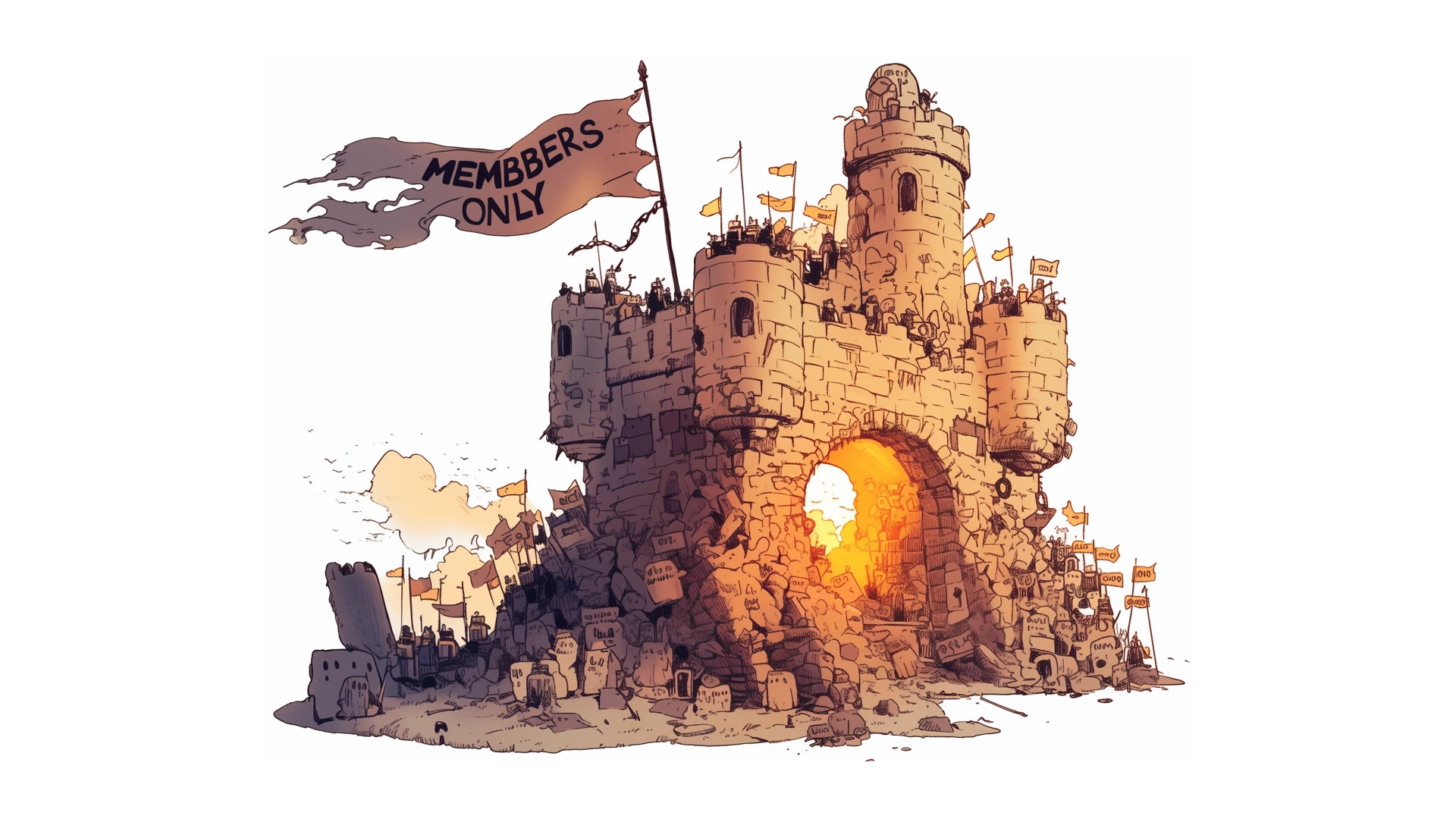
Why did one platform collapse while the others held? The Futurism piece actually hands us the answer. It quotes a user who explains the migration simply. People were “happy to finally have a tool that didn’t tell them” their questions were stupid.
That single line is the whole story. AI did not make Stack Overflow’s data obsolete. The archive was still deep, and it was still useful. AI made Stack Overflow’s hostility obsolete. ChatGPT offered the one thing the platform never could: an answer without a social tax.
The platform knew about that tax. Stack Overflow’s own blog admitted in 2018 that the site “isn’t very welcoming.” The 2019 developer survey confirmed it too. Most users named community culture as the top thing to fix. This was never a 2022 problem. It was a structural one, and it had festered for years.
When a community spends a decade pushing away the people it needs, a friendly alternative does not just win them over. It triggers an escape. That is not a technology story. That is a gang culture story.
How Gang Culture Shaped the Initiation
Every gang runs an initiation. The point is not really to test skill. It forces the recruit to pay for the privilege of belonging. The cost is the signal. If joining is free, the membership means nothing.
Stack Overflow ran the exact same system. It just used a different word for it: reputation.
You signed up, and then you could barely do anything. Voting stayed locked. Commenting on most questions stayed locked too. The platform would not even let you post an image. You had to grind. Points came slowly, and each gate (50, 100, 250, 500, 1000, 2000 rep) unlocked a basic feature that other platforms give away for free on day one.
The mechanism worked because it made membership expensive. You had to want it. You also had to take the hits, the downvoted first question, the answer closed as a duplicate, and come back anyway.
Expensive initiation filters the wrong people. It does not screen out the unskilled. It screens out everyone with other options. Busy developers left. Beginners who read a closure as a moral judgment left too. The people who stayed were the ones who had already paid in, and now had something to defend.
Tag Turf and Territory
Gangs run on territory. So did Stack Overflow.
Each tag, whether python, javascript, or regex, became a block with its own crew of high-rep regulars. They treated every new question as a possible trespass. The first thought was rarely “does this person need help?” It was “does this question belong on my corner?”
A beginner who wandered into the wrong tag got the treatment. Closed as a duplicate, with a link to a 12-year-old answer. Flagged as off-topic. Told to read the docs. Every move stayed technically within the rules. And every move also said the same thing: you are not welcome here.
To be fair, most tag regulars believed they were protecting quality. And they had a point. The site’s value really did depend on filtering low-effort questions. The execution still looked exactly like guarding a corner. The new user could not tell rigor apart from rejection. After one bad hit, they simply stopped trying.
Rep Score Was the Rank
Here the parallel stops being a metaphor. It becomes a blueprint.
Gang hierarchy is simple. There is a rank order, soldier to shotcaller to OG, and your privileges scale with it. People know your number, and they defer to it.
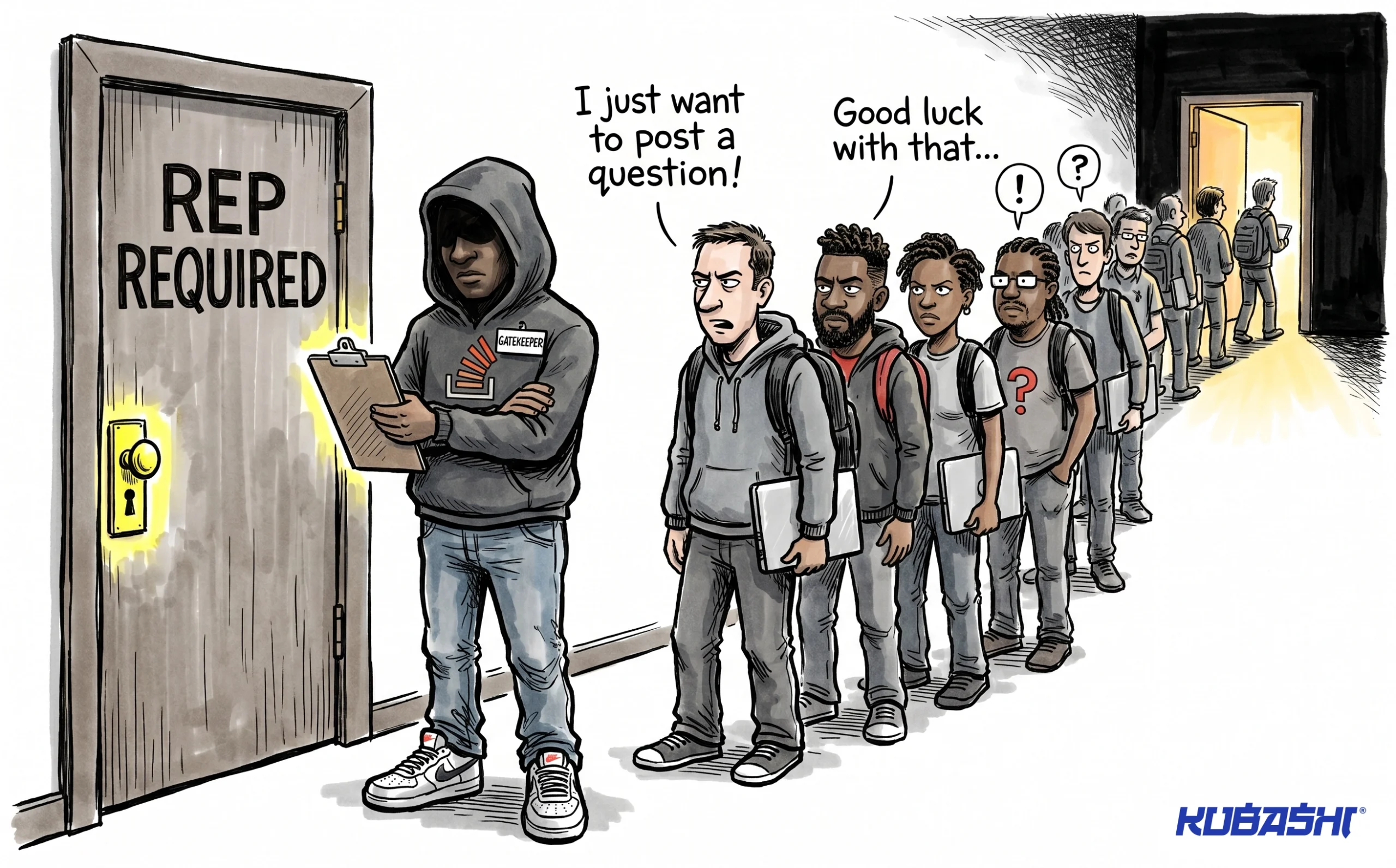
Stack Overflow gave that number an HTML element. Your reputation sat next to your name on every post. Above certain thresholds, you got powers normally reserved for paid staff. You could close questions. Editing other people’s posts became possible. Voting in elections came with the rank too. In functional terms, you became a ranking officer of the platform.
The company called this “gamification.” But games end, and reputation never did. It worked as a permanent caste mark. A 200K-rep user correcting a 50-rep user was not a conversation. It was rank speaking down to a subordinate. Most subordinates did not argue back. They learned the dialect, or they left.
The strangest part is that nobody designed it this way on purpose. The rep system was simply meant to surface good answers and bury spam. It quietly built a feudal hierarchy anyway, with rep numbers as titles of nobility. Every system that hands out power based on stored-up status drifts toward the same shape. The streets just got there first.
What Really Lost the Stack Overflow Turf War
Real gangs decline when the math flips. Membership has a cost and a value. Once the cost runs higher than the value, recruiting dries up. Then the old heads age out, and the block goes quiet.
Stack Overflow hit that point well before ChatGPT arrived. The 2018 admission proved it. The quitting moderators proved it. And the June 2023 strike proved it loudest of all.
During that strike, hundreds of volunteer moderators stopped work at once. Over 850 of them signed an open letter. The trigger was a secret AI-content policy. The real issue was older. The platform had disrespected its own unpaid labor for half a decade.
When ChatGPT arrived, it did not conquer a healthy community. It walked onto a block that had already pushed out its own future. Beginners, casual contributors, the next generation of developers: Stack Overflow had spent ten years discouraging exactly those people. ChatGPT simply offered them a door with no bouncer.
And the numbers show how fast they ran for it. By December 2025, Futurism’s count of 3,607 monthly questions marked a 96% drop from the early-2023 baseline. That is not a tool replacing a database. That is an audience that finally found the exit. The Stack Overflow turf war ended because one side had already lost its people.
Every Online Community Should Take Notes
This is not a tech-industry curiosity. It is a warning for every platform that hands moderation power to accumulated status. That status can be rep points, mod flair, follower counts, or seniority badges. The shape is always the same.
The pattern repeats with grim reliability. A community writes rules to protect quality. Then the rules need enforcers. The enforcers gain authority. Soon the authority hardens into hierarchy. And the hierarchy starts gatekeeping by reflex, because gatekeeping is what hierarchy does. Eventually the new arrivals stop arriving at all.
The fix is not to scrap moderation. That just produces 4chan. The fix is to make moderation answer to the moderated, not to whoever banked the most rep. That is a much harder design problem, and every healthy community has to solve it eventually.
What Gang Culture Explains About Online Life
Kubashi spends most of its time on music, fashion, and pop culture. We have written all year about gang culture and its influence on style and sport. A Stack Overflow autopsy looks out of place next to that.
It fits perfectly. The logic that runs a street gang also runs any closed in-group. There is a hierarchy. There is an initiation. And there is defended territory, plus a status game the veterans control. You see it in fraternities. Newsrooms have the same dynamic. And any forum that scales up without designing against it ends up there too.
The lesson lands far beyond developers. If you run a Discord, a Substack, a newsletter, or an open-source project, the warning is right here. The audience you push out today is the audience you lack tomorrow. And the moment someone builds a door without a bouncer, you learn how many of them were only waiting for one.
AI did not really kill Stack Overflow. Gang culture hollowed it out first. The audience walked. AI just built the door, and became the new shotcaller on the way out.
AI didn’t kill Stack Overflow. Gang culture hollowed it out first. AI just built the door, and became the new shotcaller on the way out.
Frequently Asked Questions
Not by itself. AI triggered the collapse, but it did not cause the weakness. Stack Overflow had documented hostility problems as far back as 2018. The 2023 moderator strike showed the cracks clearly. So AI is the cause of death. The decade of gang-style culture is the cause of vulnerability.
A lot. Monthly questions fell from over 21,000 in January 2025 to 3,607 by December, according to Futurism. Over the longer term, monthly visits dropped from roughly 110 million in 2022 to about 55 million in 2024. Daily active users also fell 47% year over year.
ChatGPT competed with every dev resource at once. GitHub, MDN, and the official docs all faced the same pressure. Most of them held. Stack Overflow did not, because its audience already wanted out. When the alternative carried no social cost, users did not migrate, they escaped.
On June 1, 2023, hundreds of volunteer moderators stopped work together. They were protesting a secret AI-content policy. Over 850 people signed the open letter. The company eventually reversed the policy. Still, the trust never fully came back.
Both systems run on the same parts. There is an initiation, a rank ladder, and defended territory. Both work while the value of belonging beats the cost. Both collapse when that math flips. The parallel is structural, not moral, and it applies to any community built on gatekeeping.