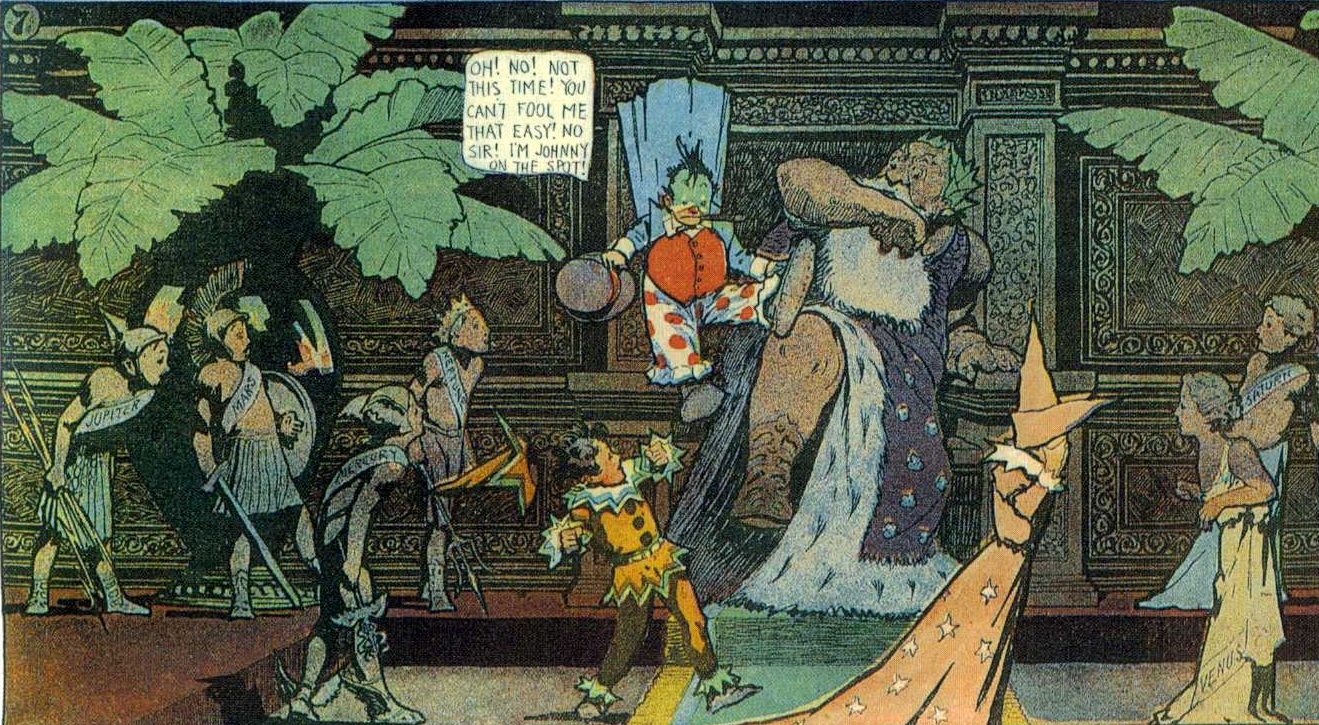
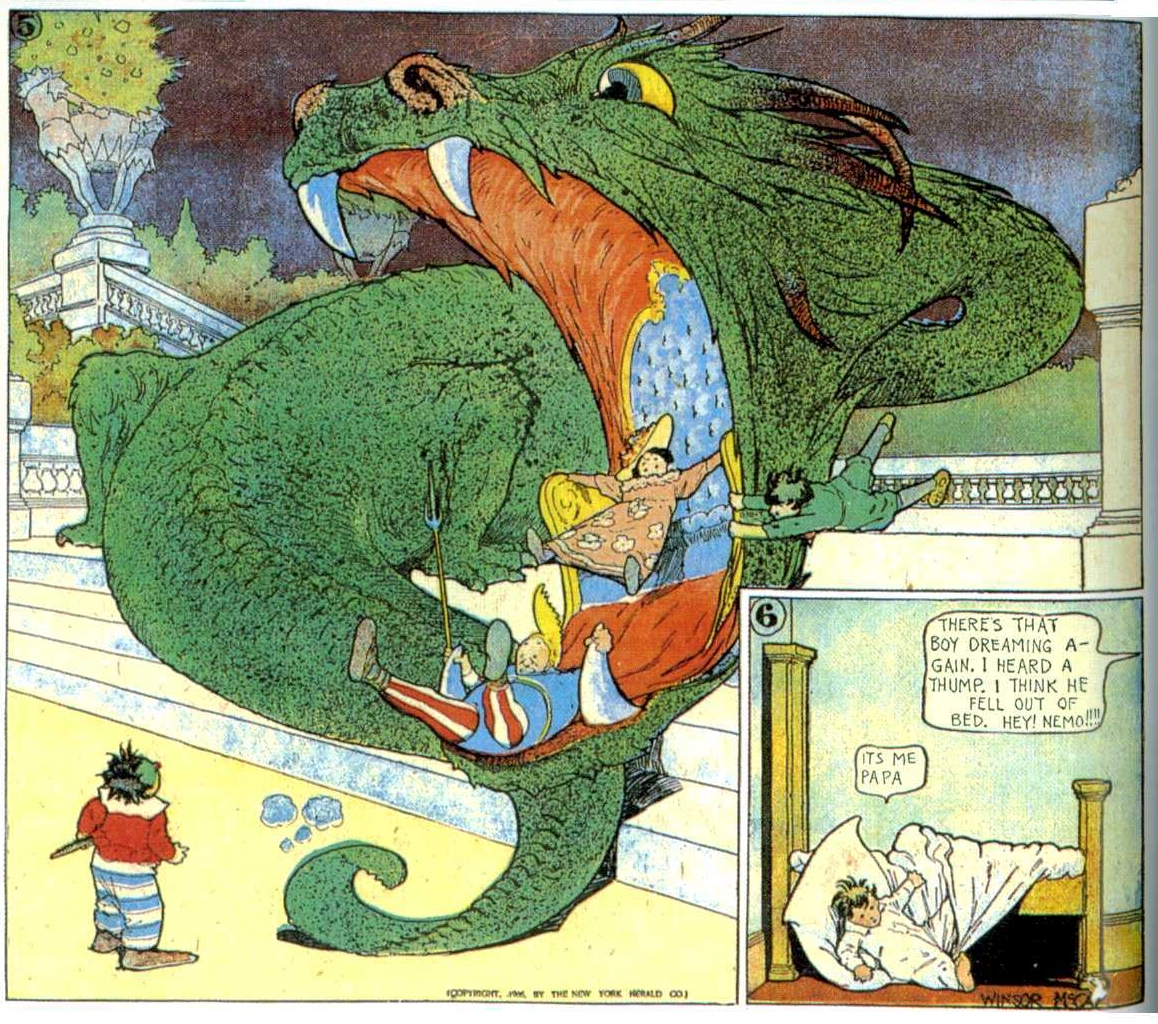
Winsor McCay’s Little Nemo in Slumberland is one of the most underrated comic collections ever drawn. The Sunday-page series ran in The New York Herald starting October 15, 1905. Modern comic strip storytelling owes a serious debt to its panels, and most readers today have never heard of the man who made it.
The comic strip is a vanishing medium
Many kids today do not know what a comic strip is. Plenty have never held a newspaper, let alone read the Sunday funnies. So the thought-provoking, paper-bound art of the strip has quietly drifted out of the culture, and the brighter, “interactive” medium that replaced it is sucking the last bit of imagination from our thickening skulls.
It was not always this way. Twenty or even forty years ago, kids rushed to the Sunday paper for the latest Calvin and Hobbes. An entire generation grew up on the comic strip as a primary art form. Sidenote: Bill Watterson recently emerged from obscurity to sketch up a few new gems.
Before Watterson, there was McCay
Before Bill Watterson, before Peanuts, and before Calvin and Hobbes, there was Winsor McCay. McCay created the fictional character Little Nemo and his elaborate dream world called Slumberland. Most modern-day comic strips owe their form and flow to that work. An animated film later adapted Little Nemo for a new generation, with Winsor’s imaginative creations driving the story.
From Wikipedia
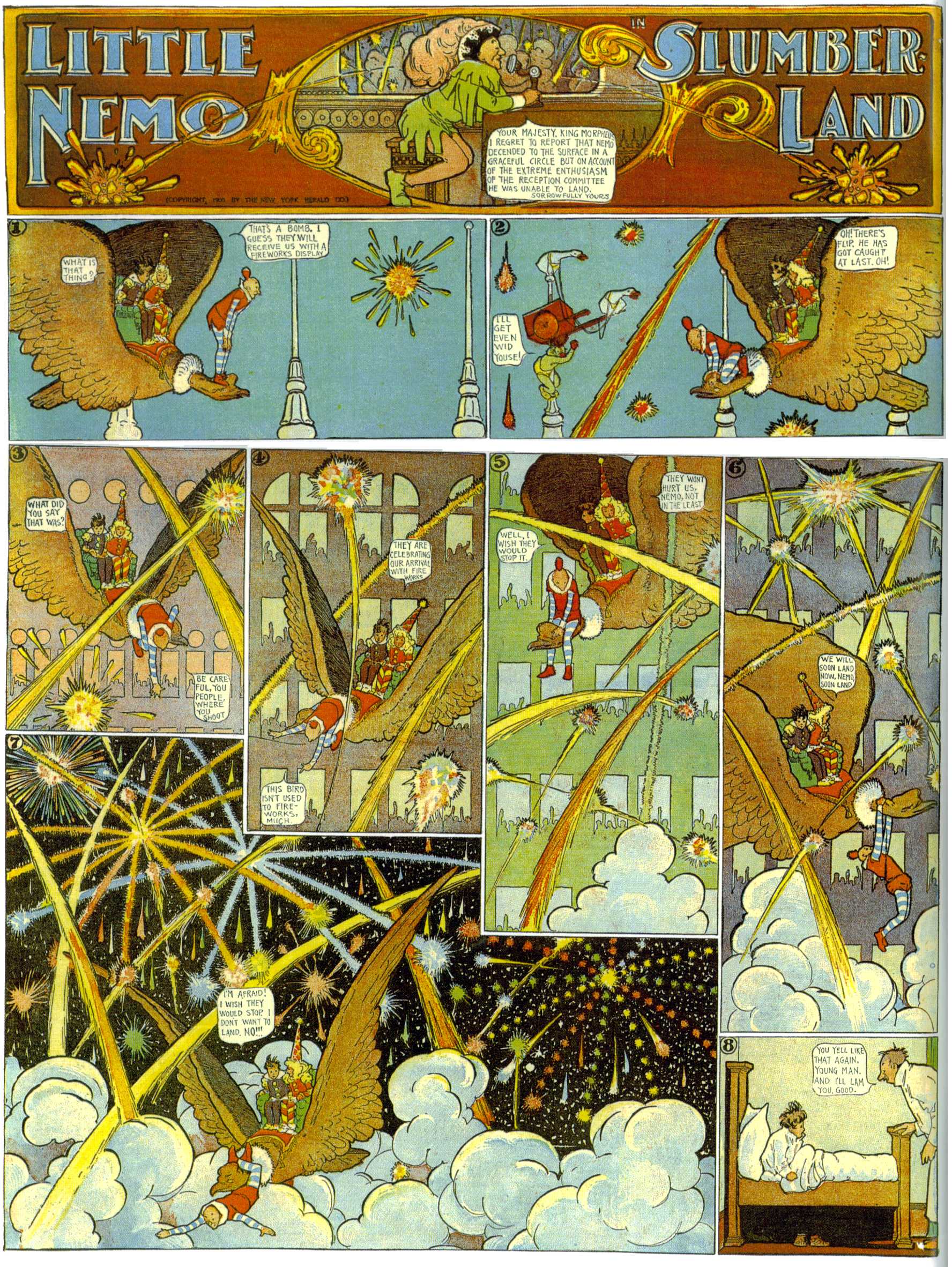
Little Nemo is a fictional character created by American cartoonist Winsor McCay. Nemo was originally the protagonist of the comic strip Little Nemo in Slumberland. The full-page weekly strip depicted Nemo having fantastic dreams that were interrupted by his awakening in the final panel. The strip qualifies as McCay’s masterpiece for its experiments with the form of the comics page, its use of color, its timing and pacing, the size and shape of its panels, perspective, and architectural detail.
Little Nemo in Slumberland ran in The New York Herald from October 15, 1905 until July 23, 1911. After that, the strip was renamed In the Land of Wonderful Dreams when McCay brought it to William Randolph Hearst’s New York American. There it ran from 1911 until July 26, 1914. McCay returned to the Herald in 1924 and revived the strip under its original title. That run continued from August 3, 1924 until December 26, 1926, when McCay returned once more to Hearst.
The strip shows McCay’s understanding of dream psychology. He tackled common dream fears like falling, drowning, and impalement. The dream world also has its own moral code, and breaking it has terrible consequences. When Nemo ignores instructions not to touch Queen Crystalette, who inhabits a cave of glass, his infatuation causes her and her followers to shatter. He awakens with “the groans of the dying guardsmen still ringing in his ears.”
Wikipedia
A Kickstarter tribute
A group of cartoonists put together a successful Kickstarter to honor McCay. The project assembled new artists to reinterpret his work and pay tribute to the late master. Fans got fresh entry points into a body of work that deserves wider recognition.
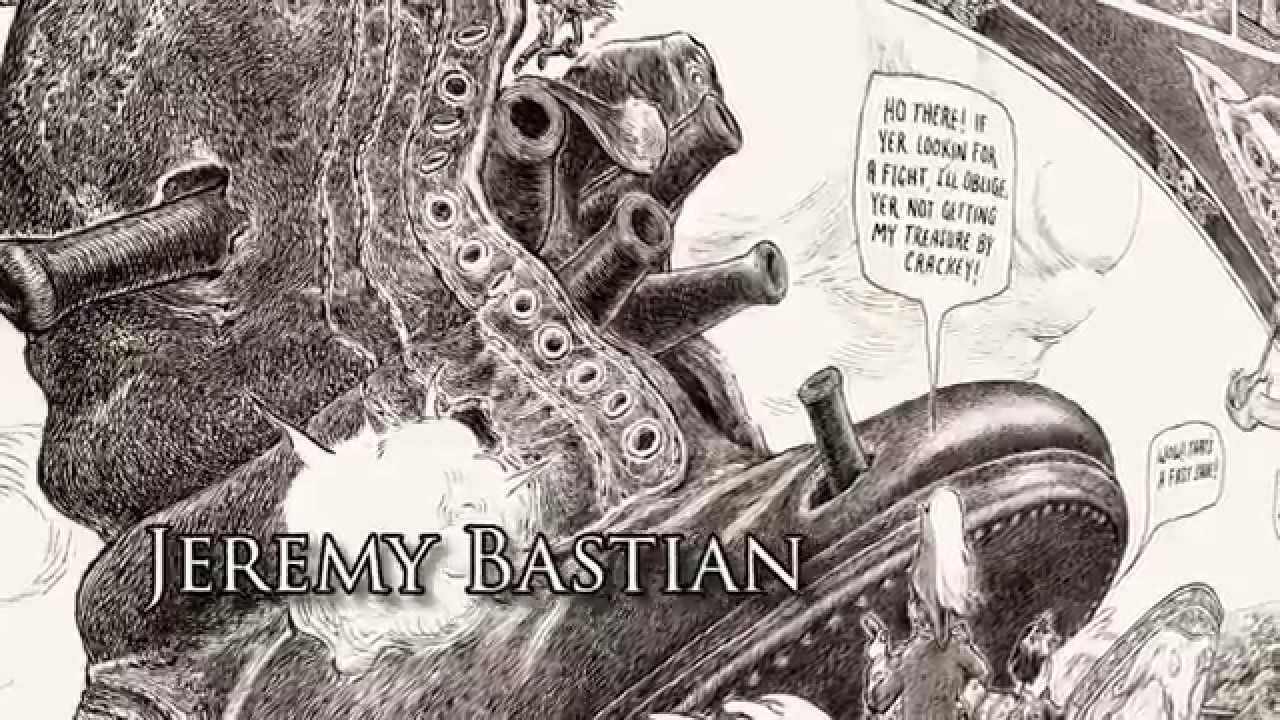
Unlike today’s compressed comic strips, McCay was given an entire newspaper page in the early 1900s. He could draw Nemo’s adventures at full scale and stretch the form. Here is a sample page:
McCay never received the acclaim he deserved during the original run. Long after the last issue, though, the strip kept finding new audiences. An animated movie arrived in the 1980s. An NES video game launched in 1990. Google honored McCay with an interactive Google Doodle on his 107th birthday.
Long live the imagination, and long live artistic masterpieces like McCay’s Little Nemo in Slumberland.
Frequently Asked Questions
Winsor McCay (1869-1934) was an American cartoonist and animator best known for the comic strip Little Nemo in Slumberland. He pioneered both the modern comic strip form and early animation, releasing Gertie the Dinosaur in 1914, one of the earliest character-driven animated films. His full-page Sunday strips experimented with panel size, perspective, color, and pacing in ways that influenced nearly every comic artist who came after him.
Little Nemo in Slumberland originally ran in The New York Herald from October 15, 1905 until July 23, 1911. McCay then took the strip to William Randolph Hearst’s New York American, where it ran under the title In the Land of Wonderful Dreams from 1911 to 1914. McCay later revived the original title at the Herald from 1924 to 1926.
Yes. Little Nemo is widely credited with shaping the visual grammar of the modern comic strip. Later cartoonists, including Bill Watterson (Calvin and Hobbes) and Charles Schulz (Peanuts), have cited McCay’s use of perspective, layout, and dream logic as foundational to the medium. McCay’s work also influenced animators including Walt Disney.
Yes. Little Nemo was adapted into a 1989 animated feature film titled Little Nemo: Adventures in Slumberland, an NES video game in 1990, and several stage and graphic novel adaptations over the years. Google also honored McCay with an interactive Google Doodle on October 15, 2012, the 107th anniversary of the strip’s debut.