What Makes a Car Truly Terrible?
Not every bad car earns a spot in the hall of shame. Plenty of forgettable sedans and underwhelming coupes have come and gone without anyone shedding a tear. The cars on this list are different. These are the vehicles that didn’t just disappoint—they offended. They caught fire (literally), they rusted before you finished the paperwork, they looked like someone lost a bet with an industrial designer, and in some cases, they actively endangered the people inside them.
What separates a merely bad car from a legendarily terrible one? It comes down to a toxic cocktail: overpromising and underdelivering, corporate arrogance, corner-cutting that bordered on criminal, and designs so misguided they became cultural punchlines. Some of these cars were born from good intentions—attempts to compete with Japanese imports or innovate during oil crises—but intention doesn’t count for much when your engine catches water like a sponge or your fuel tank turns into a bomb on rear impact.
From Detroit’s darkest chapters to a Yugoslavian import that made people question everything, here are the worst American cars (and one honorary import) that ever had the audacity to roll off an assembly line.
Possibly the Worst Car Ever: Unveiling the Chevrolet Chevette Disaster

The Chevette, despite its humble beginnings, carved out a niche in automotive history for its simplistic design and no-frills functionality. While it garnered a reputation for its durability, particularly with its ability to endure cross-country trips, its engineering flaws couldn’t be overlooked. From its infamous tendency to suck water into the engine when wet to its structural fragility, the Chevette’s shortcomings often overshadowed its reliability. Despite its flaws, some loyal owners formed a bond with their Chevettes, finding charm in its unpretentious nature.
American Car Nightmare: The Tragic Tale of the 1958 Ford Edsel

The Edsel’s launch was surrounded by immense hype, but it quickly became synonymous with disappointment. Its unconventional design, marked by a distinctive vertical grill that drew comparisons to female anatomy, failed to resonate with consumers. While some attribute its downfall to marketing missteps and exaggerated expectations, others point to its lackluster performance and high price tag during an economic downturn. Despite its brief existence, the Edsel left an indelible mark on automotive history as a cautionary tale of overhyped expectations.
The Matador’s Mistake: Unveiling the AMC Matador’s Tragic Legacy

The Matador, an attempt by American Motors Corporation (AMC) to capture the midsize car market, faced an uphill battle from the start. Despite being named “Best Styled Car” by Car & Driver in 1974, its unconventional design and lackluster performance failed to resonate with consumers. However, it found an unexpected moment in the spotlight when it appeared in Michael Jackson’s iconic “Black and White” music video. Despite its brief moment of fame, the Matador’s legacy is one of missed opportunities and underwhelming performance in a fiercely competitive market.
The Corvair Catastrophe: Exploring the Dark Side of an American Car Model

The Corvair, with its rear-mounted engine and distinctive styling, promised a unique driving experience. However, its engineering flaws, including a tendency to catch fire in rear-end collisions and handling issues, overshadowed its innovative design. Despite its shortcomings, some enthusiasts appreciated its unconventional layout and found joy in its spirited performance. Yet, its reputation as a flawed gem remains, serving as a cautionary tale of the consequences of prioritizing innovation over safety.
Gremlin: The AMC Disaster That Defined the Worst Car Models of the 1970s

The Gremlin’s unconventional design, hastily adapted from the AMC Hornet, left it with unflattering proportions and lackluster performance. Despite its shortcomings, it garnered attention for its quirky styling and became a symbol of the era’s automotive experimentation. However, its reputation for poor handling and build quality earned it a place among the automotive industry’s most infamous failures. Despite its flaws, some enthusiasts fondly remember the Gremlin as a symbol of a bygone era of automotive innovation and experimentation.
Vega: Unraveling the Secrets Behind an American Car Model Gone Wrong

The Vega, marketed as General Motors’ answer to the growing demand for fuel-efficient compact cars, fell short of expectations due to a litany of design and engineering flaws. Its aluminum engine’s propensity for oil consumption, premature rusting, and mechanical issues tarnished its reputation. Despite its popularity at the time, the Vega’s legacy is one of missed opportunities and unfulfilled promises, serving as a cautionary tale of the consequences of prioritizing cost-cutting measures over quality.
Aztek: How Pontiac Created the Ultimate American Car Model Disaster

Ah, the Aztek, a car so infamously ugly that even Walter White‘s meth empire couldn’t salvage its reputation. With its bulky exterior and plastic cladding reminiscent of a poorly designed space shuttle, this crossover was doomed from the moment it rolled off the assembly line. Despite its practicality, the Aztek’s polarizing aesthetics and lackluster performance made it a commercial disaster. While a select few may have appreciated its versatility and functionality, the Aztek will forever be remembered as a cautionary tale of what happens when form takes a backseat to function. Walter White may have chosen it as his getaway vehicle, but even his criminal prowess couldn’t redeem this automotive eyesore.

Pinto Perils: The Explosive Truth Behind Ford’s Worst Car Model

The Pinto’s reputation as a car with a volatile nature stemmed from its notorious tendency to erupt in flames in rear-end collisions. Ford’s cost-benefit analysis, which prioritized profits over safety, further tarnished its image. Despite its flaws, the Pinto’s legacy is one of controversy and scandal, serving as a cautionary tale of the consequences of corporate negligence and the importance of prioritizing safety over profits.
Related: Lowlifes and Red Flags – 10 Indicators You’re Dealing with a Lowlife
Related: Opting for a Platonic Roommate: Why I Did It and Why It’s the Wave
Yugo GV: The Eastern Bloc’s Worst Car Model Invades America

The Yugo, imported by Malcolm Bricklin in an attempt to provide an affordable option for American consumers, quickly gained notoriety for its poor build quality and unreliability. Despite its affordability, its reputation for mechanical issues and subpar engineering doomed it to commercial failure. While some appreciated its low price point, the Yugo’s legacy is one of disappointment and frustration, serving as a cautionary tale of the consequences of prioritizing cost-cutting measures over quality.
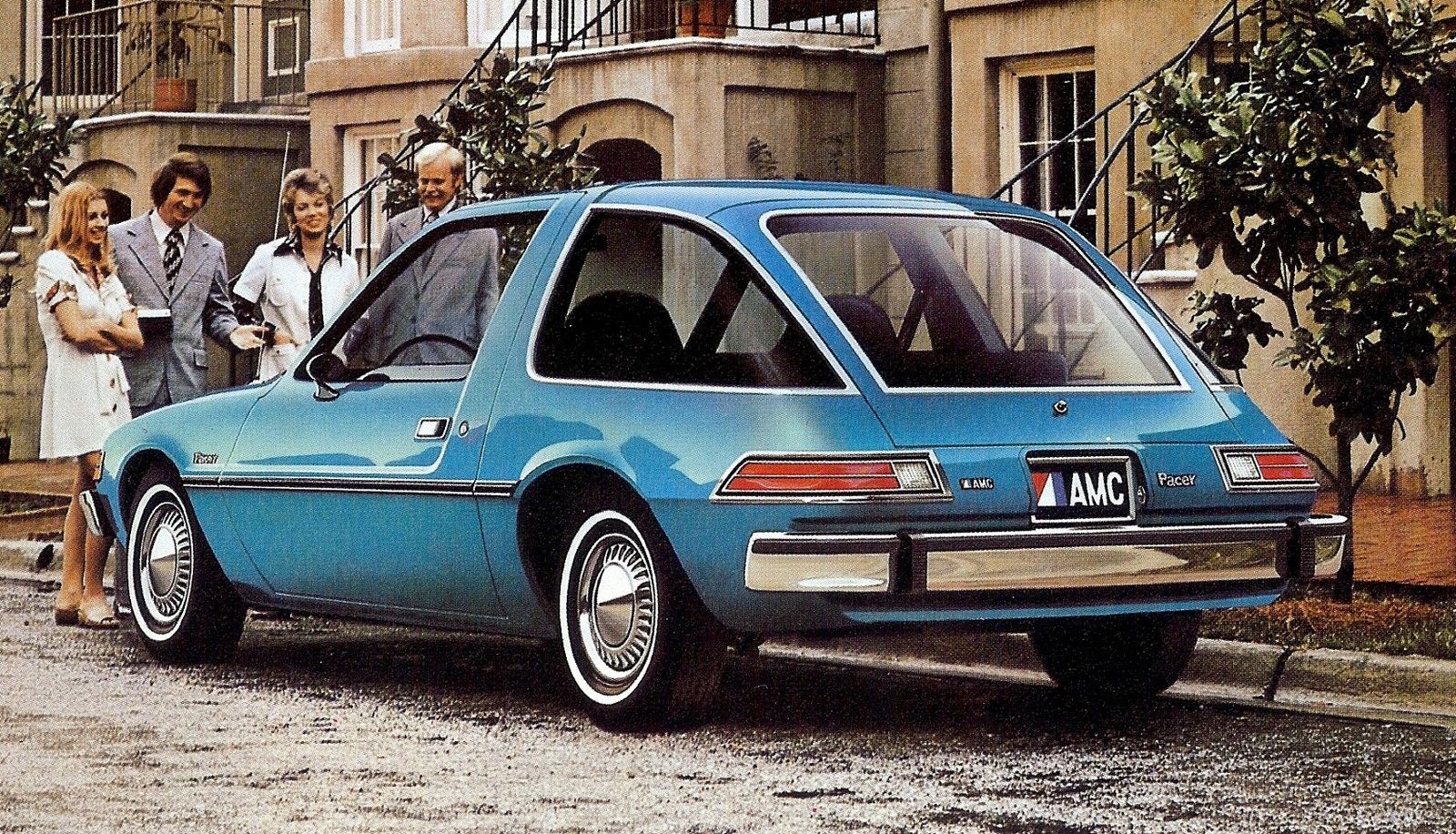
Pacer: The Quirky American Car Model That Missed the Mark

The Pacer’s distinctive design, characterized by its rounded shape and large glass area, made it a standout in the automotive landscape. However, its lackluster performance and issues with build quality tarnished its reputation. Despite its quirks, the Pacer garnered a dedicated fan base who appreciated its unique design and spacious interior. Yet, its legacy is one of missed opportunities and unfulfilled promises, serving as a cautionary tale of the consequences of prioritizing style over substance.
Why Do Bad Cars Become Legends?
Here’s the thing about these automotive disasters—most of them are more famous now than the “good” cars from their era. Nobody writes articles about the 1975 Honda Civic or the Toyota Corolla from the same period, even though those were objectively better vehicles in every measurable way. The terrible cars endure in our collective memory precisely because they were terrible. They become conversation pieces, the butt of jokes at car shows, and weirdly coveted collector’s items for people who appreciate irony on four wheels.
There’s also something deeply American about these failures. They represent an era when Detroit was swinging for the fences—sometimes connecting, often whiffing spectacularly. The Edsel was supposed to be the future. The Corvair was supposed to democratize the rear-engine layout. The Aztek was supposed to invent the crossover. Each one failed in its mission, but each one also pushed the conversation forward about what consumers actually wanted versus what corporate boardrooms assumed they wanted.
Did the Auto Industry Learn Its Lesson?
You’d think decades of public humiliation would have beaten the hubris out of American automakers. And to their credit, quality has improved dramatically since the dark days of the ’70s and ’80s. But the spirit of the Pinto and the Aztek lives on in different forms. The Chevy SSR, the Chrysler PT Cruiser’s later years, and the Dodge Caliber all earned spots on modern worst-car lists. Even Tesla’s Cybertruck—love it or hate it—carries the same DNA of polarizing design choices that made the Aztek infamous.
The lesson isn’t that automakers should play it safe. It’s that cutting corners on safety (looking at you, Ford Pinto) is inexcusable, that consumer research matters more than executive ego trips (Edsel, take a seat), and that “innovative” doesn’t automatically mean “good” (the Corvair would like a word). The best thing these terrible cars ever did was teach the industry what not to do—even if that lesson needed repeating a few times.
Frequently Asked Questions About the Worst American Cars
The Ford Pinto and Chevrolet Corvair frequently top worst-car lists due to their well-documented safety defects. The Pinto’s fuel tank design made it prone to fires in rear-end collisions, while the Corvair’s rear-engine handling issues inspired Ralph Nader’s groundbreaking book ‘Unsafe at Any Speed.’ The Pontiac Aztek is also a perennial contender for its polarizing design.
The 1970s were a perfect storm for American automakers: the oil crisis demanded fuel-efficient cars they weren’t prepared to build, new emissions regulations strangled engine performance, and Japanese imports were offering better quality at lower prices. Detroit responded by rushing out poorly engineered compact cars like the Chevrolet Vega and Ford Pinto, cutting corners on materials and safety to meet price points.
Ironically, yes. Clean examples of the AMC Pacer, AMC Gremlin, and especially the Chevrolet Corvair have appreciated significantly in the collector market. The Pontiac Aztek gained cult status after appearing in Breaking Bad, with prices rising from under $5,000 to $15,000+ for well-maintained examples. Even the Ford Pinto has a small but dedicated collector following.
The Ford Pinto holds the most notorious safety record in American automotive history. Ford’s internal cost-benefit analysis revealed the company knew about the fuel tank defect but calculated it was cheaper to pay out lawsuits than to fix the design—a decision that led to an estimated 27 deaths and numerous injuries before a recall was issued in 1978.
American Motors Corporation was the smallest of the Big Four automakers and operated on razor-thin margins. They couldn’t afford the extensive R&D budgets of GM, Ford, or Chrysler, which led to cost-cutting measures and unconventional designs meant to stand out in showrooms. Cars like the Gremlin, Pacer, and Matador were ambitious attempts to compete with limited resources, but the execution rarely matched the ambition.








Sign in to join the conversation
Share your thoughts, leave feedback, and engage with the community.
Sign in with Google